
A podcast by CIPRA. In podcast, the last CIPRA. The CIPRA podcast. We bring podcast.
Interviews, background talks and voices from all Alpine countries. Listen to this and more in the podcast of the International Commission for the Protection of the Alps. www.cipra.org.org. What are my resources and what are yours?
Which ones are in danger and which ones are our lives dependent on? What resources does it take to make a change towards sustainable development in the Alps? That CIPRA project, Resources, was tackling these questions by bringing people from different Alpine countries to work together. Meanwhile, Job Shadowing gave 24 participants the opportunity to work for one of the partner organizations in the Alps for 3-7 days.
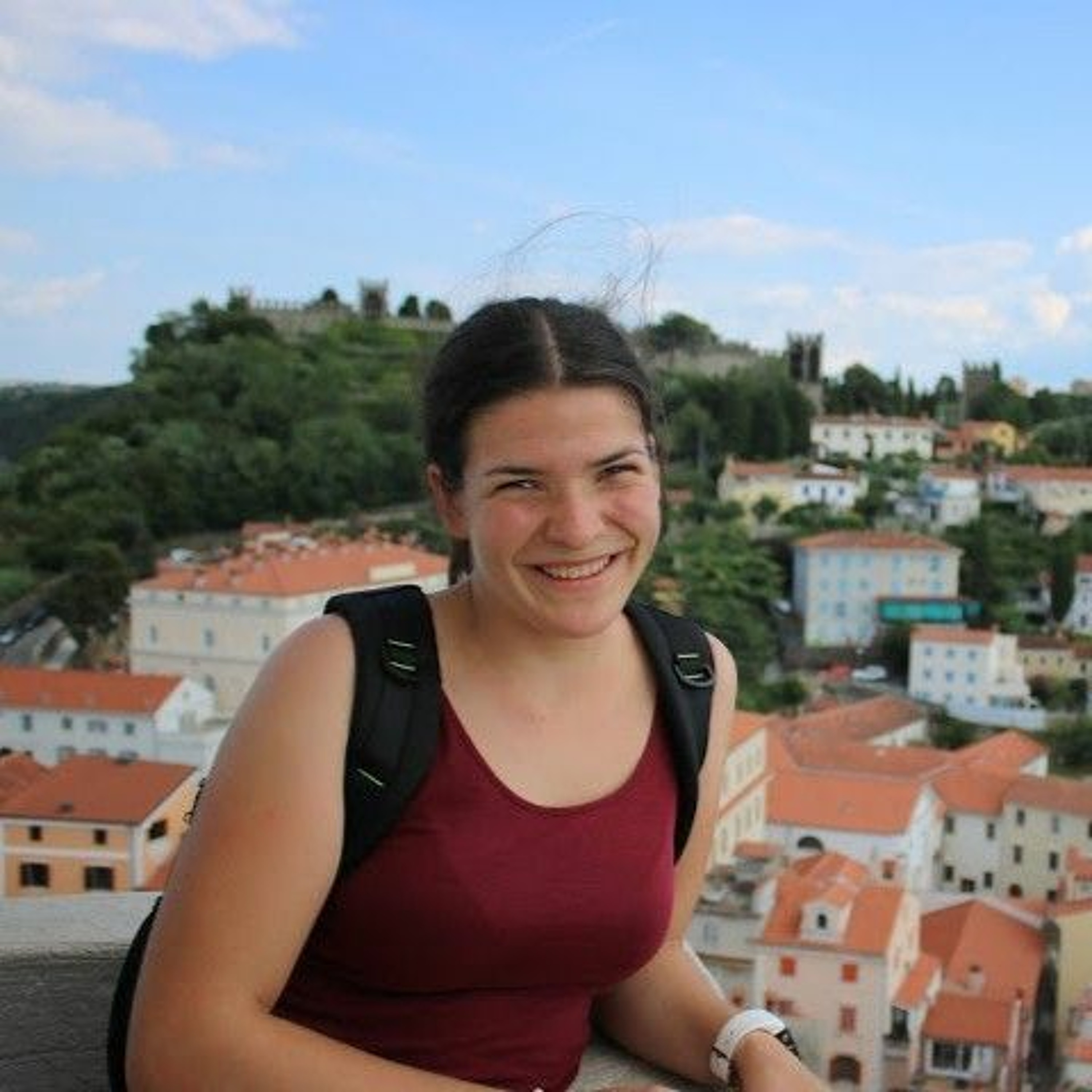
In this way, the project strengthened exchanges and learning between the organizations. Young people gained an insight into the working world of an NGO and expanded their professional network. One of these young people is Polona Sakrajak. Polona is 24 years old and from Slovenia.
She did a bachelor in geography in Guyana but is currently staying in Prague in Czech Republic for one more year, doing her master's degree in forestry, water and landscape management. During the summer, she was doing field work in forest ecology and mountain forests. My colleague Maya Matias interviewed Polona about her experiences within the Resources Project and Job Shadowing at CIPRA International. Thank you for taking time for this interview.
What are your personal resources for your commitment to environmental and Alpine protection? A bit comes from just my love for nature. As part of, I guess, even Slovenian culture, we had it that we really like going hiking, going into nature. We really connected with our forests because 60% of Slovenia is covered by forests, so I feel like this is the type of connection with nature.
I guess when you know something and you love something, you really feel like you want to protect it. But it's not just about the natural resources, it's also about the human resources. I guess there's also this community type of feeling like when you feel included somewhere and you want to develop the community or work with them. I don't know if you remember, but do you know when did you hear first about CIPRA and maybe second about the Resource Project?
Can you remember? Yeah, I think I heard about CIPRA quite a while ago because I was studying the geography department and even one of our professors is involved with CIPRA. So I've heard and seen about some local events from CIPRA Slovenia, I guess as far as four years ago, but I wasn't able to join any of them. And then finally, two years ago, there's this recurring event, at least in CIPRA Slovenia, Fire in the Alps.
And that one was organized and the main topic of it was protecting mountain forests and forest resources. And it was about taking care of the forests. So that sounded like a really interesting topic to me. So I applied and then I even wrote in our Student Association Group in about three more people to join me.
So then we went for the events and I really enjoyed it. So after that my friend and I, we decided to just become members in CIPRA Slovenia. And after that, Katrina from CIPRA Slovenia, she wrote us that there's this new project that just started, if we'd be interested to join in. And that was the Resource Project.
So I joined actually in December 2020, I think it was, yeah, for the first two at that time, online meetings that we had. That's where I heard more about the Resource Project. And then the first live activity that was like a transnational activity. I took part in the meeting in Bila in Italy in the summer of 2021.
And after that, there was another meeting just this year in Innsbruck in Austria. It was a workshop on becoming a climate risk facilitator. So you did a lot of activities in the project? So maybe you can describe a little bit your experiences, maybe one of these meetings.
What did you do there? And how was the exchange with the other people? Yeah, I mean, what we were doing there, it's always so many things going on and it's hard to even pinpoint a single one. But always, I think the best part is just to meet so many new people, because there's always new people joining in.
But on the other hand, there's also like, sometimes you meet someone and then you keep meeting them year after year. And that's also super nice. But you know, you can different to different places and then you will meet in the first place or somewhere completely different. And yeah, we were discussing topics about natural resources, about human resources.
But it's hard to like, for instance, say what we were talking about in 2021. Yes, I can imagine. And then this year on the meeting, yeah, we had a workshop on how to become climate risk facilitators. And that is a really interesting workshop because first we took part as participants, but then we were actually trained on how to facilitate the workshop for other people.
Can you maybe describe what this workshops about that you learned to facilitate? In a nice way, it's a card game where a group of participants need to find the solutions step by step. And as a facilitator, you only like kind of guide them through it, but they are the ones that actually find the solutions. And the cards are showing on one side like the basis, the scientific facts about climate change.
And you kind of need to make the connection from causes and what's the outcomes, for instance, like greenhouse gases and how that relates to like higher temperature and so on. So, yeah, that was really interesting to kind of have everything in the end, like on one desk and you just see the whole outline of how everything is connected. What do you take out of the project? What new things did you learn or take home?
Well, I've been like involved with the projects almost from the beginning. I didn't even realize that before. That also the higher end the Alps event was also part of the resource project. So I've been here for so long, like two years that a lot of things have happened in these two years.
And I feel like I've also like noticed some of my personal changes in how I see different things, how I interact with people with nature, where I see myself going in future and so on. So it has contributed to me even like on a personal level. I mean, I've been committed to like working with nature before, you know, but when you get to meet people and see like each of the people they come from a different area in the Alps. They all have their own stories or they see something that's happening in their area that you wouldn't even consider.
And maybe their type of solution is a different approach than what you're familiar with. So like it's really just about exchanging different points of use, different practices, and that seems really valuable to me. Even from my field of studies, I feel like this is like extra knowledge that I'm not able to receive in classroom. Even if we do like field trips, the trans nationality really brings a lot more richness to your point of view and then you get to meet people and make new connections.
And yeah, it's that's also really important part of it. I guess just meeting different people with different perspectives and also like all the workshops that were led there, like each of them brought some new insights. And where you're also able to bring in your knowledge and your background from your study. Sure.
I mean, even though I currently study for F3, I still feel like I'm a geographer and I will always be one. So from that point of view, you know, like geography is a science where you just try to take everything in and make something out of that, you know, just to see some topic from all different viewpoints. So yeah, it's always interesting to see like from the side of nature and science and then the human activities and like the community side and how everything interacts with each other, you know, because there are like natural resources and human resources and they're like interacting with each other all the time. So that's what feels interesting to me.
And what are also things during the workshops that you didn't like so much? We are happy to get some feedback as well so we can improve also. Well, there's people coming from all different countries. So sometimes language barriers can be a thing if not everyone is fluent in the same language that we're trying to speak.
I think usually it's most easy if that's English, but then, you know, sometimes some groups form and people just start talking if there's like majority of people from German speaking countries. But still, I think in general, like people realize and wants to feel to make feel everyone included. So usually we just speak in a native language. But then the thing I would maybe say is just the length of events and their size.
I think it was done quite well that sometimes if the event is short, like just one overnight stay, it feels kind of strange to come like if you're traveling a really large distance and then you just stay there maybe for two, three days. So I guess it could be nice if some of the events could be slightly longer. But then on the other hand, if that's during the school year, I don't think I could join because then I would be missing my classes and so on. So I guess it's always a type of balancing between like making it just long enough so that people will join, but then that it's long enough that people actually get to connect with each other and get to know each other a bit better.
Do you have any recommendations for future use project? Well, that's always hard because at least I think long term, you just remember the good parts and like it's hard to think of something that I didn't like. But maybe something that you wish for in the future, what you would be interested in future use project? Yeah, maybe I would be interested in trying to connect it with some sort of direct action.
So we are discussing a lot of topics, but I think that the people who decide to come there, they're usually already aware of the issues, for instance, climate change or biodiversity loss or something else. And I don't know, of course you learn something new each time, but I feel there's this gap between us knowing what the issues are and us putting them into some sort of direct action. That's something I would be really happy to see more of. That's also something that bothers me even in scientific worlds that we know so much background, we know how things are working.
We have the knowledge, but there's this problem with knowledge transfer, it's like raising public awareness, but also then putting it into action and making a change in that aspect. It's always interesting for us also to, if you're planning a new project, how we can bring in new ideas or other needs. So now I want to talk about the job shadowing you did at Zebra International in Liechtenstein. Maybe first, how did you hear about the job shadowing program and why did you apply?
Yeah, so first where I learned about job shadowing, it was actually mentioned to us already, I think at the first meetings we had with the resource project, that there will be different opportunities to do job shadowing. So at first I actually applied to the IUCN Congress that was supposed to happen in Marseille, that there were just some issues with how many of us would go there, so in the end that didn't happen. But I always thought it would be really interesting to go to Zebra International because that's the main organization that holds together different types of projects and also it's in Liechtenstein. It had like both aspects of me being really curious about how it looks like there, but also about the country itself.
So I thought of applying already before, but I never really found the time for it. I thought maybe already in February 2022 and then like, give them email, okay, so this like last call for job shadowing, you can do them until the end of July. And I was like, okay, I either do it now or I'm going to regret not doing it. So then I replied, hey, I have a week off at the end of July and I would like to comment that would be possible.
So that's how it went in the end. And what did you do at C-Print International? Were you able to use your skills? I was actually kind of worried like what I would be able to do that.
Like there's always this thing in the back of your mind, like a sliding posture syndrome or I don't know how to call it. But I did work in an administration like office job before, so I thought like if nothing else I can at least do something in that area. But yeah, when I got there, I was welcome, really nice. I also think it was because of the week I chose like there was just so many people coming in from all the different national C-Plays and like it was just a full office.
So I guess I got a really good week to come to Liechtenstein. But yeah, I was working on different projects, which was really nice that I wasn't, you know, just doing one thing. But I got included on many different topics and projects. So I got insight into a lot of how they work.
So first I think I started with reports on two projects. I was actually just going through the report for a resources project and another youth project. And then I was working on a report of the activity we did in in-book and a feedback form. And then I was working with my own like on proposal for another project she was doing and just brainstorming some ideas for that.
So it was really nice to be able to do different things and get an insight into how projects are also led from the beginning and then how they finish reports and all the work that goes into actually leading projects from beginning to end. Although I don't think any type of expert in that after four days in the office. But it was interesting to get an insight into this aspect. And did you also learn new things during the work?
For sure. I guess especially this part about how projects are led, maybe how they're financed. When you apply a project just what you need to be thinking of so that you have enough freedom for it to maybe change just slightly. After you start and you see you should do something or you want to do something and maybe just working with alasmos grants and so on.
But it was also I think really nice to meet all the people that work in the office and just put their face behind the name. I was maybe reading an email or something like that and see also how the office dynamics work. Because as a person who's still in the education process it's always nice to see like how it can look like after you've finished your studies. Like just some different options of where one might find themselves afterwards.
You said you were curious about Lichtenstein so how was it to be there and how would you describe Lichtenstein for you? I think a really nice thing was when I got there that Zia Zil provided me with a bicycle. So I was actually staying in Feltkyl in Austria and then I had the opportunity to cycle 10 kilometers to work. Like if I wanted to take a train I could also do that.
And the nice thing about the job shadowing is that we got like all of our expenses reimbursed. I didn't need to feel worried about any of that just coming to Lichtenstein. But it was so nice to just take a bicycle in the morning and cycle from Austria to Lichtenstein to the office over all the fields on such nice cycling paths. It felt kind of like a fairytale to be honest and I really enjoyed cycling so.
And then I was also able to go up with around Lichtenstein and also felt guilty in the afternoons after my time in the office. And I was hanging out with some people that were also working in the office of interns. So I feel like I got a really nice experience during my week in Lichtenstein. Would you recommend job shadowing to others and if yes why?
Yeah I would definitely recommend job shadowing to others. There are also different opportunities. I mean at least they were in these projects. Like we had the option to go to any other national CIPRA where like I think the time frame was 3 to 7 days.
Or if they were organizing a project or something or a camp or something. So you know joining CIPRA International for a week was one of the options and it felt really interesting to me. And I had like a really great experience so I don't know how it was for other people doing other types of opportunities. But I could really highly recommend this one because it was really interesting to get them inside into how an NGO like that works on an international level.
You listened to an interview with Polona Zakashik about her experiences within the project resources and job shadowing at CIPRA International. This interview was conducted by Maya Matias. If you are interested to learn more about job shadowing and our current projects please visit our website CIPRA.org. My name is Michel Gums.
Thank you for listening to our podcast and have a good time in the Alps. A podcast by CIPRA. A podcast by the LACIPRA. A podcast by the LACIPRA.
A podcast by the LACIPRA. The CIPRA Podcast. Three of the podcast. Interviews, background talks and voices from all our countries.
Listen to this and more in the podcast of the International Commission for the Protection of the Alps. www.cipra.org. Forward slash podcast.