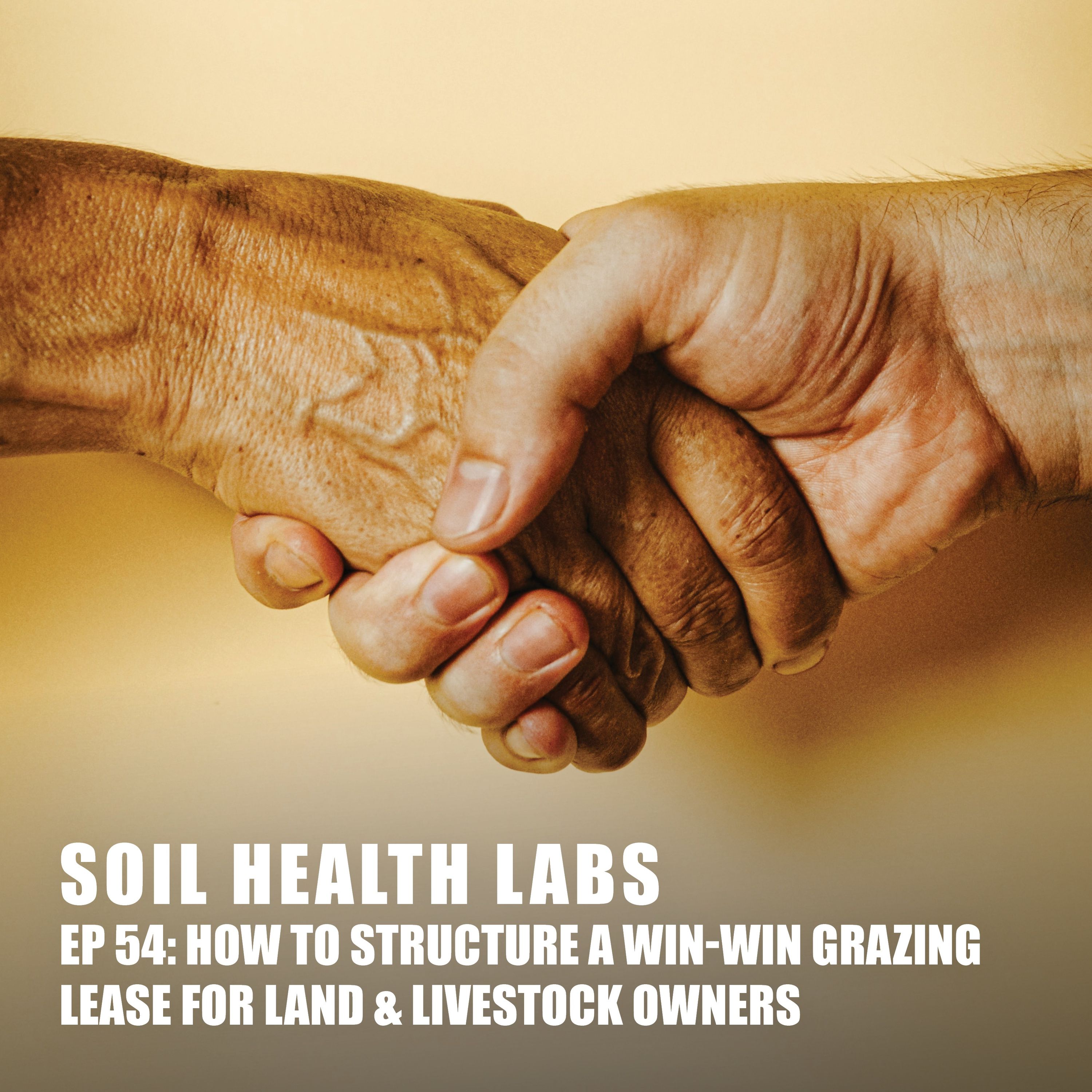
54 How to Structure a Win-Win Grazing Lease for Land and Livestock Owners episode artwork

EPISODE · Sep 19, 2023 · 58 MIN

54 How to Structure a Win-Win Grazing Lease for Land and Livestock Owners

from Soil Health Labs · host Soil Health Labs

We were delighted to get back with Pete Bauman who is a Natural Resources and Wildlife Field Specialist for SDSU Extension. Pete specializes in range, pasture, and grassland management with an emphasis on educating producers about how profitability and ecological balance are complimentary. Pete’s focus areas include alternative grassland management tools such as fire, biological control, controlled grazing, and reduction of inputs for systems health. We got together specifically to discuss contract grazing and structuring of grazing leases. Pete, who wrote an SDSU Extension article on Structuring Grazing Leases (see link below), explains that at the core of contract grazing is an agreement between two parties with parameters that are beneficial and acceptable to both parties. Contract grazing can be beneficial if both parties are committed to mutual goals and objectives, leading to better resource management and a recognition of the other’s needs and goals. Pete warns against the conventional paradigm of prioritizing short-term income and profit maximization over the long-term relationship and ecological impact, what happens then is the land “gets trampled in the dust” and the relationship between lessor and lessee is either strained or broken. The time that lands – and relationships – are most vulnerable are when cropland rental prices are high, driving grazing land rental prices up. This mechanism is explained by Pete in the podcast. Overgrazing, often leading to costly weed problems, and pressure on water systems and fences, leading to costly repairs, can often lead to unexpected costs that the landowner has to bear – it is these unexpected costs that can have negative effects on the relationship between lessor and lessee. Parameters can and should be established in the lease agreement to prevent such consequences, and both parties should have a clear understanding of their partners’ contract's goals and objectives - good communication between the landowner and the livestock owner is key to this process. If you take nothing else from the podcast, get the agreement down on paper, a handshake agreement may work for a while, but when things go wrong, the more that is spelled out, the less there is to dispute. Pete talks about the importance of setting goals (e.g., financial, input cost, aesthetic, ecological goals) for managing grazing land and how landowners should assess the current state of their property and set a desired future condition, based on their gals – this ought to be communicated to the livestock owner as well. A good lessee's role is to enhance the long-term viability, productivity, and ecology of the leased property to keep it or improve it toward being a well-functioning system; when the lessor’s goals should align with the current lessee's goals, they can create a mutually beneficial agreement between the parties. As long-term relationships build, many good landowners consider the value of their lessee beyond short-term arrangements; a landowner who values their lessee is often willing to take less, conversely some lessees are willing to pay more – all of this points to the inherent (financial and other value) of a good partnership. Bauman believes that instead of renting by acre, it is better to rent per head, per day, which is based on the amount of grass consumed by the lessee's livestock. By having a predetermined agreement, both parties can avoid misunderstandings and conflicts over conflicting goals. Buz and Pete also discussethe services provided by the landowner and lessee during the grazing period. He provides examples of both extremes, where some lessees are responsible for everything, while others have contract graziers that provide all services, including infrastructure, rotation labor, water systems, and even medical treatment. Links: SDSU Extension Article on Structuring Grazing Leases: https://extension.sdstate.edu/structuring-grazing-leases South Dakota Grazing Exchange: https://sdgrazingexchange.com/

We were delighted to get back with Pete Bauman who is a Natural Resources and Wildlife Field Specialist for SDSU Extension. Pete specializes in range, pasture, and grassland management with an emphasis on educating producers about how profitability and ecological balance are complimentary. Pete’s focus areas include alternative grassland management tools such as fire, biological control, controlled grazing, and reduction of inputs for systems health. We got together specifically to discuss contract grazing and structuring of grazing leases. Pete, who wrote an SDSU Extension article on Structuring Grazing Leases (see link below), explains that at the core of contract grazing is an agreement between two parties with parameters that are beneficial and acceptable to both parties. Contract grazing can be beneficial if both parties are committed to mutual goals and objectives, leading to better resource management and a recognition of the other’s needs and goals. Pete warns against the conventional paradigm of prioritizing short-term income and profit maximization over the long-term relationship and ecological impact, what happens then is the land “gets trampled in the dust” and the relationship between lessor and lessee is either strained or broken. The time that lands – and relationships – are most vulnerable are when cropland rental prices are high, driving grazing land rental prices up. This mechanism is explained by Pete in the podcast. Overgrazing, often leading to costly weed problems, and pressure on water systems and fences, leading to costly repairs, can often lead to unexpected costs that the landowner has to bear – it is these unexpected costs that can have negative effects on the relationship between lessor and lessee. Parameters can and should be established in the lease agreement to prevent such consequences, and both parties should have a clear understanding of their partners’ contract's goals and objectives - good communication between the landowner and the livestock owner is key to this process. If you take nothing else from the podcast, get the agreement down on paper, a handshake agreement may work for a while, but when things go wrong, the more that is spelled out, the less there is to dispute. Pete talks about the importance of setting goals (e.g., financial, input cost, aesthetic, ecological goals) for managing grazing land and how landowners should assess the current state of their property and set a desired future condition, based on their gals – this ought to be communicated to the livestock owner as well. A good lessee's role is to enhance the long-term viability, productivity, and ecology of the leased property to keep it or improve it toward being a well-functioning system; when the lessor’s goals should align with the current lessee's goals, they can create a mutually beneficial agreement between the parties. As long-term relationships build, many good landowners consider the value of their lessee beyond short-term arrangements; a landowner who values their lessee is often willing to take less, conversely some lessees are willing to pay more – all of this points to the inherent (financial and other value) of a good partnership. Bauman believes that instead of renting by acre, it is better to rent per head, per day, which is based on the amount of grass consumed by the lessee's livestock. By having a predetermined agreement, both parties can avoid misunderstandings and conflicts over conflicting goals. Buz and Pete also discussethe services provided by the landowner and lessee during the grazing period. He provides examples of both extremes, where some lessees are responsible for everything, while others have contract graziers that provide all services, including infrastructure, rotation labor, water systems, and even medical treatment. Links: SDSU Extension Article on Structuring Grazing Leases: https://extension.sdstate.edu/structuring-grazing-leases South Dakota Grazing Exchange: https://sdgrazingexchange.com/

NOW PLAYING

54 How to Structure a Win-Win Grazing Lease for Land and Livestock Owners

0:00 58:22

No transcript for this episode yet

We transcribe on demand. Request one and we'll notify you when it's ready — usually under 10 minutes.

Eat to Live Jenna Fuhrman, Dr. Fuhrman Our health is our most precious gift and smart nutrition can change your life. Each month, join Dr. Fuhrman and his daughter, Jenna Fuhrman as they discuss important topics in the world of nutrition. Eat to Live will change the way you eat and think about food. Kaizen Blueprint Aldo Chandra "Kaizen" is a Japanese term for continuous improvement. This podcast provides a blueprint to learn about health, wealth, relationships and everything else in between. Through our podcast, we strive to inspire, educate, and motivate our audience to cultivate a mindset of lifelong learning, productivity, and personal development. By sharing insights, strategies, and practical tips, we aim to guide listeners on their journey towards realizing their fullest potential, fostering success, and creating lasting positive change. PodSights Health & Wellness podsights.ai Transform your wellbeing journey. Get trusted, evidence-based answers to your health, fitness, and mental wellness questions. Make informed decisions about your health. Visit podsights.ai to create your own wellness podcast. Tips, News and Stories for Older Adults Esther C Kane CAPS, C.D.S. "Tips, News, and Stories for Older Adults" delivers weekly insights tailored for seniors. We bring you summaries of curated news, practical advice, and inspiring stories that matter to the 55+ community. From health and finance to technology and lifestyle, our content keeps you informed and engaged. Sourced from trusted outlets, each episode offers valuable information for navigating your golden years. Join us as we explore aging with positivity, wisdom, and engaging stories. Your perfect companion for staying active, learning, and embracing life's later chapters.

Frequently Asked Questions

How long is this episode of Soil Health Labs?

This episode is 58 minutes long.

When was this Soil Health Labs episode published?

This episode was published on September 19, 2023.

What is this episode about?

We were delighted to get back with Pete Bauman who is a Natural Resources and Wildlife Field Specialist for SDSU Extension. Pete specializes in range, pasture, and grassland management with an emphasis on educating producers about how profitability...

Can I download this Soil Health Labs episode?

Yes, you can download this episode by clicking the download button on the episode player, or subscribe to the podcast in your preferred podcast app for automatic downloads.
URL copied to clipboard!