
EPISODE · May 29, 2020 · 32 MIN
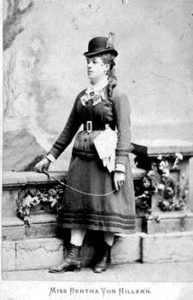
55: The 100-miler – Part 2 (1874-1878) Women Pedestrians
from Ultrarunning History · host Davy Crockett
By Davy Crockett Competitions to walk or run 100 miles have taken place for more than 300 years. Part 1 (1737-1875) of this series shared the very early attempts to reach this ultra-distance milestone on foot. By 1867, walking 100 miles in one-go started to receive intense attention, especially in America. A multi-year 100-mile frenzy was launched. In this part, the story is told how the 100-mile craze expanded. In 1878, thanks to those in England, the 100-miler opened up to runners who could “go as you please” rather than sticking to a strict “heel-toe” walking style that was emphasized in America. That year, well over one hundred successful 100-mile finishes were accomplished with times that fell dramatically as the 100-mile athletes learned to trot. Also that year, women especially left their mark on the 100-mile sport in America, as the country became fascinated with their accomplishments. The most prolific 100-milers in 1878 were women! It was written, “One of the most peculiar features of the walking mania is the number of lady pedestrians now on stage, and the surprising speed and powers of endurance which they exhibit.” Mark Twain’s 100-miler Samuel Clemens “Mark Twain” (1835-1910) even joined in the 100-mile craze. He attempted to walk 100 miles from Hartford, Connecticut to Boston, Massachusetts in two days with his pastor, J. H. Twitchell. The two had taken many ten-mile walks together to enjoy social chat and exchange views. They would always return home from these walks with “jaw ache” but were never foot sore. So, they hoped to walk all the way to Boston to store up enough “jaw” to last then through the winter. The two started on November 19, 1874 at 9 a.m. intending to stay on an old turnpike, see the hamlets along the way, and avoid walking on the railroads. After ten hours and 28 miles, they stopped for the night. “Before retiring, they had a consultation and decided that their undertaking had developed into anything but a pleasure trip and was actually hard work.” They decided to postpone their pedestrian tour for a year or so. In the morning they walked seven more miles for a total of 35 miles, and then took the train to Boston. Twain said, "My knee was so stiff that it was like walking on stilts." It was written, “Mark Twain wishes it to be distinctly understood that the walk was not a failure and they would have continued the trip had Mr. Twitchell not have been under engagement to preach in Newton on Sunday morning.” He said that next time he would reserve a week for the 100 miles but that he was not anxious to take away Edward Payson Weston’s laurels because he did consider that he was at least as good as Weston. Daniel O’Leary In 1874, Daniel O’Leary (1841-1933) came into the 100-mile scene, stealing away much of the spotlight that had been on Edward Payson Weston (1839-1929). O’Leary was born in Ireland and as a child lived through terrible years of potato blight, causing horrible starvation and disease. In 1866, like so many other Irish, he immigrated to America. He could not find work in New York City, so he settled in Chicago worked in a lumber yard and sold books door-to-door. He built up his endurance from speed walking his routes. In 1874 O’Leary overheard a group discussing Weston’s attempts to walk 100 miles in twenty-four hours. One person said that only a Yankee could accomplish the feat. Another commented that Weston was planning on going to Europe. O’Leary said, “If he dropped into Ireland on the way he’d get beaten so bad that he’d never again call himself a walker.” Everyone laughed at him. He finally said that he thought he could beat Weston. They then roared with laughter. O’Leary wanted to prove that an Irishman could be a successful distance walker too. He rented the West Side Rink on at the corner of Randolf and Ada Streets in Chicago, and announced that he would be attempting to walk 100 miles in 24 hours. For training,
Embed this episode
What this episode covers
Competitions to walk or run 100 miles have taken place for more than 300 years. Part 1 (1837-1875) of this series shared the very early attempts to reach this ultra-distance milestone on foot. By 1867, walking 100 miles in one-go started to receive intense attention, especially in America. A multi-year 100-mile frenzy was launched. In this part, the story is told how the 100-mile craze expanded. In 1878, thanks to those in England, the 100-miler opened up to runners who could “go as they pleased” rather than sticking to a strict “heel-toe” walking style that was emphasized in America. That year, well over one hundred successful 100-mile finishes were accomplished with times that fell dramatically as the 100-mile athletes learned to trot. Also that year, women especially left their mark on the 100-mile sport in America, as the country became fascinated with their accomplishments. The most prolific 100-milers in 1878 were women! It was written, “One of the most peculiar features of the walking mania is the number of lady pedestrians now on stage, and the surprising speed and powers of endurance which they exhibit.”
NOW PLAYING
55: The 100-miler – Part 2 (1874-1878) Women Pedestrians
No transcript for this episode yet
Similar Episodes
No similar episodes found.
Similar Podcasts
No similar podcasts found.