
EPISODE · Apr 15, 2026 · 20 MIN
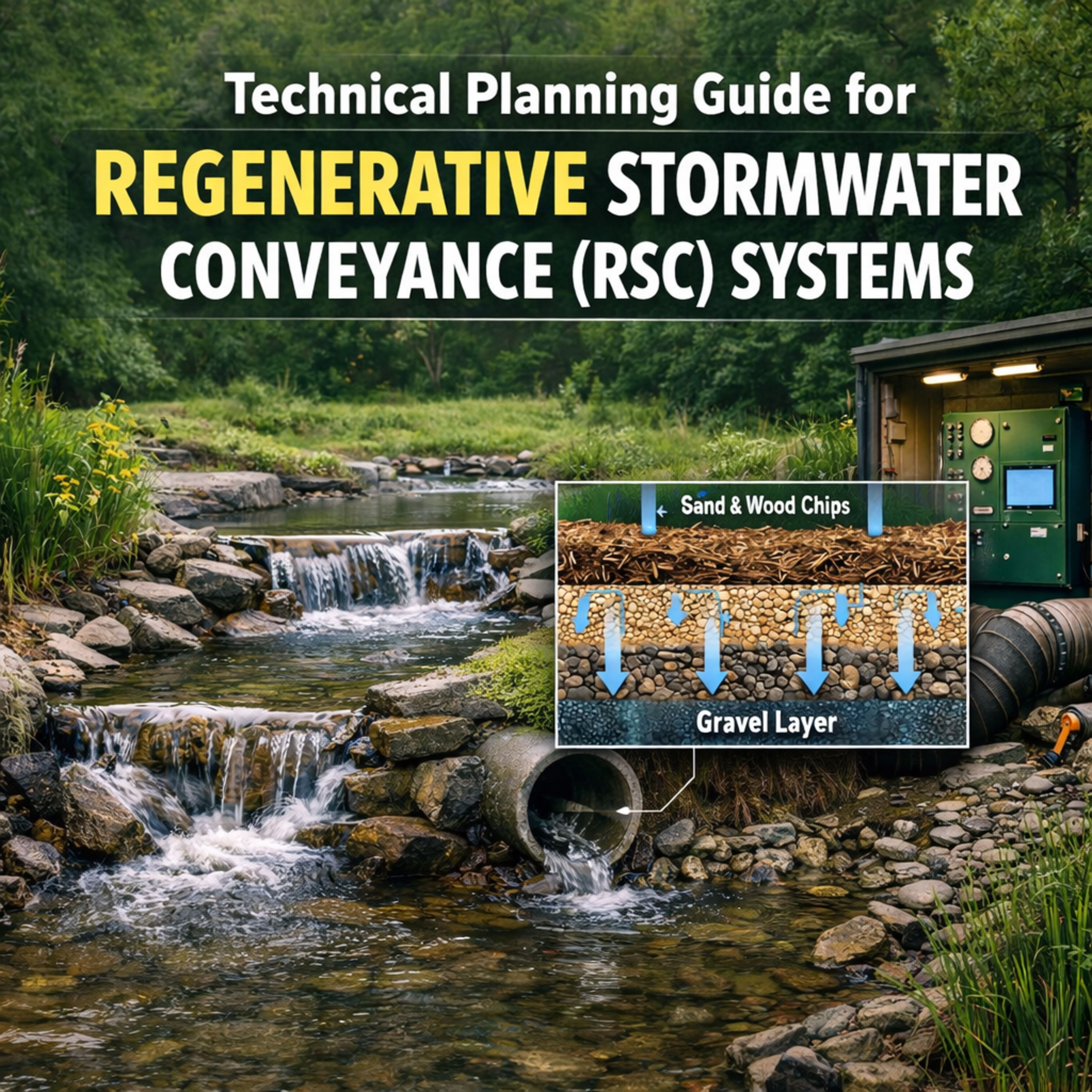
#559 Technical Planning Guide for Regenerative Stormwater Conveyance (RSC) Systems
from Golf 247.eu: The Global Platform for Innovative Technologies and Teaching Concepts. · host Golf247.eu
Regenerative Stormwater Conveyance (RSC) is a green infrastructure system designed to restore eroded drainage channels while improving water quality and hydraulic performance. Unlike traditional systems that simply move water, RSC mimics natural drainage patterns, transforming degraded channels into functional ecosystems.The system reduces flow velocity through a sequence of shallow pools and riffles, preventing erosion and improving infiltration. It achieves high pollutant removal efficiency, reducing Total Suspended Solids by up to 80% and nutrients by approximately 70%, while also mitigating thermal impacts on receiving waters.A detailed site assessment is essential. Typical drainage areas range from 10–30 acres, with a maximum of 50 acres. Slopes should ideally not exceed 10%, and required space is about 0.5–3% of the contributing area. Minimum setbacks must be maintained to protect infrastructure and water sources, and RSC systems must not be used for highly contaminated runoff.Hydraulic design focuses on non-erosive flow. Systems are built as sequences of pools, riffles, cascades, and grade control structures, ensuring velocities remain below 4 ft/s. Structural stability depends on precise elevation control, proper stone sizing, and energy dissipation through cascades. Pools must drain within 72 hours to prevent standing water.The subsurface system is critical for performance. A 4:1 sand-to-wood chip mix provides filtration and supports microbial activity. This layer is supported by gravel for stability and permeability, following principles similar to USGA green construction to prevent particle migration and ensure consistent drainage.Vegetation plays a functional role in stabilization and infiltration. A multi-layer planting strategy—trees, shrubs, and ground cover—is required, with species selected based on moisture tolerance. Native plants are preferred for long-term resilience and reduced maintenance.Construction must avoid soil compaction, as this reduces infiltration capacity. Heavy equipment is restricted, protected zones must be clearly marked, and upstream areas must be stabilized before operation.Long-term performance depends on maintenance. Regular inspections, debris removal, vegetation management, and sediment control are essential. Structural issues such as erosion, stone displacement, or weir failure must be addressed quickly.Overall, RSC systems combine engineering precision with ecological function, creating sustainable, high-performance stormwater solutions.📺 The Explainerwww.Golf247.eu
Embed this episode
NOW PLAYING
#559 Technical Planning Guide for Regenerative Stormwater Conveyance (RSC) Systems
No transcript for this episode yet
Similar Episodes
No similar episodes found.
Similar Podcasts
No similar podcasts found.