
EPISODE · Mar 3, 2026 · 21 MIN
584-GPLD1 and TNAP Regulation of Cognitive Function in Aging
from Paper Talk
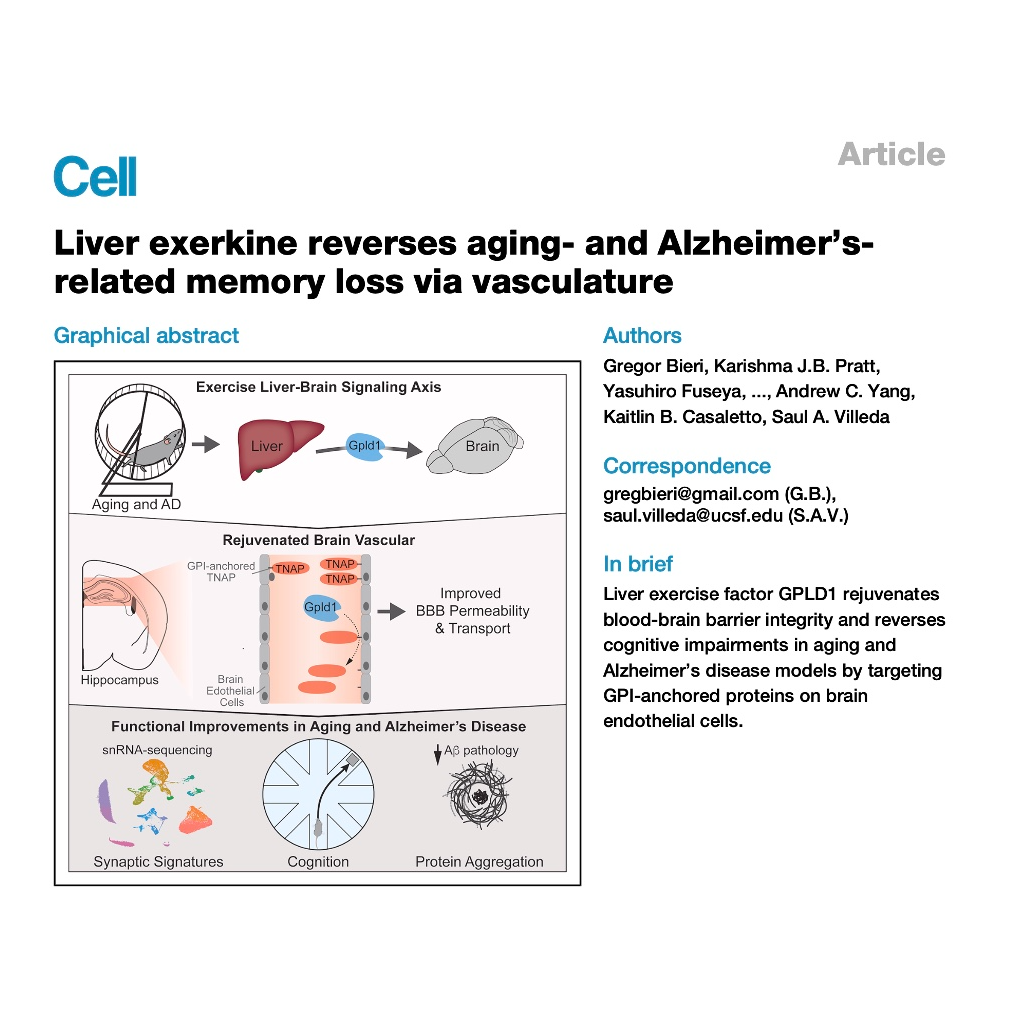
This research explores how exercise-induced blood factors, specifically the enzyme GPLD1, can combat brain aging and cognitive decline. The study identifies tissue-nonspecific alkaline phosphatase (TNAP) as a critical regulator of the blood-brain barrier, noting that excessive levels of this enzyme impair vascular integrity and memory. By increasing liver-derived GPLD1 or pharmacologically inhibiting TNAP, researchers were able to reverse age-related inflammatory signatures and improve learning in elderly mice. These interventions also showed promise in Alzheimer’s disease models, significantly reducing amyloid plaques and restoring cognitive function. Ultimately, the findings suggest that targeting these systemic pathways can rejuvenate the cerebrovascular system to protect against neurodegeneration. This work highlights a potent molecular mechanism through which physical activity maintains neurological health.References: Bieri G, Pratt K J B, Fuseya Y, et al. Liver exerkine reverses aging-and Alzheimer’s-related memory loss via vasculature[J]. Cell, 2026.前往小宇宙评论区与主播互动
Embed this episode
Ready to play
584-GPLD1 and TNAP Regulation of Cognitive Function in Aging
No transcript for this episode yet
Similar Episodes
No similar episodes found.
Similar Podcasts
No similar podcasts found.