589: Abraham Lincoln and Sustainability, part 1: Is the US a racist nation? What should we do then? episode artwork

EPISODE · Jun 5, 2022 · 13 MIN

589: Abraham Lincoln and Sustainability, part 1: Is the US a racist nation? What should we do then?

from This Sustainable Life

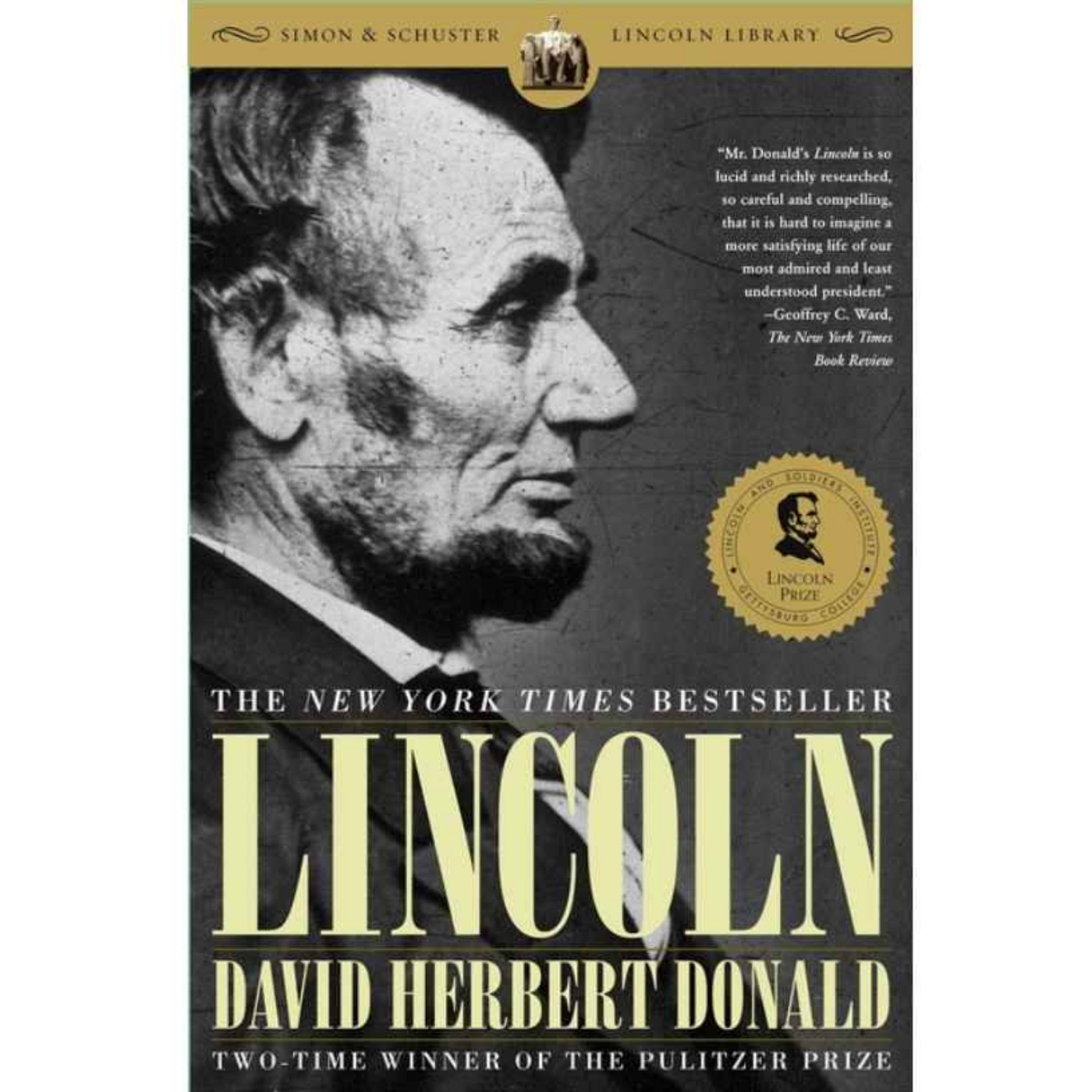
The start of this episode's text:Regular listeners know I’ve been living with my apartment off the electric grid for two weeks, in Manhattan, not off in the woods.Most of the benefits are about connecting more with nature, being humble to it, not dominating it. I’m waking up earlier, for example, to work and read by daylight, so I don’t have to drain the solar-powered battery. Direct sunlight is free. Likewise, during a spell of three overcast days, I had to pay attention to my power use and take advantage of what sunlight I could to charge the battery.Speaking of reading by daylight, the great benefit prompting today’s post is nearly finishing a biography, Lincoln, by David Herbert Donald. I’m on page 507 of 600, not counting the over hundred pages of footnotes. Past the Gettysburg Address, he’s just been nominated for his second candidacy. Talk of amending the constitution is starting to appear. The war appears mostly won, though deaths mount, Confederate wins still happen, and no one knows how to plan for or handle reconstruction.I talk a lot about slavery relating to pollution. I’ve for years taken inspiration from British abolitionists around 1800 who looked across oceans to see people suffering for their culture’s indulgences. For the first time in history, according to podcast guest and author of Bury the Chains, Adam Hochschild, one group worked for another group’s freedom. Every argument you’ve heard to avoid giving up polluting, their peers used to avoid giving up slavery (what I do doesn’t matter, only government and corporations can make a difference, if we don’t others will, it’s not that bad, it will work out, etc), but they refused to accept the cruelty, injustice, and inhumanity. Through their work, and others’, without a civil war, England made illegal the slave trade and then slavery. I look across oceans and see people suffering and dying, displaced from their land or poisoned and killed on it because we fund companies and governments to do it by buying their packaging, fossil fuels, and so on.People commonly describe America as a racist nation, especially white Americans, especially white Americans who don’t act against racism. A Constitution permitting slavery and a three-fifths clause certainly back up that view. What do we make of all the people born into that system who did nothing to create it and who worked against it? Besides Lincoln, consider William Lloyd Garrison, Thadeus Stevens, Emerson, Thoreau, and everyone who opposed slavery from before the Constitution to today? What about the hundreds of thousands of men who fought for the Union, many volunteers, maybe not all fighting specifically to end slavery but many for just that reason?One could argue they should have done more. When they take down statues of Thomas Jefferson, who opposed slavery they point out he owned slaves. You can’t argue he created the system he was born into. How much could he do to change that system within his lifetime? Can you blame him for not ending slavery? Say you blame him for owning slaves, would his freeing his slaves changed the system? Alone, clearly not, but you could argue he should have acted his conscience and done what he knew was right, whether it significantly changed the system or not. Everyone knows everyone prefers being free to being enslaved.What could a free person, benefiting from living in a system of slavery or not, have done? How would they make a difference? Lincoln took a lifetime to reach a position where he could do things like issue the Emancipation Proclamation, which didn’t end slavery, and along the way embraced many crazy notions, like shipping blacks to Africa.See the rest here.Conversations with Lincoln author David Herbert Donald on C-Span Hosted on Acast. See acast.com/privacy for more information.

The start of this episode's text:Regular listeners know I’ve been living with my apartment off the electric grid for two weeks, in Manhattan, not off in the woods.Most of the benefits are about connecting more with nature, being humble to it, not dominating it. I’m waking up earlier, for example, to work and read by daylight, so I don’t have to drain the solar-powered battery. Direct sunlight is free. Likewise, during a spell of three overcast days, I had to pay attention to my power use and take advantage of what sunlight I could to charge the battery.Speaking of reading by daylight, the great benefit prompting today’s post is nearly finishing a biography, Lincoln, by David Herbert Donald. I’m on page 507 of 600, not counting the over hundred pages of footnotes. Past the Gettysburg Address, he’s just been nominated for his second candidacy. Talk of amending the constitution is starting to appear. The war appears mostly won, though deaths mount, Confederate wins still happen, and no one knows how to plan for or handle reconstruction.I talk a lot about slavery relating to pollution. I’ve for years taken inspiration from British abolitionists around 1800 who looked across oceans to see people suffering for their culture’s indulgences. For the first time in history, according to podcast guest and author of Bury the Chains, Adam Hochschild, one group worked for another group’s freedom. Every argument you’ve heard to avoid giving up polluting, their peers used to avoid giving up slavery (what I do doesn’t matter, only government and corporations can make a difference, if we don’t others will, it’s not that bad, it will work out, etc), but they refused to accept the cruelty, injustice, and inhumanity. Through their work, and others’, without a civil war, England made illegal the slave trade and then slavery. I look across oceans and see people suffering and dying, displaced from their land or poisoned and killed on it because we fund companies and governments to do it by buying their packaging, fossil fuels, and so on.People commonly describe America as a racist nation, especially white Americans, especially white Americans who don’t act against racism. A Constitution permitting slavery and a three-fifths clause certainly back up that view. What do we make of all the people born into that system who did nothing to create it and who worked against it? Besides Lincoln, consider William Lloyd Garrison, Thadeus Stevens, Emerson, Thoreau, and everyone who opposed slavery from before the Constitution to today? What about the hundreds of thousands of men who fought for the Union, many volunteers, maybe not all fighting specifically to end slavery but many for just that reason?One could argue they should have done more. When they take down statues of Thomas Jefferson, who opposed slavery they point out he owned slaves. You can’t argue he created the system he was born into. How much could he do to change that system within his lifetime? Can you blame him for not ending slavery? Say you blame him for owning slaves, would his freeing his slaves changed the system? Alone, clearly not, but you could argue he should have acted his conscience and done what he knew was right, whether it significantly changed the system or not. Everyone knows everyone prefers being free to being enslaved.What could a free person, benefiting from living in a system of slavery or not, have done? How would they make a difference? Lincoln took a lifetime to reach a position where he could do things like issue the Emancipation Proclamation, which didn’t end slavery, and along the way embraced many crazy notions, like shipping blacks to Africa.See the rest here.Conversations with Lincoln author David Herbert Donald on C-Span Hosted on Acast. See acast.com/privacy for more information.

NOW PLAYING

589: Abraham Lincoln and Sustainability, part 1: Is the US a racist nation? What should we do then?

0:00 13:35

No transcript for this episode yet

We transcribe on demand. Request one and we'll notify you when it's ready — usually under 10 minutes.

Big Old Life: Heather Blackbird interviews people on planet earth. Heather Blackbird loves asking questions. This podcast is a learning experience. Join me, Heather Blackbird, as I talk to people about their lives. Frequency of new episodes is a little all over the place and I'm learning as I go. Big Old Life is a small way of talking about the vastness of life, one person at a time. If you are reading this or found this podcast it's probably because someone you know gave you a link to it. :) Explicit Tales Of A Superstar DJ The Insomniac Spun seemingly out of nowhere from her complacent life in the corporate world, turned seemingly overnight from 16-Hour shift work and into the life of a literally starving artist and working musician, The Protagonist navigates her supposed rise to fame and superstardom on a journey through spiritual awakening, coming-of-age, and intimate self-realization--guided by an omnipresent force and equipped with the power of love, magic, and music. {Enter The Multiverse.} [The Festival Project] The Festival Project, Inc.™ is a multidimensional multimedia platform which encompasses exploratory and artistic social personifications and expressions on cosmic theory, spirituality, growth, health & wellness, philosophy and theoretic dynamics in entertainment such as music, design, film, television, radio, dance and festival culture, art, fashion, literature, and science. The Festival Project™ and its subsidiary Non-Profit, The Collective Complex © aims to challenge modern artistic and philosop Explicit The Sacred +Profane Podcast nephtaragrace The Sacred + Profane Podcast is a provocative conversation dedicated to cementing a better future for all. We specialize in unpacking the nuances of what is considered sacred and profane, particularly focusing on sex, death, and all that pertains to the circle of life. Our aim in focusing on such ”taboo” subject matter is to demystify what is unconscious, bring to light what has been known for centuries as ”the occult,” and empower the rapid transformation that is occurring on the Planet. Explicit Northern Sass and Southern Class Tay and Ani Come sit in on girl talk with Tay and Ani as we discuss life in Texas, girl math, food, wine and roasting each other. Explicit

Frequently Asked Questions

How long is this episode of This Sustainable Life?

This episode is 13 minutes long.

When was this This Sustainable Life episode published?

This episode was published on June 5, 2022.

What is this episode about?

The start of this episode's text:Regular listeners know I’ve been living with my apartment off the electric grid for two weeks, in Manhattan, not off in the woods.Most of the benefits are about connecting more with nature, being humble to it, not...

Can I download this This Sustainable Life episode?

Yes, you can download this episode by clicking the download button on the episode player, or subscribe to the podcast in your preferred podcast app for automatic downloads.
URL copied to clipboard!