
EPISODE · Mar 7, 2026 · 18 MIN
602-Whole-Brain Connectivity Predicts Psychosis Risk
from Paper Talk
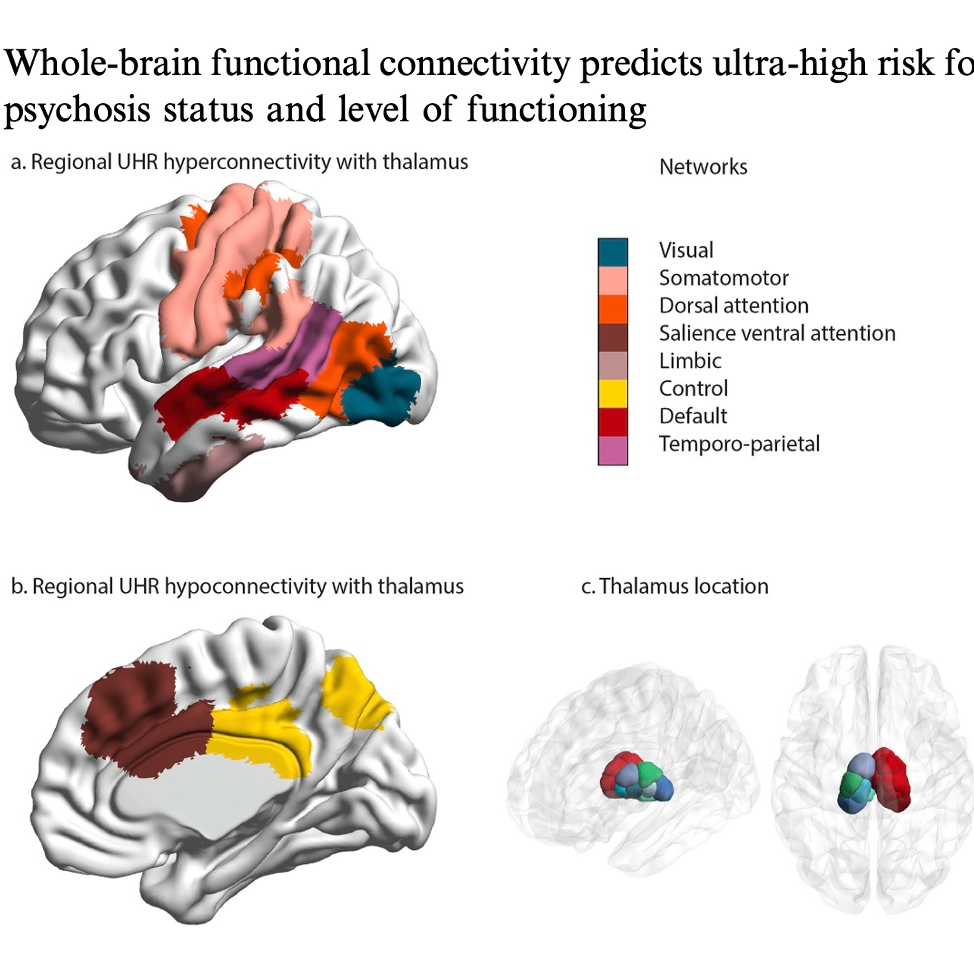
This study investigates how brain connectivity patterns can identify individuals at ultra-high risk (UHR) for psychosis and predict their everyday social and occupational functioning. Researchers utilized resting-state fMRI and machine learning to demonstrate that both increased and decreased connectivity—particularly involving the thalamus as a central hub—accurately distinguish UHR individuals from healthy peers. Notably, the same neural networks that signal a risk for psychosis also correlate with a person’s level of functioning, regardless of whether they eventually develop a full psychotic disorder. The findings suggest that hyper-connectivity in specific circuits may reflect a compensatory effort to maintain performance despite underlying neurological strain. Ultimately, the research establishes functional connectivity as a significant biomarker for the clinical impairments and biological realities associated with the early stages of mental illness.References: Ambrosen K S, Kristensen T D, Glenthøj L B, et al. Whole-brain functional connectivity predicts ultra-high risk for psychosis status and level of functioning[J]. Schizophrenia, 2026.前往小宇宙评论区与主播互动
Embed this episode
Ready to play
602-Whole-Brain Connectivity Predicts Psychosis Risk
No transcript for this episode yet
Similar Episodes
No similar episodes found.
Similar Podcasts
No similar podcasts found.