
EPISODE · Jul 1, 2026 · 21 MIN
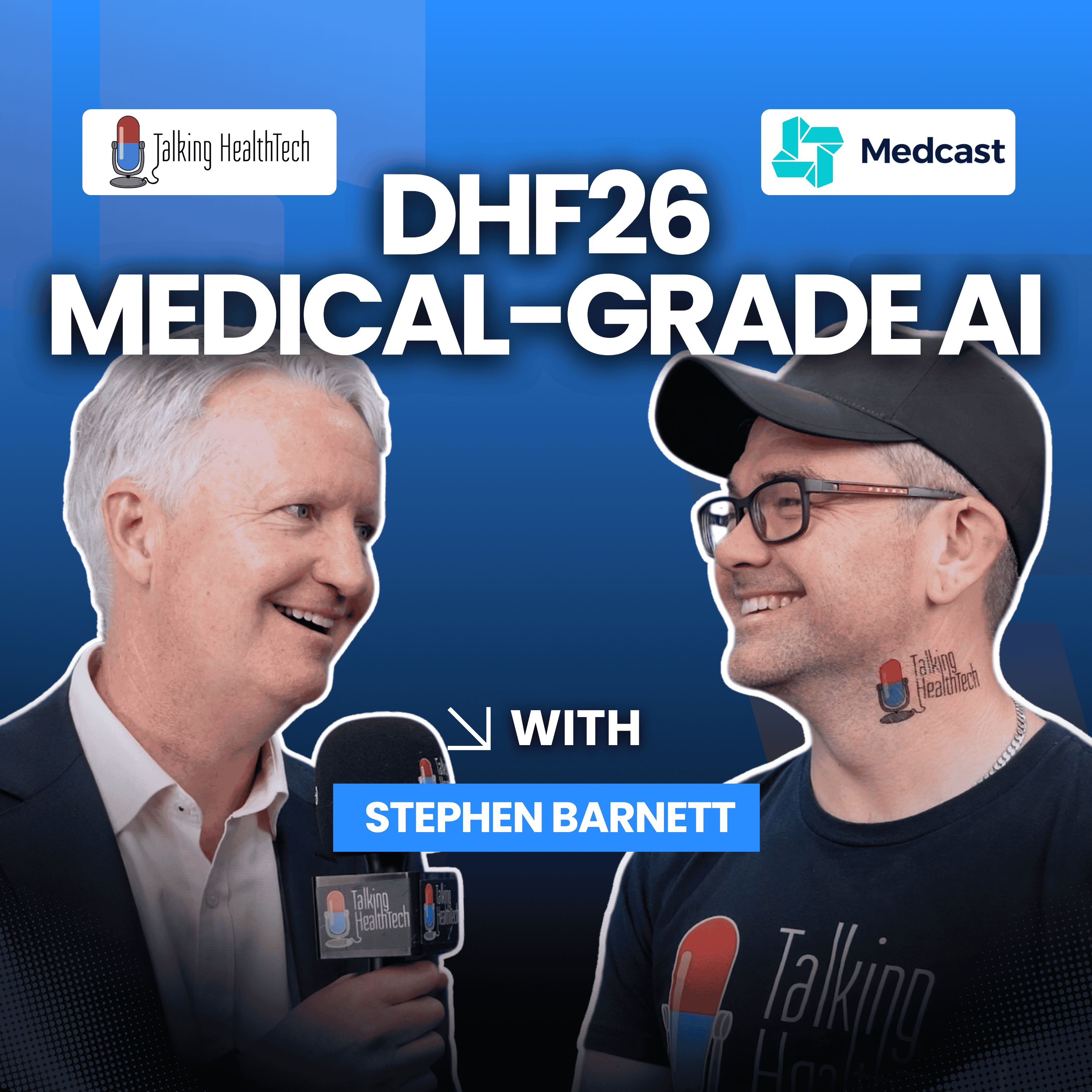
620 - From Know-What to Know-How: Medcast’s Journey with Medical-Grade AI at DHF26
from Talking HealthTech
Find out how Medcast is building trustworthy medical-grade AI in this episode of Talking HealthTech, recorded live at the Digital Health Festival 2026 in Melbourne, Australia's premier gathering for health innovation, technology, and policy.Peter Birch sits down with Dr Stephen Barnett, CEO of Medcast, to explore what it genuinely takes to make AI safe, reliable, and fit for purpose in a clinical setting.With a background spanning general practice, research, and digital health innovation, Barnett brings a grounded and practical perspective to one of the most talked-about topics in healthcare right now.Together, they unpack the concept of knowledge translation, the persistent gap between cutting-edge AI and trustworthy clinical tools, and why large language models alone are not enough.The conversation covers retrieval-augmented generation, the risks of AI hallucinations, the importance of curated and validated data sources, and the orchestration layer that sits between a powerful model and a safe medical answer.They also discuss how clinical workflows are changing, the shift in how doctors use digital tools in front of patients, and the emerging conversation around patient-facing AI.Key Takeaways🧑⚕️ Knowledge translation in healthcare relies on getting the right information to the right person at the right time, impacting both clinician learning and patient outcomes.🤖 Large language models require an orchestration layer and data curation processes to be considered "medical grade" and trustworthy for clinical use.🔎 Retrieval-augmented generation and other governance measures help address hallucinations and bias in AI-powered healthcare solutions, supporting quality, safety, and auditability.💡 Medluma, Medcast's AI platform, addresses compliance, standardisation, and onboarding within healthcare organisations, while empowering clinicians with trusted knowledge access.📱 Patient-clinician trust depends on using validated, professional tools for information sourcing, and future AI integrations may also support patient self-service within set guardrails.Timestamps00:00 - Introduction and guest overview00:44 - Medcast origins and purpose02:54 - Obsession with AI and knowledge translation03:49 - Medical safety in language models06:13 - Techniques for trustworthy AI10:01 - Adapting to rapid AI changes13:32 - Knowledge translation across clinical and non-clinical roles14:49 - Patient trust and professional boundaries18:22 - Medcast and Medluma future roadmapCheck out the episode and full show notes on the Talking HealthTech website.If you’re enjoying the show and want access to exclusive healthtech discussions, meetups, and member-only content, you can learn more about becoming a THT+ Solo Member here: talkinghealth.tech/solo_shownotesAnd if this episode was useful, leaving a review or sharing it with someone in the industry always helps.Mentioned in this episode:Sign Up to the Free Talking Healthtech NewsletterSign up to the free Talking HealthTech newsletter for weekly digital health news, events, jobs, partner updates and Pete’s take on what matters across the sector: talkinghealthtech.com/newsletter
Embed this episode
Ready to play
620 - From Know-What to Know-How: Medcast’s Journey with Medical-Grade AI at DHF26
No transcript for this episode yet
Similar Episodes
No similar episodes found.
Similar Podcasts
No similar podcasts found.