
EPISODE · Mar 15, 2026 · 20 MIN
644-Cerebellar Tumour Origins in Fetal Programs
from Paper Talk
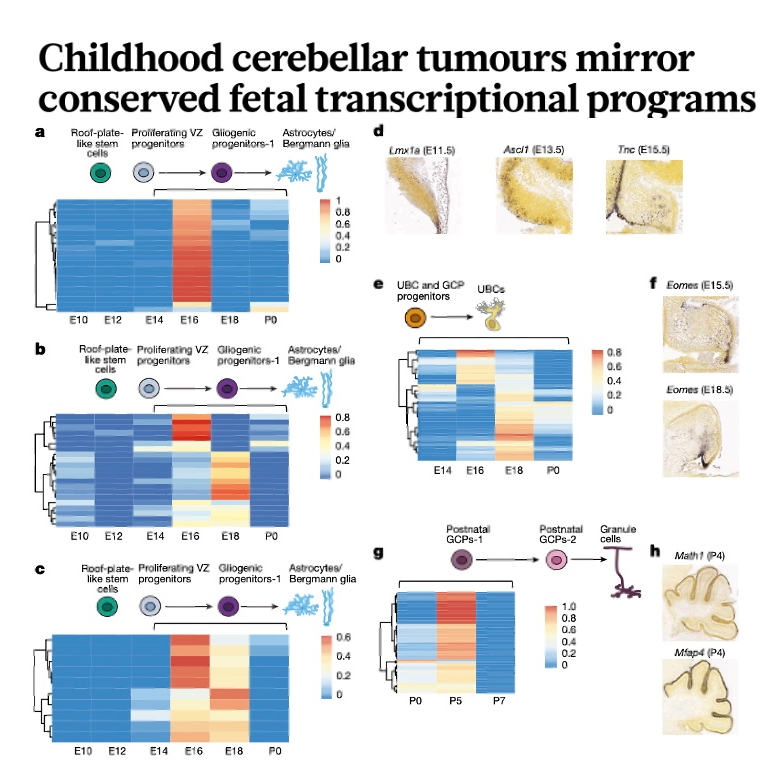
This research utilizes single-cell transcriptomics to map the developmental origins of childhood cerebellar tumors, comparing over 60,000 fetal mouse cells to human patient samples. The study reveals that different tumor subtypes, such as medulloblastoma and ependymoma, transcriptionally mimic specific, time-restricted progenitor cells found in the developing brain. For instance, Sonic Hedgehog medulloblastomas resemble granule cell hierarchies, while Group 4 medulloblastomas align with unipolar brush cell lineages. By identifying these "cellular scaffolds," the authors demonstrate that these cancers are essentially disorders of early brain development. The findings also uncover significant cellular heterogeneity within individual tumors, suggesting they contain mixed populations at varying stages of differentiation. Ultimately, this work provides a biological explanation for why these tumors primarily affect young children and offers a framework for creating more accurate diagnostic tools.References: Vladoiu M C, El-Hamamy I, Donovan L K, et al. Childhood cerebellar tumours mirror conserved fetal transcriptional programs[J]. Nature, 2019, 572(7767): 67-73.前往小宇宙评论区与主播互动
Embed this episode
Ready to play
644-Cerebellar Tumour Origins in Fetal Programs
No transcript for this episode yet
Similar Episodes
No similar episodes found.
Similar Podcasts
No similar podcasts found.