
EPISODE · Mar 17, 2026 · 19 MIN
653-Converging Dopamine Encode Exploration Decisions
from Paper Talk
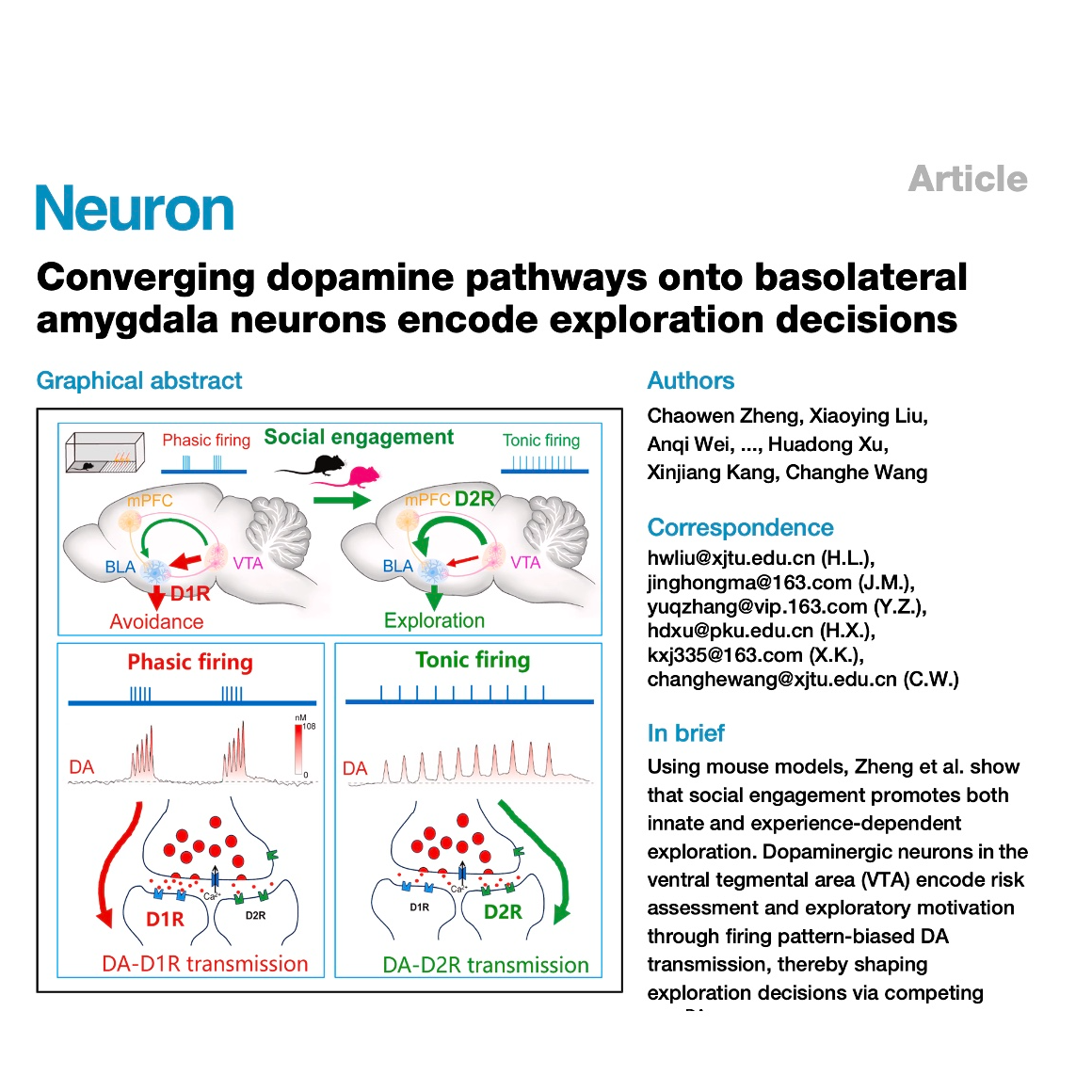
This research identifies the ventral tegmental area (VTA) as the primary neural hub for making exploration decisions in mice, specifically focusing on how social companionship reduces perceived risk. Scientists discovered that dopaminergic neurons use two distinct firing patterns to balance curiosity and caution: tonic firing promotes the motivation to explore, while phasic firing signals high-risk vigilance and avoidance. Through social engagement, the brain shifts from phasic to tonic activity, effectively "desensitizing" the animal to danger and encouraging it to enter previously threatening environments. This process is managed by two competing pathways that converge on the basolateral amygdala (BLA), involving an indirect route through the medial prefrontal cortex (mPFC). Ultimately, the study reveals that the dynamic balance between these dopamine pathways determines whether an individual chooses to investigate a new area or remain in safety.References: Zheng C, Liu X, Wei A, et al. Converging dopamine pathways onto basolateral amygdala neurons encode exploration decisions[J]. Neuron, 2026.前往小宇宙评论区与主播互动
Embed this episode
Ready to play
653-Converging Dopamine Encode Exploration Decisions
No transcript for this episode yet
Similar Episodes
No similar episodes found.
Similar Podcasts
No similar podcasts found.