
EPISODE · Mar 20, 2026 · 22 MIN
668-空间组学揭示肝癌微小残留病灶的免疫逃逸机制
from 聊聊Sci
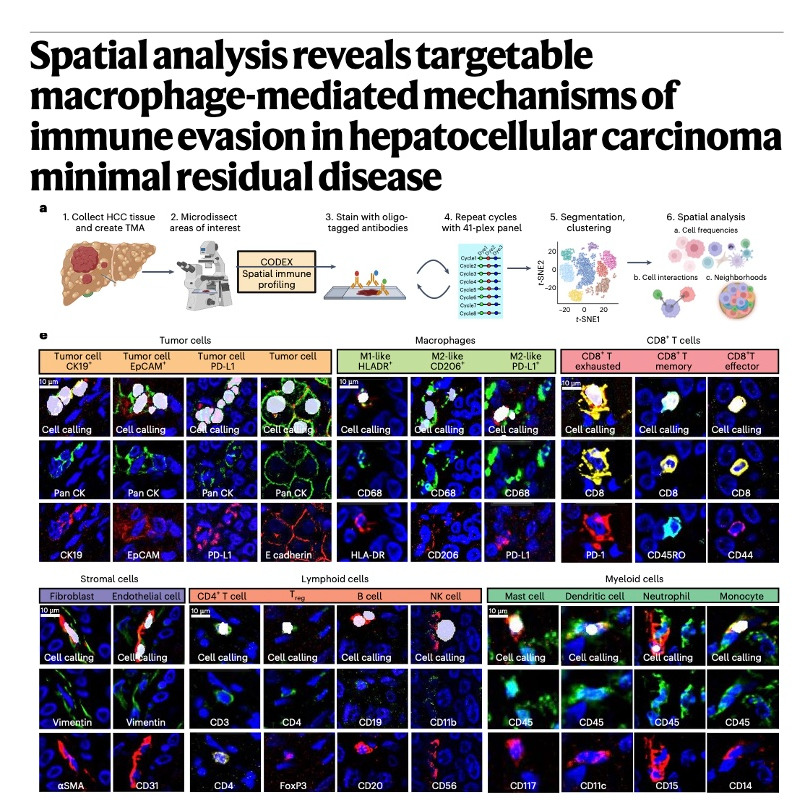
这项研究通过空间蛋白质组学和单细胞成像技术,揭示了肝细胞癌(HCC)在治疗后产生微小残留病灶(MRD)并导致复发的免疫逃逸机制。研究人员发现,残留肿瘤组织中富集了PD-L1+ M2型巨噬细胞,这些细胞通过TGFβ1通路与干细胞样癌细胞发生空间相互作用,从而诱导CD8+ T细胞耗竭。通过人类样本分析与多种小鼠模型验证,研究证实这种特定的空间微环境是肿瘤持久存在的关键。实验结果表明,联合阻断PD-L1和TGFβ可以有效清除残留的癌细胞,并重新激活机体免疫监视。该发现为预防肝癌复发提供了新的联合免疫治疗策略,强调了针对肿瘤空间结构进行精准干预的重要性。References: Lemaitre L, Adeniji N, Suresh A, et al. Spatial analysis reveals targetable macrophage-mediated mechanisms of immune evasion in hepatocellular carcinoma minimal residual disease[J]. Nature cancer, 2024, 5(10): 1534-1556.前往小宇宙评论区与主播互动
Embed this episode
Ready to play
668-空间组学揭示肝癌微小残留病灶的免疫逃逸机制
No transcript for this episode yet
Similar Episodes
No similar episodes found.