
EPISODE · Mar 20, 2026 · 25 MIN
668-Spatial Stem-Like Evasion in Residual Liver Cancer
from Paper Talk
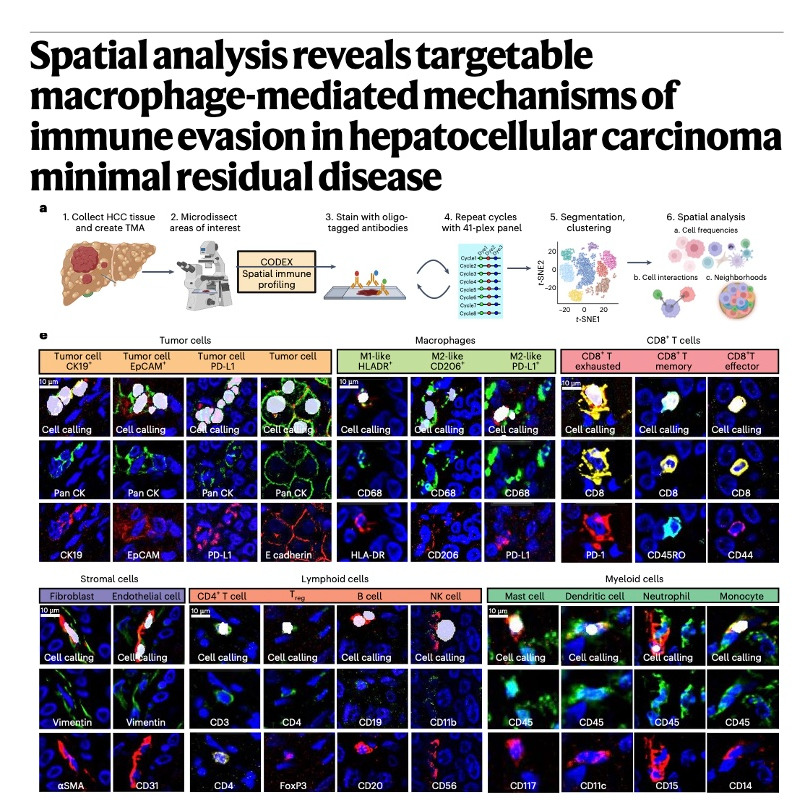
This research investigates how hepatocellular carcinoma (HCC) persists as minimal residual disease following treatment and eventually causes cancer recurrence. By utilizing spatial analysis and high-resolution imaging on human samples and mouse models, the authors identified a specific neighborhood of cells where immunosuppressive macrophages interact with stem-like tumor cells. These interactions are driven by the TGFβ pathway, which allows cancer cells to evade the immune system and leads to the exhaustion of protective CD8+ T cells. The study demonstrates that dual-targeting of the PD-L1 and TGFβ pathways can successfully eliminate these residual cells in mice. Ultimately, these findings suggest a new therapeutic strategy to prevent liver cancer from returning by disrupting the local environment that sustains dormant tumor cells.References: Lemaitre L, Adeniji N, Suresh A, et al. Spatial analysis reveals targetable macrophage-mediated mechanisms of immune evasion in hepatocellular carcinoma minimal residual disease[J]. Nature cancer, 2024, 5(10): 1534-1556.前往小宇宙评论区与主播互动
Embed this episode
Ready to play
668-Spatial Stem-Like Evasion in Residual Liver Cancer
No transcript for this episode yet
Similar Episodes
No similar episodes found.
Similar Podcasts
No similar podcasts found.