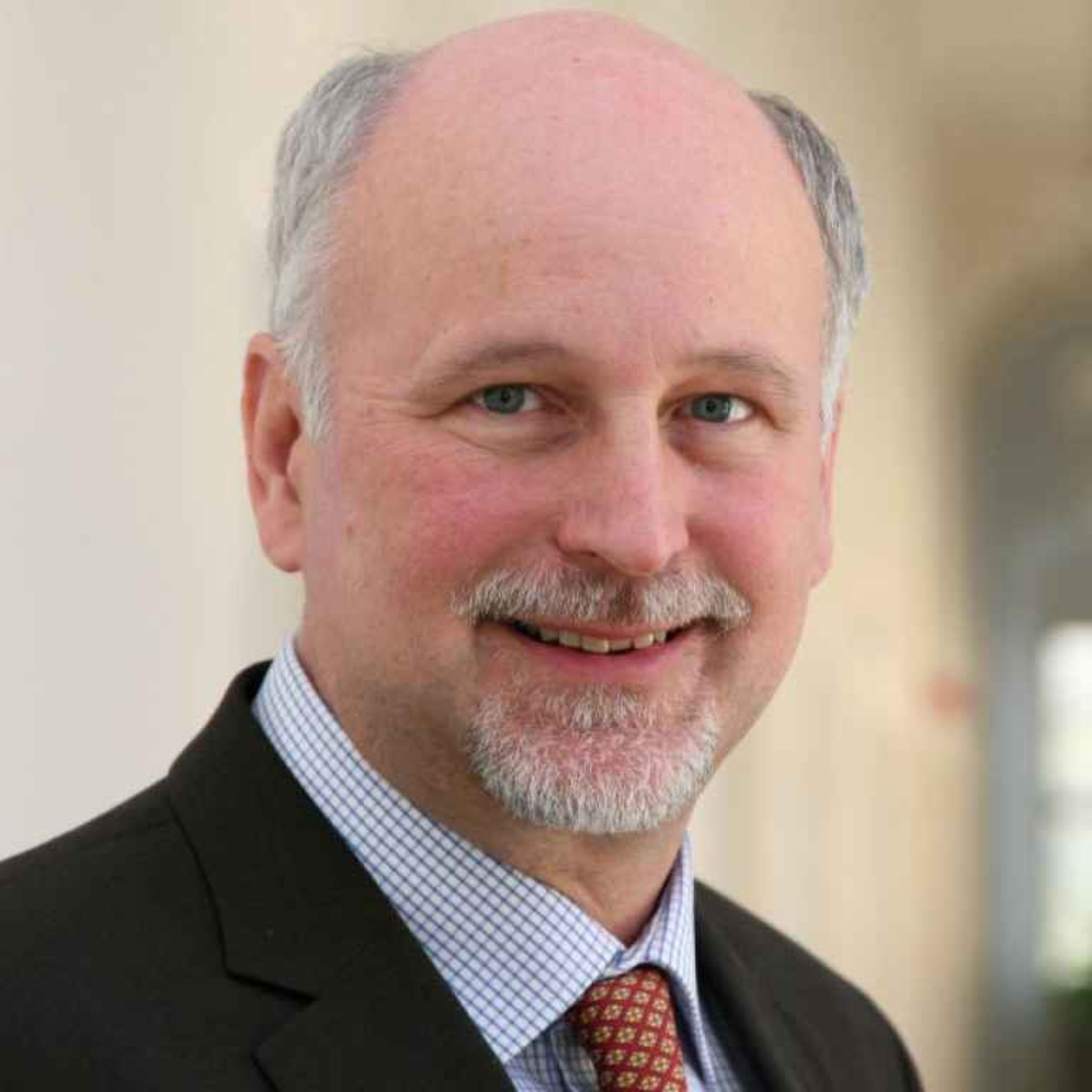
680: Wolfgang Lutz: A Primer in Demographics and Global Population Projections episode artwork

EPISODE · Apr 1, 2023 · 53 MIN

680: Wolfgang Lutz: A Primer in Demographics and Global Population Projections

from This Sustainable Life

Wolfgang Lutz is one of the world's experts in projecting global population levels and demography. I contacted him to help understand the differences between projections based on demography like his and the United Nations' versus systemic ones like in Limits to Growth.He gave a comprehensive overview of who projects and how, at least as much as can be covered in under an hour. Some highlights:Who projects based on demography: the UN, International Institute for Applied Systems Analysis (IIASA), and the Wittgenstein Center, among others.He described what and how demographers project: Assumptions, methods, variables of age, sex, education, migration, fertility rate, mortality rate. He consistently repeated the importance of education.On Limits to Growth, he pointed out that systems analyses include feedback mechanisms, but their demographics tend to be less sophisticated, for example lacking age structure or effects of education. Demographers don't take them seriously because of their oversimplification.I asked how demographers include feedback. He described a few ways, including asking experts and translate their responses into different scenarios. What about big events like fish or aquifers depleting? He pointed out extreme events are hard to predict, though humanity's historical resilience suggests we'll figure out ways to level their effects. Demographers also include probabilistic models for tipping points, disease, and such, and report levels of variance.The results of his research and projections: Human population peaking somewhere around 2080 at around 10 billion then declining. It may reach about 3 to 4 billion by 2200, which could be long-term sustainable, though the transition is uncertain. Humanity could reach a healthy, wealthy, more equal, more resilient, and well educated future, but not given.Potential problems: heat waves, drought, floods, sea level rise. Humans can solve to some degree, but we have to prepare.What to focus on: since population changes slowly, behavior, technology, and migration first, then education especially of women in the long term since its effects happen more slowly. Also family planning, women's health, contraception, and sexual equality.We covered a lot, though scratched the surface, gives understandable overview of demographics and global population projections.I put greater weight on difficult-to-predict extreme uncertain events. At least I'd make the uncertainty go down more than the symmetry I see, but our conversation was about learning and understanding, not debate. I've learned a lot each time I've listened to this episode. It's dense with information, but on an important subject.Wolfgang's page at the International Institute for Applied Systems AnalysisTwo of his major papers explaining how he models global population growthThe end of world population growth, Nature, 2001Dimensions of global population projections: what do we know about future population trends and structures?, Philosophical Transactions of the Royal Society B: Biological Sciences, 2010Executive summary of his book World Population and Human Capital in the Twenty-First Century Hosted on Acast. See acast.com/privacy for more information.

Wolfgang Lutz is one of the world's experts in projecting global population levels and demography. I contacted him to help understand the differences between projections based on demography like his and the United Nations' versus systemic ones like in Limits to Growth.He gave a comprehensive overview of who projects and how, at least as much as can be covered in under an hour. Some highlights:Who projects based on demography: the UN, International Institute for Applied Systems Analysis (IIASA), and the Wittgenstein Center, among others.He described what and how demographers project: Assumptions, methods, variables of age, sex, education, migration, fertility rate, mortality rate. He consistently repeated the importance of education.On Limits to Growth, he pointed out that systems analyses include feedback mechanisms, but their demographics tend to be less sophisticated, for example lacking age structure or effects of education. Demographers don't take them seriously because of their oversimplification.I asked how demographers include feedback. He described a few ways, including asking experts and translate their responses into different scenarios. What about big events like fish or aquifers depleting? He pointed out extreme events are hard to predict, though humanity's historical resilience suggests we'll figure out ways to level their effects. Demographers also include probabilistic models for tipping points, disease, and such, and report levels of variance.The results of his research and projections: Human population peaking somewhere around 2080 at around 10 billion then declining. It may reach about 3 to 4 billion by 2200, which could be long-term sustainable, though the transition is uncertain. Humanity could reach a healthy, wealthy, more equal, more resilient, and well educated future, but not given.Potential problems: heat waves, drought, floods, sea level rise. Humans can solve to some degree, but we have to prepare.What to focus on: since population changes slowly, behavior, technology, and migration first, then education especially of women in the long term since its effects happen more slowly. Also family planning, women's health, contraception, and sexual equality.We covered a lot, though scratched the surface, gives understandable overview of demographics and global population projections.I put greater weight on difficult-to-predict extreme uncertain events. At least I'd make the uncertainty go down more than the symmetry I see, but our conversation was about learning and understanding, not debate. I've learned a lot each time I've listened to this episode. It's dense with information, but on an important subject.Wolfgang's page at the International Institute for Applied Systems AnalysisTwo of his major papers explaining how he models global population growthThe end of world population growth, Nature, 2001Dimensions of global population projections: what do we know about future population trends and structures?, Philosophical Transactions of the Royal Society B: Biological Sciences, 2010Executive summary of his book World Population and Human Capital in the Twenty-First Century Hosted on Acast. See acast.com/privacy for more information.

NOW PLAYING

680: Wolfgang Lutz: A Primer in Demographics and Global Population Projections

0:00 53:31

No transcript for this episode yet

We transcribe on demand. Request one and we'll notify you when it's ready — usually under 10 minutes.

Big Old Life: Heather Blackbird interviews people on planet earth. Heather Blackbird loves asking questions. This podcast is a learning experience. Join me, Heather Blackbird, as I talk to people about their lives. Frequency of new episodes is a little all over the place and I'm learning as I go. Big Old Life is a small way of talking about the vastness of life, one person at a time. If you are reading this or found this podcast it's probably because someone you know gave you a link to it. :) Explicit Tales Of A Superstar DJ The Insomniac Spun seemingly out of nowhere from her complacent life in the corporate world, turned seemingly overnight from 16-Hour shift work and into the life of a literally starving artist and working musician, The Protagonist navigates her supposed rise to fame and superstardom on a journey through spiritual awakening, coming-of-age, and intimate self-realization--guided by an omnipresent force and equipped with the power of love, magic, and music. {Enter The Multiverse.} [The Festival Project] The Festival Project, Inc.™ is a multidimensional multimedia platform which encompasses exploratory and artistic social personifications and expressions on cosmic theory, spirituality, growth, health & wellness, philosophy and theoretic dynamics in entertainment such as music, design, film, television, radio, dance and festival culture, art, fashion, literature, and science. The Festival Project™ and its subsidiary Non-Profit, The Collective Complex © aims to challenge modern artistic and philosop Explicit The Sacred +Profane Podcast nephtaragrace The Sacred + Profane Podcast is a provocative conversation dedicated to cementing a better future for all. We specialize in unpacking the nuances of what is considered sacred and profane, particularly focusing on sex, death, and all that pertains to the circle of life. Our aim in focusing on such ”taboo” subject matter is to demystify what is unconscious, bring to light what has been known for centuries as ”the occult,” and empower the rapid transformation that is occurring on the Planet. Explicit Northern Sass and Southern Class Tay and Ani Come sit in on girl talk with Tay and Ani as we discuss life in Texas, girl math, food, wine and roasting each other. Explicit

Frequently Asked Questions

How long is this episode of This Sustainable Life?

This episode is 53 minutes long.

When was this This Sustainable Life episode published?

This episode was published on April 1, 2023.

What is this episode about?

Wolfgang Lutz is one of the world's experts in projecting global population levels and demography. I contacted him to help understand the differences between projections based on demography like his and the United Nations' versus systemic ones like...

Can I download this This Sustainable Life episode?

Yes, you can download this episode by clicking the download button on the episode player, or subscribe to the podcast in your preferred podcast app for automatic downloads.
URL copied to clipboard!