
EPISODE · Mar 23, 2026 · 19 MIN
682-SMARCA5 Control: Decoupling Pancreatic Malignancy
from Paper Talk
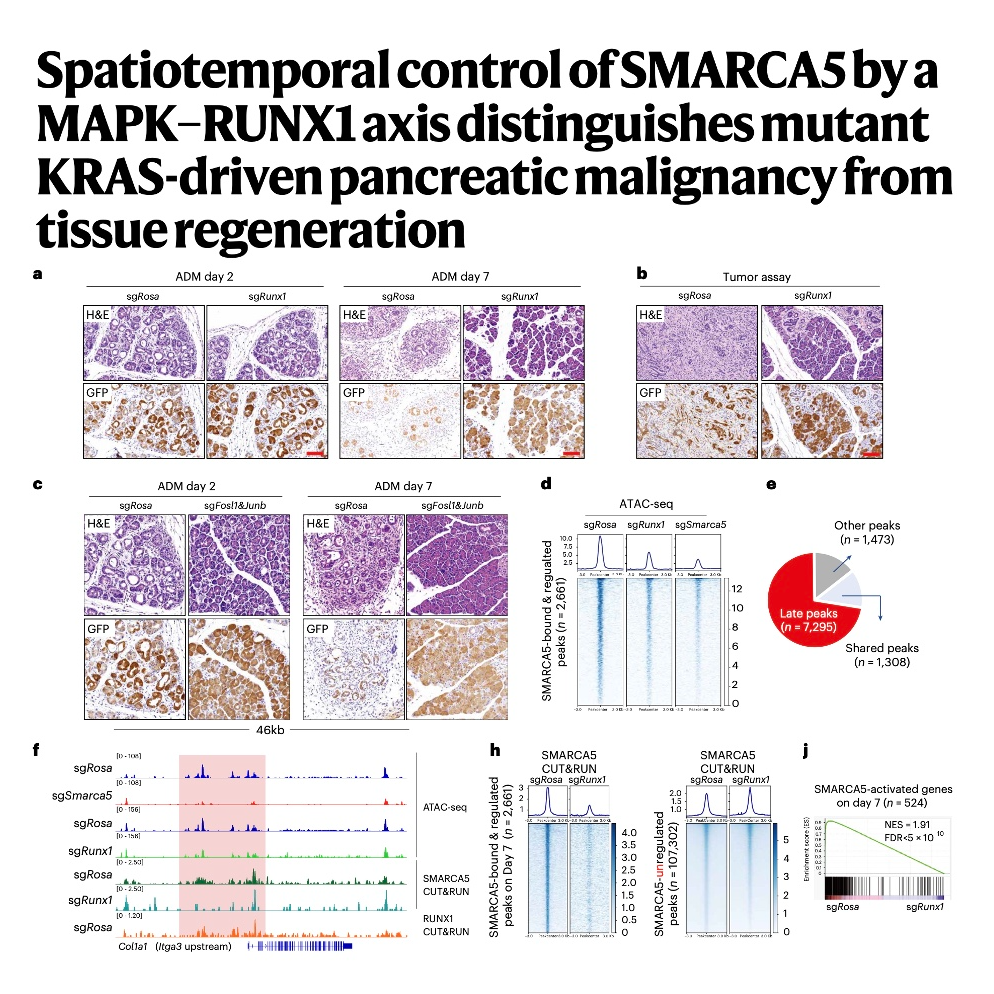
This research identifies the chromatin remodeler SMARCA5 as a critical molecular switch that distinguishes cancerous growth from natural tissue repair in the pancreas. While traditional treatments often cause collateral damage by inhibiting factors necessary for both regeneration and disease, scientists found that SMARCA5 specifically maintains the accessibility of DNA regions required for malignancy. In the presence of mutant KRAS, the transcription factor RUNX1 recruits SMARCA5 to "lock in" a neoplastic state, effectively preventing acinar cells from returning to their healthy form after injury. By disrupting the SMARCA5-containing NoRC complex, researchers were able to suppress pancreatic ductal adenocarcinoma (PDAC) without hindering the organ's ability to regenerate. This discovery highlights a spatiotemporal mechanism that can be targeted to treat lethal tumors while preserving essential physiological healing processes.References: Han J, Lu X, Guo M, et al. Spatiotemporal control of SMARCA5 by a MAPK–RUNX1 axis distinguishes mutant KRAS-driven pancreatic malignancy from tissue regeneration[J]. Nature Cancer, 2026, 7(1): 43-59.前往小宇宙评论区与主播互动
Embed this episode
Ready to play
682-SMARCA5 Control: Decoupling Pancreatic Malignancy
No transcript for this episode yet
Similar Episodes
No similar episodes found.
Similar Podcasts
No similar podcasts found.