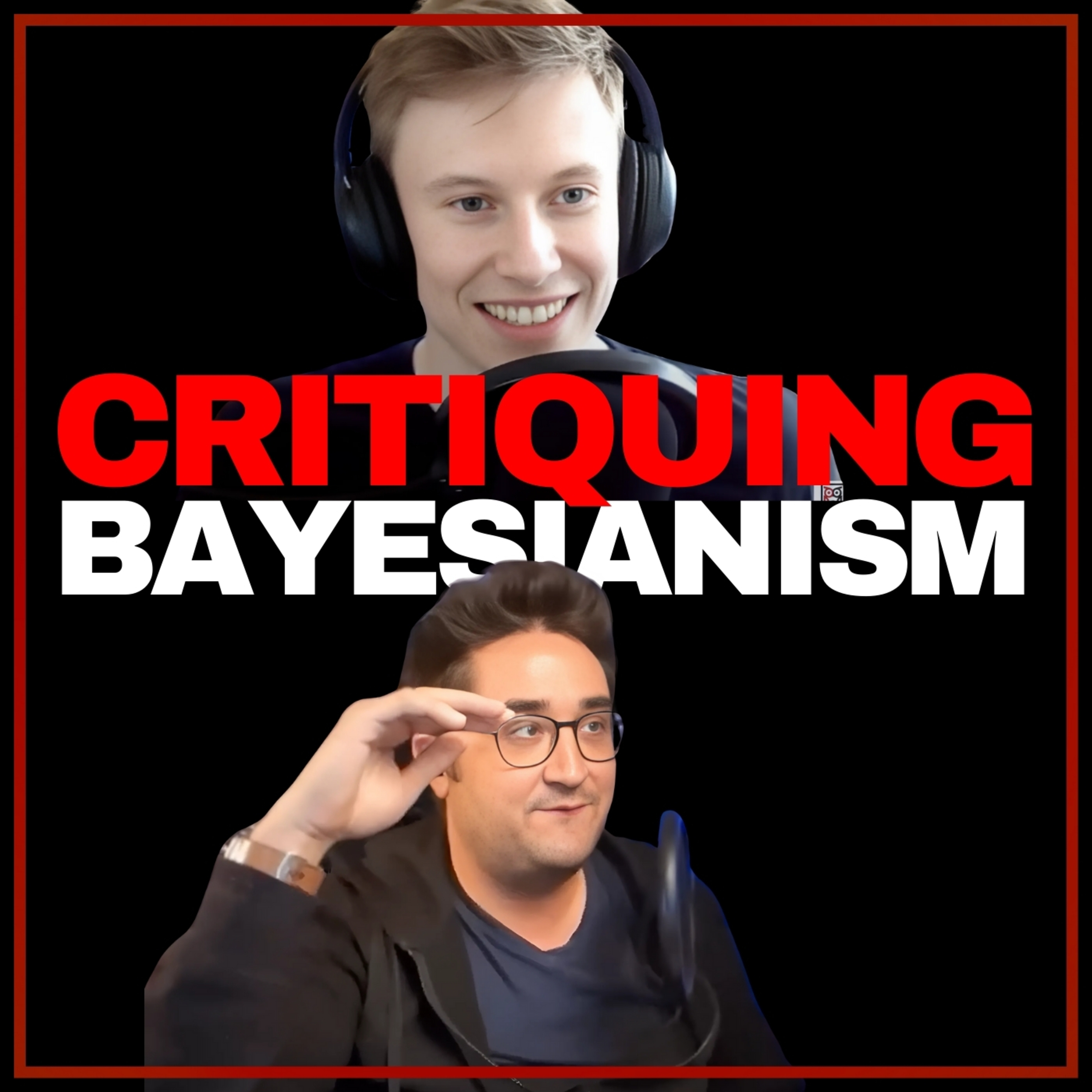
#69 - Contra Scott Alexander on Probability episode artwork

EPISODE · Jun 20, 2024 · 1H 45M

#69 - Contra Scott Alexander on Probability

from Increments · host Ben Chugg and Vaden Masrani

After four episodes spent fawning over Scott Alexander's "Non-libertarian FAQ", we turn around and attack the good man instead. In this episode we respond to Scott's piece "In Continued Defense of Non-Frequentist Probabilities", and respond to each of his five arguments defending Bayesian probability. Like moths to a flame, we apparently cannot let the probability subject slide, sorry people. But the good news is that before getting there, you get to here about some therapists and pedophiles (therapeutic pedophelia?). What's the probability that Scott changes his mind based on this episode? We discuss Why we're not defending frequentism as a philosophy The Bayesian interpretation of probability The importance of being explicit about assumptions Why it's insane to think that 50% should mean both "equally likely" and "I have no effing idea". Why Scott's interpretation of probability is crippling our ability to communicate How super are Superforecasters? Marginal versus conditional guarantees (this is exactly as boring as it sounds) How to pronounce Samotsvety and are they Italian or Eastern European or what? References In Continued Defense Of Non-Frequentist Probabilities Article on superforecasting by Gavin Leech and Misha Yugadin Essay by Michael Story on superforecasting Existential risk tournament: Superforecasters vs AI doomers and Ben's blogpost about it The Good Judgment Project Quotes During the pandemic, Dominic Cummings said some of the most useful stuff that he received and circulated in the British government was not forecasting. It was qualitative information explaining the general model of what’s going on, which enabled decision-makers to think more clearly about their options for action and the likely consequences. If you’re worried about a new disease outbreak, you don’t just want a percentage probability estimate about future case numbers, you want an explanation of how the virus is likely to spread, what you can do about it, how you can prevent it. - Michael Story Is it bad that one term can mean both perfect information (as in 1) and total lack of information (as in 3)? No. This is no different from how we discuss things when we’re not using probability. Do vaccines cause autism? No. Does drinking monkey blood cause autism? Also no. My evidence on the vaccines question is dozens of excellent studies, conducted so effectively that we’re as sure about this as we are about anything in biology. My evidence on the monkey blood question is that nobody’s ever proposed this and it would be weird if it were true. Still, it’s perfectly fine to say the single-word answer “no” to both of them to describe where I currently stand. If someone wants to know how much evidence/certainty is behind my “no”, they can ask, and I’ll tell them. - SA, Section 2 Socials Follow us on Twitter at @IncrementsPod, @BennyChugg, @VadenMasrani Come join our discord server! DM us on twitter or send us an email to get a supersecret link Help us calibrate our credences and get exclusive bonus content by becoming a patreon subscriber here. Or give us one-time cash donations to help cover our lack of cash donations here. Click dem like buttons on youtube What's your credence in Bayesianism? Tell us over at [email protected].

After four episodes spent fawning over Scott Alexander's "Non-libertarian FAQ", we turn around and attack the good man instead. In this episode we respond to Scott's piece "In Continued Defense of Non-Frequentist Probabilities", and respond to each of his five arguments defending Bayesian probability. Like moths to a flame, we apparently cannot let the probability subject slide, sorry people. But the good news is that before getting there, you get to here about some therapists and pedophiles (therapeutic pedophelia?). What's the probability that Scott changes his mind based on this episode? We discuss Why we're not defending frequentism as a philosophy The Bayesian interpretation of probability The importance of being explicit about assumptions Why it's insane to think that 50% should mean both "equally likely" and "I have no effing idea". Why Scott's interpretation of probability is crippling our ability to communicate How super are Superforecasters? Marginal versus conditional guarantees (this is exactly as boring as it sounds) How to pronounce Samotsvety and are they Italian or Eastern European or what? References In Continued Defense Of Non-Frequentist Probabilities Article on superforecasting by Gavin Leech and Misha Yugadin Essay by Michael Story on superforecasting Existential risk tournament: Superforecasters vs AI doomers and Ben's blogpost about it The Good Judgment Project Quotes During the pandemic, Dominic Cummings said some of the most useful stuff that he received and circulated in the British government was not forecasting. It was qualitative information explaining the general model of what’s going on, which enabled decision-makers to think more clearly about their options for action and the likely consequences. If you’re worried about a new disease outbreak, you don’t just want a percentage probability estimate about future case numbers, you want an explanation of how the virus is likely to spread, what you can do about it, how you can prevent it. - Michael Story Is it bad that one term can mean both perfect information (as in 1) and total lack of information (as in 3)? No. This is no different from how we discuss things when we’re not using probability. Do vaccines cause autism? No. Does drinking monkey blood cause autism? Also no. My evidence on the vaccines question is dozens of excellent studies, conducted so effectively that we’re as sure about this as we are about anything in biology. My evidence on the monkey blood question is that nobody’s ever proposed this and it would be weird if it were true. Still, it’s perfectly fine to say the single-word answer “no” to both of them to describe where I currently stand. If someone wants to know how much evidence/certainty is behind my “no”, they can ask, and I’ll tell them. - SA, Section 2 Socials Follow us on Twitter at @IncrementsPod, @BennyChugg, @VadenMasrani Come join our discord server! DM us on twitter or send us an email to get a supersecret link Help us calibrate our credences and get exclusive bonus content by becoming a patreon subscriber here. Or give us one-time cash donations to help cover our lack of cash donations here. Click dem like buttons on youtube What's your credence in Bayesianism? Tell us over at [email protected]. Support Increments

NOW PLAYING

#69 - Contra Scott Alexander on Probability

0:00 1:45:09

No transcript for this episode yet

We transcribe on demand. Request one and we'll notify you when it's ready — usually under 10 minutes.

Bible Read Me Charles Van Deursen Most people may have never read the Holy Bible from cover to cover for several good reasons. A couple of hinderances might be that the texts reflect an ancient culture and that much of it is not in chronological order. Here you will enjoy listening to a summary of daily portions of Scripture grouped in one week increments, chosen in the order that they occurred in history. By this time next year you will have gained a better understanding of the big picture of the Bible narrative as well as intriguing details that will help you to connect the events of ancient days with the life that you are now living. Just as wise King Solomon wrote, "There is nothing new under the sun," but many times it can be difficult to find the time to dig out and apply these nuggets of golden truth to your daily life.Charles Van Deursen presents the Scripture summaries in a literal, grammatical-historical context while using the language in the way that Christian Women’s Weight Loss | Faith, Food, Fitness Ondrea Lynn - Certified Personal Trainer and Nutrition Coach for Christian Women Are you tired of fighting the scale 24/7? Are you sick of fad diets that only get you temporary results? Do you wish you had an easy plan to follow so you don’t have to stress out about how to lose weight? Are you looking for a simple foundational weight loss framework that can fit into your busy day so it becomes a lifestyle? Do you wish you could workout in 15-minute increments instead of hours at the gym? Do you wish you have an exercise plan that gets you results while working out at home? Are you looking for ways to naturally speed up your metabolism? Do you want your pizza and spinach too? Are you ready to break free from binge eating, over eating, and sugar addiction? Are you ready to be free from past trauma and hurts that drive you to sabotage? Do you desire a stronger relationship with Jesus, even on your weight loss journey but unsure how that looks? Hey, I’m Ondrea Lynn and I’m so excited that you are here with me on Christian Women Weight Loss! I remember what Increments with Alishah Novin Alishah Novin Increments is a show for technologists about leveraging the in-between moments. Those moments you come up for air, and take a beat.They say music is about the space between the notes, and just like music - growth happens in those moments between projects. Increments won't always give you answers, but will create the space for you to find them Siblinghood of Recovery Angie Reno When I found out my son was deep in the throes of Substance Use Disorder (SUD), chaos became the norm. As each step became more challenging, the information on SUDs, treatment, healing, and basically everything that comes with an SUD Family crisis, became overwhelming. Inundated with so much information, I felt like I had crossed space and time and landed in a new world. I actually had: I had entered the world of Recovery. My goal through this Podcast is to condense what I learned into small increments, and provide anyone willing to listen a message of hope. The world of Recovery is filled with parents, children, and family members who walk together. We share what we learn, listen with heart, and provide a community of support. We are a Siblinghood of Recovery.

Frequently Asked Questions

How long is this episode of Increments?

This episode is 1 hour and 45 minutes long.

When was this Increments episode published?

This episode was published on June 20, 2024.

What is this episode about?

After four episodes spent fawning over Scott Alexander's "Non-libertarian FAQ", we turn around and attack the good man instead. In this episode we respond to Scott's piece "In Continued Defense of Non-Frequentist Probabilities", and respond to each...

Can I download this Increments episode?

Yes, you can download this episode by clicking the download button on the episode player, or subscribe to the podcast in your preferred podcast app for automatic downloads.
URL copied to clipboard!