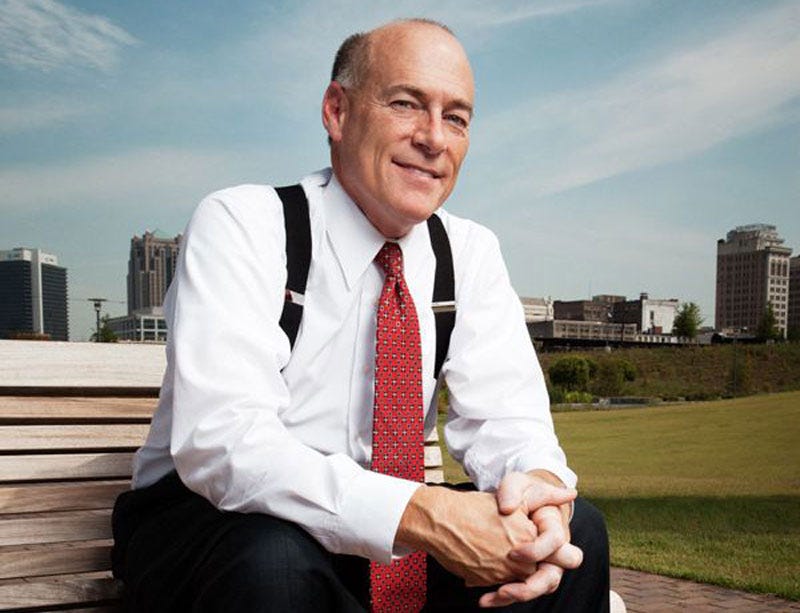
#69 — James Spann (ABC 33/40)
from Inside The Newsroom Hosted by Inside The Newsroom
Hello! And welcome to another episode of Inside The Newsroom. It’s April, which means we’re officially inside the 2020 U.S. tornado season, so today we have WEATHER ROYALTY on the podcast. James Spann is chief meteorologist at ABC 33/40 in Birmingham, Alabama, and an absolute God within the severe weather community. I visited James in-person a couple of years ago to talk about his more than 40 years as a broadcast meteorologist, as well as his troubled upbringing growing up without his father. James recently published his autobiography which can be found on all the usual websites. This time around James and I spoke about what the 2020 tornado season may have in store for us, and what tornado preparation his and other states are doing amid the coronavirus. Below is a rundown of everything we talked about and more, but first a quick shoutout to friend of the show (and former guest) Andrea Jones-Rooy who is the funniest data scientist alive today. Right, let’s get to it! ✊ Picks of the Week * Donate To Journalists — Seattle Times journalist Paige Cornwell has set up a Go Fund Me page to help laid off and furloughed journalists. I donated $20 yesterday. Not much, but it all helps. * Brian Kemp — While the entire world knew we can carry symptoms of the coronavirus without showing them, Georgia’s Governor announced this week that he didn’t know such a thing, which will directly cost lives in his state. * U.S. Unemployment — The second major rise in unemployment claims was announced yesterday, something we’ll be addressing next week. James 👇 Will You Like Me? Before you read on, please like this edition of Inside The Newsroom by clicking the ❤️ up top. That way I’ll appear in clever algorithms and more people will be able to read. Cheers. 2020 Tornado Season Forecast We’re “officially” inside the U.S. tornado season, which typically runs from the start of April to the end of June. I say “officially” because tornadoes can and do strike in any month of the year and in every single U.S. state. Last year was above average with a reported 1,676 tornadoes compared with an average of 1,306 per year since 2000. And 2020 could be another above average year, according to experts from AccuWeather: “AccuWeather forecasts a normal to slightly above-normal number of tornadoes in 2020 with a range of 1,350 to 1,450. That range is close to what occurred in 2019 and 5 to 15 percent more than the U.S. annual average.” Already there have been 180 tornado reports so far this year, including unusually high reports in January and February, and a modest amount in March. But April is where things typically kick off, as warm moist air from the Gulf of Mexico rises west across the U.S. until it meets the cold dry air from the Rockies, typically somewhere in Tornado Alley — Iowa, Kansas, Nebraska, Oklahoma and Texas — or Dixie Alley — Louisiana, Arkansas, Tennessee, Mississippi, Alabama and Georgia. The deadliest tornado outbreak so far this year was on March 3 and produced two separate EF3 (winds up to 165mph) and EF4 (up to 200 mph) tornadoes, according to the Enhanced Fujita Scale, including one that ripped through downtown Nashville. Twenty-four people have been confirmed dead and three people are still missing. Good chance to point out that tornadoes CAN AND DO hit large cities. Don’t believe otherwise. Long-Term Tornado Trends Like with any weather phenomena, we can’t definitively say whether tornadoes are becoming more frequent or powerful based on a single event. Nor can we absolutely say whether the number of tornadoes is increasing from just a handful of years of data. Instead, we can accurately say that climate change has and will continue to make the chances of tornadoes more likely, especially those super duper EF4 and EF5 twisters that can flatten entire towns and cities. But even then, there are so many moving parts — better radar technology, more tornado spotters, more populated cities — that the data is never going to be 100 percent the same comparing one year to another. That said, there are a couple of critical long-term trends that I’ve written about before. First up is the Expanding Bulls-Eye Effect affecting every city in every state. It’s effectively the urban sprawl problem: As more people flock to cities in tornado prone areas, the larger the target for tornadoes to strike. The likes of Oklahoma City (more on that later), Dallas and Atlanta are all among the most vulnerable cities of a large-scale disaster. Credit: Stephen M. Strader and Walker S. Ashley And the effects are already being felt. In Forney, a suburb 20 miles east of Dallas, the population has grown 390 percent to more than 20,000 people in the past 30 years. On this very day eight years ago, 17 tornadoes touched down in North Texas including one that completely destroyed Crosby Elementary School in Forney. Had it happened just a decade before, the tornado would have hit an open field. Credit: Yours Truly Less simple is the rise in tornadoes being reported in the southeastern states. In recent decades, the percentage of total twisters in the U.S. to touch down in Dixie Alley has dramatically increased, and when it comes to number of lives lost, Dixie Alley is now the deadliest tornado region in the entire world. That’s due to a combination of more populous cities than Tornado Alley (see above), but also the detached attitudes of people in the south. I was talking to a friend who studied in Atlanta just before the 2008 tornado that ripped up downtown and he had no idea tornadoes even hit Georgia, let alone in the very city he was living. Unfortunately that’s still the case in many southeastern cities, though the more tornadoes that do hit, the more people will have no other choice than to pay attention. Credit: Yours Truly In terms of the annual number of tornadoes increasing, that also has many nuances. Like we spoke about above, climate change is and will have a real impact on the size and frequency of tornadoes. But radar technology has also dramatically increased since the mid-1990s, and the popularity of the movie Twister unleashed storm chasing as a cult, which means more tornadoes are being spotted and reported than ever before. States’ Tornado Preparedness States in Tornado and Dixie Alley will need to make impossible decisions in the coming days, if they haven’t already done so. The dilemma of prioritising safety from tornadoes or coronavirus isolation will likely mean new confirmed cases, as some states have opened community tornado shelters. But a tornado rolling through town is the more immediate threat. Alternatively, some states face leaving some residents without the extremely expensive personal tornado shelter high and dry. In James’ state, the Alabama Public Health Department released a statement saying that tornadoes took first priority, but “educated decisions” should be made to avoid contracting the coronavirus. In Missouri, which too sees it’s fair share of tornadoes, Springfield-Greene County also urged people to take personal safety in community shelters if needed. But in Oklahoma, it’ll be left up to local jurisdictions to decide whether to open public shelters or uphold recommendations against gatherings of more than 10 people. Without sounding like a local TV meteorologist myself, each state will differ in its policy so please check your local listings for more information. How the OKC Weather War Advanced Warning Systems Like journalists, meteorologists struggle to get their message through to readers and viewers because of all the noise in today’s media world. Social media has both helped and harmed James’ work, as he’s now able to connect directly with people in his market and constantly pump out warnings and other information. But the distrust in, well, everything right now means some people don’t believe warnings until it’s too late. I’ve been in tornado warnings in three states and every time I was glued to the TV screen. Heck, I even tune in sometimes from the UK for fun. Still, if you’re … This is a public episode. If you'd like to discuss this with other subscribers or get access to bonus episodes, visit insidethenewsroom.substack.com/subscribe
Embed this episode
No transcript yet.