
EPISODE · Mar 25, 2026 · 22 MIN
694-Cellular Basis for Mammalian Nocturnal-Diurnal Switch
from Paper Talk
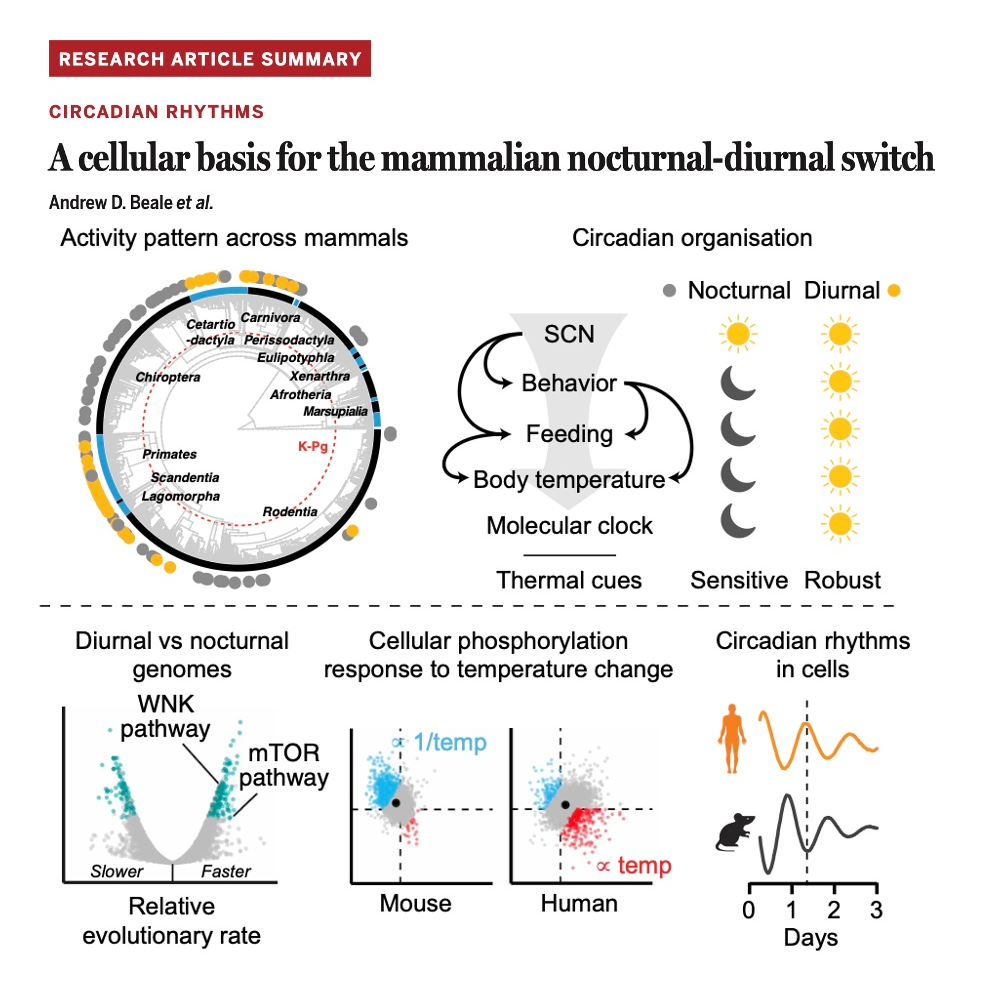
This research identifies a cell-intrinsic, thermodynamic mechanism that governs the biological switch between nocturnal and diurnal activity in mammals. While the brain's master clock remains the same across species, peripheral cellular clocks in diurnal mammals have evolved to respond differently to daily cycles of temperature and osmolality. Specifically, diurnal cells are more robust and less sensitive to these environmental perturbations due to accelerated evolution in the mTOR and WNK signaling pathways. In contrast, nocturnal cells show a high level of sensitivity, with biochemical processes like protein synthesis accelerating in response to heat. The study demonstrates that manipulating mTOR activity can effectively shift the circadian behavior of nocturnal cells to a more diurnal-like pattern. These findings suggest that temporal niche selection is rooted in fundamental genetic and biochemical adaptations to cellular thermodynamics.References: Beale A D, Christmas M J, Rzechorzek N M, et al. A cellular basis for the mammalian nocturnal-diurnal switch[J]. Science, 2026, 391(6788): eady2822.前往小宇宙评论区与主播互动
Embed this episode
Ready to play
694-Cellular Basis for Mammalian Nocturnal-Diurnal Switch
No transcript for this episode yet
Similar Episodes
No similar episodes found.
Similar Podcasts
No similar podcasts found.