This episode is supported by anthropic, the team behind Claude. Now history's biggest leaps started as hard questions that people didn't want asked. Yeah, as a class, for example, at the end of the 15th century. And the hard question in particular was, what is out there beyond the Atlantic Ocean to the west? And as you will know, the man who found the answer to that question was the explorer Christopher Columbus.
And he realizes, or rather everybody else realizes, that there is a vast continent out there. And he's of course the Americas. So, you know, anthropic knows the importance of questions. And it's why anthropic is founded on one hard question above all. How can we ensure that the AI revolution really goes well for ordinary people?
So they are over 100,000 people. And what came back wasn't just fear. There was hope as well. People wanted to know, will cancer ever be cured? It turns out that there is hope in hard questions.
Ask yours at Claude.ai slash rest his history and keep thinking. Ugh, hold music. Not what you want to hear when a pipe just burst in your basement is flooding. That's why intact insurance answers two million clean calls per year within 20 seconds. So instead of hearing this lovely track, you'll hear this in seconds.
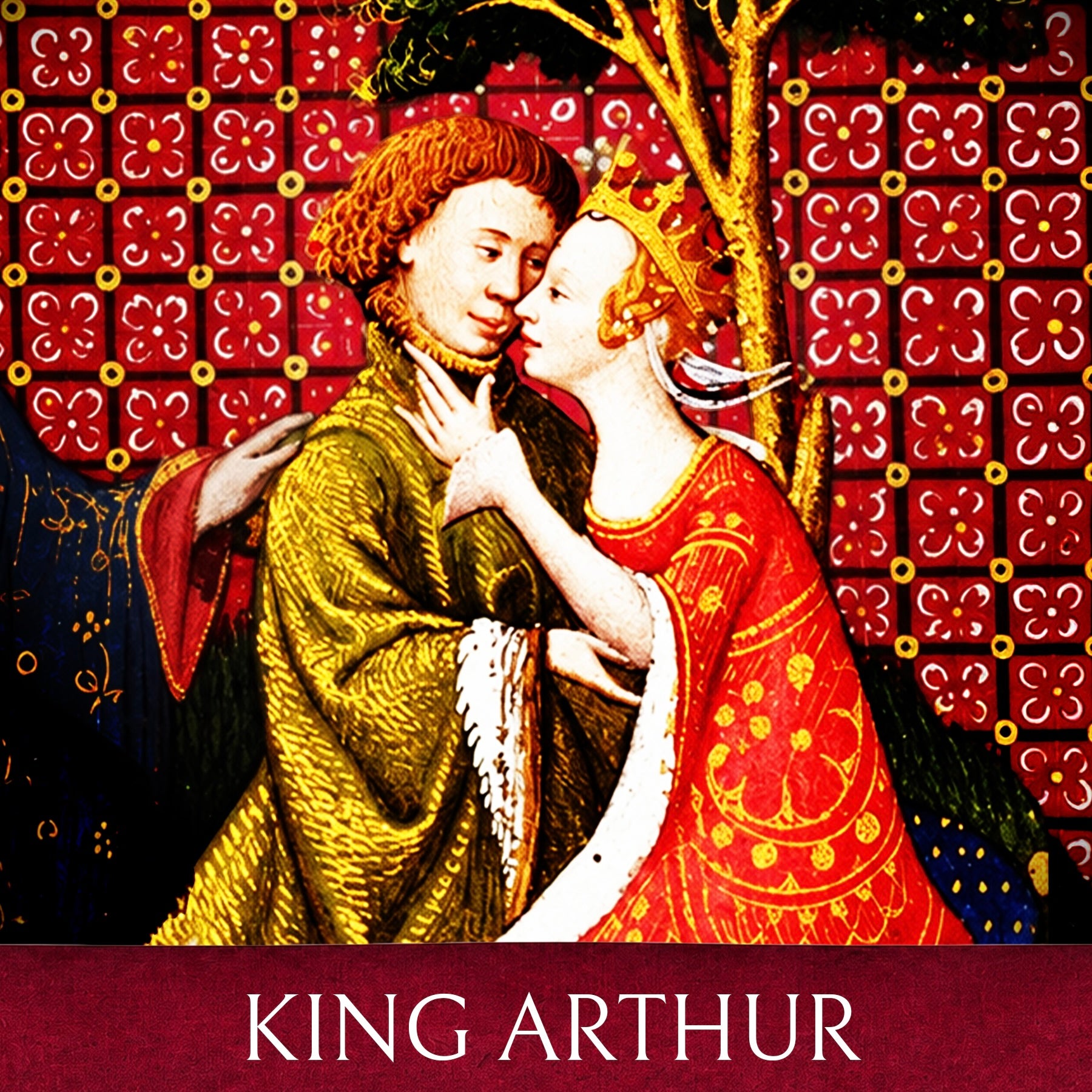
Hello, intact insurance. And so Lancelot comes to the bed of Guinevere, King Arthur's Queen, whom he adores. And before whom he kneels, holding her more dear than the relic of any saint. And the Queen extends her arms to him and embracing him, presses him tightly against her bosom, drawing him into the bed beside her and showing him every possible satisfaction. Her love and her heart go out to him.
It is love that prompts her to treat him so. And if she feels great love for him, he feels a hundred thousand times as much for her. Now Lancelot possesses all he wants. When the Queen voluntarily seeks his company and love. And when he holds her in his arms, she holds him in hers.
Their sport is so agreeable and sweet as they kiss and fondly each other that in truth, such a marvellous joy comes over them as was never heard or known. But their joy will not be revealed by me. For in a story, it has no place. So that was Crete-Indo-Tois as translated by WW Comfort. Being both tantalizing and a little bit coy in describing the coupling of Lancelot and Queen Guinevere.
And Tom, you've described them as after Romeo and Juliet, the most famous lovers in all world literature. Which is a big claim, but not necessarily an incorrect one. There's probably a fair bit of truth in that. That's definitely correct, I think. Where are we clearly, you think?
Because you're in it. Name a more iconic couple. Stanny Baldwin and Theodora. Will they be sung off in centuries to come? I have my eyes.
Surely. But Donald Tell, maybe. So Lancelot has gained entry, as it were. Who were matron? Yeah.
By heroic means. Well, he's been smacked with metal bars. Yes, so he's pulled them apart. They were on the window. And he's done it with his bare hands.
And he's cut a finger right the way down to the nerves. He does so. But Crete-Indo tells us, so focused was he that he paid no heed to the wound. So that's true devotion. What Crete-Indo is describing here, the depths of his erotic passion, the rapture of its consummation, that this is perhaps the single most influential passage of erotica ever written by a medieval author.
Because not only does it introduce one of the great themes of Arthurian legend, so namely this adulterous relationship between Lancelot, who is the greatest knight of King Arthur, and Guinevere, who is King Arthur's queen. But it also establishes a template for what historians term, courtly love, that generations of knights would be inspired to try and follow. So the key to this notion of courtly love, Lancelot, he's not just Guinevere's lover, but her servant, almost her slave. And he will endure anything, even the most abject degree of shame, as we will see, to prove his devotion to her. And this devotion, as you might have been able to tell from that reading that he did dominate, it borders on the sacrilegious.
So we heard that when he approaches Guinevere's bed, he genuflex holding her more precious than the relic of any saint. And then in due course, when he leaves her, he suffers, Crete-Indo says, Amartas agony. But the thing is, you might think, well, this is all very wet. He's kind of mooning over girls. One kind of rough, tough warrior does that.
This devotion to Guinevere does not diminish Lancelot's standing as a great warrior, quite the opposite, because it's precisely his love for Guinevere, which inspires him to become the greatest of all the knights of the round table. And this directly impacts the way that knights in the real world come to understand who they are, the ethos, the ideals of their class. Because the lesson that the love that Lancelot has for Guinevere is teaching them is that the true greatness that a warrior is capable of attaining. It doesn't ultimately derive from a lust for conquest or for glory or for vengeance, a kind of relish in violence.
It comes from submission to a beloved, to a beloved lady. This is at the very centre of the idea of the chivalre romance, isn't it? And this text, I guess, is the foundational document of it, to some extent. I think more than to some extent, I mean, I think it absolutely is fundamental, because it's the text that introduces the love that Lancelot has for Guinevere to the world. Crete-Indo is writing it sometime around 1180, and he's doing it in obedience to a very, very glamorous patron.
And so this patron is María France, the Countess of Champagne, and in his dedication to María Crete-Indo, salutes her as, I think, only a top medieval French poet can. He writes brilliantly, I am not one to wish the flatter my lady. I will simply say the Countess is worth as many queens as a gem is worth of pearls. But of course, what he's doing there is what a knight should be doing with this lady. He's flattering her and paying homage to her beauty.
And he's flattering somebody who is not just beautiful. So he says, oh, so we're led to believe. But incredibly important and powerful. I mean, she is the biggest patron in the Western world at this point. I think you could say that María France, who I'm guessing quite a few people may, never even have heard of, that she ranks probably as the single most consequential literary patron in the whole of medieval Europe.
She's also incredibly glamorous in terms of her parentage, because she's the daughter of the King of France, Louis VII. And her mother is the most glamorous and charismatic woman of the age, Elle-Ravacoutain. Oh yeah. And Elle-Ravacoutain is a woman who is all about courtly love, because her father, Duke William IX of Aquitain, he is the archetype of a courtly lover. So he is the earliest troubadour whose poetry survives.
And troubadours are poets from Southern France, and so Aquitain is a part of that, who are very distinctive. They are celebrating love as an almost spiritual calling. They emphasize wit, refinement, courtesy. And they praise adulterous love and the demands of secrecy and of inner torment that adulterous love imposes on a lover as something not to be ashamed of, but something ennobling. And so this is a very potent package.
And you can see that it's got the real kind of hint of the taboo about it. And so that makes it very, very exciting for people. And I think that Marie is very conscious of this inheritance that she's got from her grandfather and from her mother, even though she'd actually only been seven when her mother in 1152, to the great scandal of Christendom had walked out on her father, the King of France, and gone off and married his greatest rival, which is terrible behaviour. And of course the great rival to the King of France was Henry Plantagenet, who when Elle-Ravacout is already the Duke of Normandy and the Count of Anjou, but who two years after the marriage in 1154 becomes a rival king because he becomes Henry the second, the King of England.
And when you throw in Aquitain, which Elle-Ravacout has brought to the party, you know that's her dowry, Henry is now ruling an empire, that is larger than that under the control of the King of France, because Henry's empire stretches from the Pyrenees right the way up to the river Tweed. Yeah, the Andr the lands on either side of the channel, France and Britain, and if they are joined by more than just the mutual enmity of their two kings, there is also this incredible cultural synergy, this incredible cultural exchange going on.
And a court like Maria Francis is all about cultural cross-fertilisation, and in other courts as well, so Henry's too and Elle-Ravacout, but I think particularly Mary's is that this is where the troubadour influences that Mary has inherited from her grandfather and from her mother, are meeting with Arthur Mania. It's the only word for it. And as we said in our previous episode, what launches Arthur Mania is this mad supposed history written by a cleric called Geoffrey of Monmouth, and this is the history of the kings of Britain. So people remember from last episode that kicked off with Brutus from Troy, beating the giants, then it went all the way up to Athlstan, and that the centre of it is the story of Arthur and his reign, and this is where so many of the elements, derived, then picked up by Mallory and others.
And Geoffrey's book basically hits the shelves, I mean, I don't know what it is, it tables, the scriptoria. Yeah, you described it in New Year's, the sort of the equivalent of the Tolkien or rolling of the day. Yeah, so fantasy writer that people actually cannot get enough, they're queuing up in Waterlands for it. Yeah, at this point, and it's at Marie's Court, so 30 years after this, you have a crossover between Geoffrey of Monmouth and then the troubadour singing about Forbidden Romance and people stealing into each other's bedrooms and all of that. Yes, and the guy who leads the way is creating Antatua, and that is why he is as significant a poet as any who's ever lived in, you know, the European tradition.
Okay, well, he is that important. And I think you can gauge a sense of the impact that he has from the plot of Lancelot, which is the story in which that consummation between Lancelot and Gwynneville, that you opened this episode with features. So what is the plot of this poem? It opens at Arthur's Court on the feast day of Ascension. And as always, we'll tend to happen in Arthurian romances after Cretia.
He basically is establishing the template. You have this great feast, Arthur's presiding over it, and a strange figure arrives at the court. And this guy is a knight called Meliagon, the prince of a mysterious land called Gore. And Meliagon boasts that he holds, and I quote, in captivity, knights, ladies, and damsels, who belong to Arthur's dominion and household. And he offers Arthur a deal, that if any of Arthur's knights is man enough to escort Gwynnevere Arthur's queen into a nearby forest and there prevent Meliagon from seizing her, then Meliagon will free all the captives that he is holding in Gore.
But should the knight who goes to free Gwynnevere fail, then Meliagon will abduct Gwynnevere and take her to Gore and keep her as a captive as well. And this is the kind of challenge that Arthur, as a greater noble king, cannot really turn down. And there is an additional complication, which is that Kay, who is Arthur's foster brother and steward, had earlier got Arthur to promise, very rashly, to grant whatever boon Kay might request. And Kay now steps forward to demand the honour of a scorting Gwynnevere into the wood. And Arthur's very reluctant to do this, because he knows Kay, they grow up together and he knows that Kay is absolutely rubbish when it comes to defending damsels from sinister figures from otherworldly kingdoms.
But he's given his word and so he doesn't really have any choice. And so Kay escorts Gwynnevere out from Camelot into the wood, and there he's set upon by Meliagon, who then duly carries her off to Gore. And so Gwynnevere has been taken. When to be fair to Gwynnevere, I mean, she doesn't always behave well in the other instances. But you can see why she would be...
Yeah, a bit cross. Yeah, her husband's basically just reduced her to an absolute bargaining chip, with her useless person at the court to defend her honour. And everything has proceeded as she might have feared. Yes, I mean, I think you can see why she'd be cross. However, that said, Arthur does send all the various nights at the round table off to try and get her back.
And among these is his best night, his nephew Gwynne. And on the way, Gwynne overtakes a knight whose horse is on the point of collapse, because he has been pursuing the Queen, I mean, absolutely frenetically. And this night is lots of lot, although actually, Crettina doesn't reveal his name until about halfway through the poem, but we'll call him Lancelot, because that's who he is. And Gwynne has, you know, he's riding there, he's a leading knight, and so he has a second horse. And he very generously gives Lancelot this second horse, and Lancelot climbs onto it, goes careering off into the wood, but he's going at such a lick that once again, the horse basically collapses under him.
And it's now that Lancelot meets with a dwarf, and dwarfs often feature in romances, and this is one of the first. And he's driving a tumbrel, so the kind of cart that we last met carrying Mary Anne-Tourenette and Donton and Rose-Pierre to the guillotine. Yeah, as in the French Revolution, so in the Middle Ages, tumbrels are used to carry criminals around and make them into objects of derision and mockery. And the dwarf says to Lancelot, I will give you news of Queen Guinevere, if you agree to get off your horse and get into the tumbrel, and I will drive you through all the various towns and villages. And for a fraction of a second, Lancelot hesitates, because this is such a monstrous humiliation that any knight would shrink from it.
But he needs information about Guinevere, and so he does only hesitate for a fraction of a second, and he does climb into the cart, and he does willingly suffer all the mockery that this brings him, as he's led through, you know, the local villages and so on. And it has a consequence of this, the information that he's given, that he is the knight who ends up finding where Guinevere is being kept captive, he rescues her, and he restores her to King Arthur. And having done that, it's Lancelot who fights a climactic battle before the whole of Arthur's court with Melignon, and he defeats Melignon and cuts off his head. And it is Lancelot, as we heard at the start of the show, who is going to be accepted by Guinevere as her lover, even though initially, actually when they meet up, Guinevere is very frosty, because she has discovered, we're not told how, but she just does, that Lancelot had had this brief hesitation, and she's absolutely lived with him, because he hadn't immediately leapt into the tumbrel.
The only person who could have told her is the dwarf, or Lancelot. That's not being mad to tell her that, wouldn't he? Well, you've got to be honest with your lady. I thought about not doing it, and then... No, you've got to be honest with your lady, Donna.
Insane from Lancelot. I mean, so is everything that's going to happen. Right, so let's stop here, stand back and look at the story that Crigsion tells. What is so special about this story, and you've been making great claims for Crigsion, anything for this story, what makes this different from what the stories that people have been telling up to this point, why does it have such an extraordinary impact on the imagination of medieval Europe? I think it's a cocktail, Dominic.
It's a cocktail of various elements. Yeah. So a lot of the elements of the story come from Wales, and we promised our Welsh listeners that it's going to be a lot of Welsh history in this. You can end the show there. That's the explanation.
That's all I need. No, because we want to look and see what are the Welsh elements in the story? No, right, actually. We've got some Welsh history. We want to delve deep.
Do we not? We want to plunge deep into the Merc of Welsh history. Into the Mine, into the coal mine of Welsh history. So lots of the characters who feature in the story, they have a Welsh background. So Arthur, Guinevere, Kay, Gawain.
These are all characters who've been mentioned by Geoffrey Monmouth, and who feature as well in 11th and 12th century Welsh poetry. So Guinevere, like Morgan of Fate, like the Lady of the Lake, is basically a Welsh woman. So great to have at least three Welsh women on the show. Melio Gore isn't mentioned by Geoffrey, but he does feature in Haggiography, so the life of a saint that had been written by one of Geoffrey's mates. And this is a Welsh cleric called Caradoc of Clankarvin, and Caradoc of Clankarvin's Life for Saint features in it.
Well, it's Melio Gore, but he's actually called Melwhas in this life. And he is King of the Summer Land, which seems to be Somerset. Oh, interesting. Because Melwhas abducts Guinevere, and he takes it to Glastonbury, which we were talking about in the previous episode. And he imprisants of air behind Reed beds, floodwaters, and marshes.
So that's from the tale. And there he rapes her, and Arthur's looking for her and finally tracks her down. And he's preparing to free her by attacking Glastonbury when, disappointingly, the saint, who's a Welsh woman called Gildas, who will be hearing about Gildas again later in this series. Gildas pops up and completely ruins the story by negotiating between Melwhas and Arthur, and securing the resquinivir. So there's no fight, so they break credit to the saint.
But disappointing, I think, if you're a listener wanting a big bust up. Especially as Melwhas has behaved poorly and deserves some muddles. Yeah, I agree. But the odd thing is that this story is obviously being taken, I guess, by probably Brettons across Christendom. It's definitely reached Northern Italy by the beginning of the 12th century, because you remember that carving that appears on the Cathedral of Medina in Northern Italy?
I do see earliest carving showing Arthur in his nights. The scene it shows is Arthur advancing on Melwhas's castle to Three Guinevere. So it's clearly very popular. And I think that although we don't have any source material, it clearly derives from the kind of Welsh mythology that Tolkien loved. So Elvish, otherworldly lands that are perilous to enter very difficult to escape.
A kind of sinister Lothlorian. It's that kind of thing. So Gore is Elvish, I guess, in its kind of character. So there's all these Welsh traditions, which are very venerable. They're very ancient.
But at the same time, what Cretia is doing in Historia is he's fusing them with elements of French and very, very cutting edge. And so the most obvious of these is the character of Lancelot himself, because Cretia is the first dimension Lancelot. Scholars have obviously very keen to know where does this figure suddenly pop up from. They derive his name from German or Old French or well, even Welsh sources. But it's entirely possible that Cretia has made the name up himself.
I mean, it has kind of hint of Lance. And as we'll see, Lance is quite important in this story. And also, scholars have kind of tried to distinguish maybe there's a pre-existing folk tale that Cretia is drawing on. So it's telling perhaps that in another of his romances, Cretia refers to Lancelot as Lancelot de Lach of the lake. Yeah, of course.
Yeah. And the reason for this, supposedly, is that he's been brought up by a fairy queen who lived beneath a lake. And so it's not surprising that within a few decades, Lancelot has been cast as the foster son of the lady of the lake. But again, it seems at least as likely that Cretia has just made Lancelot up completely. And I think the reason why this is a credible theory is that he's so plainly embodies everything that is kind of cutting edge about Knighty fashion in the mid-12th century.
So most obviously, he is the absolute archetype of a courtly lover. Right from the beginning, the complete devotion that he shows to Queen Guinevere is perfectly in tune with the sensibilities of the Troubadours. Right. He is the ultimate troubadour hero. And this is why he is happy to sacrifice his personal honour in the cause of his beloved by getting into that tumbrel.
And this is counterpointed to Gawain, who is also asked by the dwarf if he wants to climb into the tumbrel and then Gawain can hear what the dwarf has to say. Gawain says, no, because Gawain is old school and he's not interested in humiliating himself in that manner. So Lancelot is a very modern figure in that sense. And he's modern throughout, right? So readers at the time or listeners would have interpreted Lancelot as a figure much like themselves, not like Arthur who's a figure for antiquity.
So in Britain, Gawain remains the great hero. Gawain is seen as the ultimate knight really in the way up to Mallory, who actually loves Lancelot, as we'll see. But in France, Lancelot is seen as he becomes the great hero of the Arthurian stories almost overnight. And I think that is because Lancelot is embodying this incredible new trend in loving and fighting. So it's not just that Lancelot is happy to get into the back of the tumbrel in the cause of rescuing his beloved.
But when his beloved says, humiliate yourself, embarrass yourself, shame yourself, Lancelot does it. So at various points in Cretino's romance, Gawain appears to him fight poorly, behave like a coward, run away, and Lancelot does it. This is the measure of how obedient he is as her lover. And then of course, on top of that, most glaringly, most shockingly, there is the adulterous quality of his love. So it's evident right from the beginning, because Cretino writes about this in the opening lines of his poem, that he is uncomfortable about this.
And he specifies that he would never have written it, had Maria France not directly commissioned it. So to quote Cretino, the material and the treatment of this book are given and furnished to him by the Countess, and he is simply trying to carry out her concern and intention. So he is aware that this is treacherous waters. And he's getting this in the troubadours. It's the troubadours who are so obsessed with adultery and deception and stuff.
Yes. And he's just simply picking this up. Yes. It's a display of everything that's most edgy and glamorous in the literature of mid-tolth century France. Right.
Got it. Cretino has found the perfect hero to exemplify it. But just to say that the impact of the troubadours is evident not just in the character of Lancelot, but in the character of Arthur's Court. And a significant marker of this, I think, is the name that Cretino gives to it. So in his history, Geoffrey Monmouth had placed Arthur's Court in the Welsh town of Célion, so the city of the Legion, thereby rooting it in the ancient history of Rome, giving Arthur the kind of the patina of antiquity.
And Geoffrey very implausibly described Célion as a match for Rome, which I think is probably overdoing it. But Cretino, by contrast, places Arthur's Court at a place called Camelot. And this seems to be a name which again Cretino has made up. Because Camelot, this is the first appearance of that name in this poem, Lancelot. And although Cretino is situated in Britain, it's transparently a course, I think, that owes its character to erotic currents that are flowing in from Aquitaine.
So it's British, but with a troubadour spin. And it's incredibly momentous in its impact, because what Cretino is doing is kind of mixing martial endeavour with courtly love and thereby establishing a template for the narrative of the Arthurian quest, which will never be superseded. So people listening to the count of the plot, it may not sound that radical, but it is radical. No one has really come up with something like this before, but it's so familiar to us now. The idea of the knight who is motivated by a passion for his lady riding out into the wilds in search of adventures, the knight errant, it's a novelty in Cretino.
In its wake, it becomes the absolute convention. When I think about Camelot, it does look like a 12th or 13th century French court, I suppose, with the sort of the towers and the banners and the flags and the damsels and all of that. And of course, a big part of that is that there just seems to be a permanent tournament going on. And that I guess is also a reflection of the political and cultural currents of the time, isn't it? And of the influence of Cretino, because it's in a tournament that staged before Guinevere and the Lady of Camelot that Lancelot is demonstrating his devotion to the queen by playing the coward on her commands. So he's riding into the lists, Guinevere sends a message saying, run away, and so Lancelot has
to do it. And then when she commands it and says, actually go in and prove yourself the greatest knight in the world, Lancelot does that as well. And the climax of this, of course, is when he fights with Melia Gar, the guy who's abducted Guinevere defeats him, beheads him. And again, this is being done at Camelot in front of Guinevere. So to quote Maurice Keene, great Oxford historian who once interviewed me for Oxford. He interviewed me as well. He was a tutor at Baylour. Well done,
that's something we share. Did he let you in though? That's the question. Well, I went for Cambridge instead. So no, if I'd gone for Oxford, I would definitely have gone. Yeah, it doesn't sound like
it, but anyway, continue. Oh, I think you'll find Cambridge is number one in the rankings. Anyway, Keene wrote, after Cretino literally description of a tournament would be complete without its word picture of the watching ladies and of the tokens from their dresses, the sleeves of their gowns or their hair, which the champions proudly bear. That's basically what you're saying, that when you think of Camelot, that's what you think of. You think of the Queen, the Princess, dating down at the nights, she's bestowing tokens on them. And Cretino again is the guy who establishes
the template for that. But I think it's not just about the literature, right? I mean, these tournaments, you start having people who are kind of imitating them. And so fiction and reality starts to blur. And the quote from Keene comes from a classic book that he wrote on an ideal that both shaped and was shaped by the stories of the round table and by the inheritors of poetry. And Lancelot is the absolute epitome of this. And that idea, of course, is chivalry.
Oh, yeah. And after the break, we will be exploring how Salant-Sillot became the poster boy for an entire revolution in the practice of medieval warfare. I genuinely can't wait. We'll see you after the break, everybody. Hold music. Not what you want to hear when a pipe just burst in your
basement is flooding. That's why intact insurance answers two million clean calls per year within 20 seconds. So instead of hearing this lovely track, you'll hear this in seconds. Hello, intact insurance. Hi, everyone. It's Katie K here from the rest is politics US. The midterms are
almost here. It's the biggest political moment of the year. And Anthony Scaramucci and I'll be right there with you making sense of every twist and turn as the results come in. You know, that's right. We're going to be live on YouTube covering the midterms as we get the results. Will Donald
Trump be a lame duck for the next two years or walk away with a mandate to do whatever he wants? We're about to find out. So join us for midnight to three a.m. Eastern time on November the 4th. We'll be live reacting to all of the results as they come in. So make sure you're subscribed to the rest
of the US on YouTube and turn on notifications, please. You won't want to miss this. Welcome back to the rest of history. A frank on horseback could drive a hole through the walls of Babylon. Not my words, Tom, but the words of Anna Comina, who is the daughter of the Byzantine Roman Emperor Alexios the first and Anna Comina was marveling at the spectacle of the vast crusader army that in the last weeks of 1096 had arrived outside the walls of the new Rome Constantinople.
And she's looking out and she can see these nights on horseback, the franks on horseback as she calls them. And this is something extraordinary. This is an innovation that she has not seen before, the medieval knight in all his glory. Yeah. And her astonishment is unsurprising because a knight on horseback is a new kind of fighter, really, really novel. So at Hastings in 1066, only 40 years previously,
you hadn't had the spectacle of the kind of armed cavalryman that Anna Comina is seeing. A crusader cavalry charge is even more intimidating than the charge of the Norman knights against the Anglo-Saxon and that's because over the four decades that have followed the Norman conquest, horsemen have basically mastered a new and devastating way to handle a lance. And from childhood now, they are being trained to ride with it couched, which basically means you tuck it under the armpit so that it remains steady. And then your left hand is free to hold the reins and a shield. And you throw in stirrups, you throw in a kind of new kind of saddle which has a raised back so that it will protect you against the impact of hitting someone with your lance. And you have a horse that's bred for strength,
for aggression, so the greatest of these are called Destry A. And the result is what Moriscan in his book on chivalry describes as a human projectile, which is a very apt description, because you can see that the success that these human projectiles have when they advance and charge or mass from the success of the first crusade, which against all the odds, they go from Constantinople, they march their way through hostile territory and they do end up capturing Jerusalem. And it demonstrates just how devastating this new style of warfare, which has emerged in the lands of the Franks, the western Christendom, over the latter decades of the 11th century, just how devastating it is. And by the 12th century, the impact of this on the way that war is practiced in the lands of Latin Christendom is becoming impossible for any ambitious king to ignore.
Basically, if you are going to be a cutting edge monarch or even a cutting edge baron, then you are going to need an army of these lance driving horsemen at your beck and call. And these are for obvious reasons called Chevalier in French from Chevalle Horse. And these Chevaliers are now the cutting edge that every king has to have. They are the face of the modern battlefield, if you want to put it like that. And what kind of people are we talking about? So
stereotypically, we think of Chevalier's knights as the nobility, well born, well bred. But is that strictly true? And I guess this also takes us the origins of the English word for them as knights. Yeah, obviously kings, barons, lords, they can afford the Destrie A, the armor, the arms and all of that. That's not an issue for them. So in that sense, they are Chevalier. But actually,
the word Chevalier in the early 11th century had been quite de-classis. Essentially, it's a name that is given to armed retainers of local lords. And they are not looked upon as being in any way classy. They are kind of akin to the heavies employed by a mafia boss. They are seen as essentially kind of thugs on horseback. And I think you do get a sense of this in the word connect in English,
which gives us our word knight, because that also in Old English had basically meant to retain a servant, someone who is at the beck and call of a local lord. And this means that knights, in the early decades of the 12th century, are a very upwardly mobile class. These are people who, in the 11th century, had broadly been despised by the upper classes and are now clawing their way upwards into a kind of distinct social class. And as always happens when you have an upwardly mobile class, the people who belong to it are afflicted by kind of anxieties and aspirations. And they're kind of a complex eddy. So the anxieties, I mean, they're very obvious what they would be,
they're paranoid about being looked down on by kings and barons and whatever. And they're also paranoid about how they're going to fund the cost of the arms and the armor, which is getting more and more expensive. But then they do also have their aspirations. These young men who are on the margins of aristocratic society, they're needed by the great lords to perform the cutting edge of their military machines. The dream of these young men is ultimately to be accepted as a kind of brother knight by the great lords of the day. That's what they really want. And if you're from an
imp hyunus background, but you've managed to get a horse, you've kind of cobbled together some armor, you can ride with a couched lance, your dream is that you and kings and lords and princes, that you might be joined in a kind of a brotherhood, common order of what the French call chivalerie, and which is comrades in what the English will come to call chivalry. Yeah, brothers and arms. But I can see what's in that if you've worked your way up and you're the parvignu, what's in it for you if you're the Duke of Norfolk or something? Why do you want to hang around with these people? What do you want to be brothers with them?
Well, the Duke of Norfolk might lean on his immediate retainers because the Duke of Norfolk needs these guys, that is back, and the king ultimately might then lean on the Duke of Norfolk because the more that victory in medieval battle comes to depend on heavy cavalry, the chivalerie, operating as a kind of single body, this great massed charge of Frankish heavy cavalry. So the more chivalry comes to seem to kings and dukes and such like, an absolutely brilliant way of fostering the esprit de corps that you need to form a coherent body of heavy cavalry. It's a way of generating a kind of shared ethos because a band of knights who are fractured by snobberies and social divisions are going to be of much less value to an ambitious king than one in which these divisions have been dissolved by a sense of common brotherhood. And of course, Dominic, you will know what the most celebrated illustration of this principle is. It's devised in the mid-troll century just as chivalry is becoming fashionable across Christendom. And it is of course an entirely
fictional one. And this is the round table. And the roundness of it's the roundness is key. There's no one other head and no one other foot, right? The roundness is absolutely key. And it's
completely telling that the round table as a theme in Arthurian literature first appears in the mid-troll century exactly as this need for kings and such like to form their heavy cavalry into a kind of single body of men is becoming paramount. And it's introduced into the bloodstream of Arthurian literature by a Norman poet called Wace, great name. And Wace is writing in the 1150s, it's a kind of updating of Geoffrey of Monmouth's history. And telling that he dedicates it to Eleanor of Aquitaine. So again, it's this idea of the fashionable southern kind of models of new behavior. Wace is buying into this as well. And the round table, you know, just as Art's
Lot seems to have been creating as invention, the round table seems to have been Wace's invention, even though obviously he has to state otherwise because it's supposed to be very ancient. So to quote Wace in his history, on account of his noble barons, each of whom he felt he was superior, each considered himself the best. And no one could say who was the worst. Arthur had the round table built about which the Britons tell many a tale. The Britons don't tell many a tale about it. Wace
is making this up, but he needs to say that. They sat the vassals all equal, all leaders. They were placed equally round the table and equally served. None of them could boast he sat higher than his peer. Each was seated between two others, none at the end of the table. All are equal.
It's a lovely idea. I'm curious whether any kings did actually introduce such a table. No. Oh, no, they didn't. Okay. Well, there's that one that hangs in Winchester, but it's hanging from
the wall. People are not actually sitting around it. Because ultimately the hierarchy is too important. You can't wish away the social organizations. Yeah. You can go so far, but not, you know,
the dukes aren't going to accept that. Yeah. But I think that what Arthur E. literature does is that it offers ways, even though there isn't a round table, it does kind of offer paths for impacunious, upwardly mobile, ambitious young men to kind of make their way into the heart of court society in a way that would not have been possible before Cretinas romances. So there are two shortcuts in particular. I've both featured in Cretinas romances and both was centered on
courts like those of Eleanor and Maria France. And one of these is the practice of dubbing. So this is the formal initiation into knighthood of a young man by a seasoned and celebrated knight. And everyone, I'm sure, will be able to imagine it. The young man kneeling before the elder man, the elder man touches him with the tip of the sword on the shoulder. And the younger man who
is being knighted swears to a very solemn code of behavior. He swears he will always be loyal to his leech lord, even unto death. He will always honor women and do all in his power to serve them. And he will hear mass every day and on Friday in commemoration of the crucifixion of his lord, he will fast. And for a young man of obscure background to be knighted by a famous chevalier, a famous knight, it's a tremendous social leg up. And the bond between the guy who's been knighted
and the guy who has done the knighting comes to be seen as something almost holy, something that is incredibly precious. And the classic example of this in courtly romance is in Mallory's Morked Arthur. And it's the story of Lancelot's knighting of Sir Gareth, who is the youngest brother of Gawain, and who has written and is pretending to be a scullian in the kitchens. And so is kind of roundly mocked, treated as a kind of vahlet, but who displays his knightly prowess. And Lancelot is the only knight who recognizes this. And he champions Gareth from the beginning, ends up dubbing
him as a knight, loves him like his own. And Gareth, in turn, adores Lancelot, models himself on him, prices loyalty to Lancelot ultimately over loyalty to his own brothers. And that bond is seen as being entirely acceptable. People understand why Lancelot and Gareth would be as close as they are. And as so often in our theory and literature, it both inspires and is inspired by what is actually going on in the real world. So these bonds between the young knight and the older knight who's knighted
him, they are seen as being very precious. And it's a way for someone from a relatively obscure background to make a name for himself. And then of course, there's the second way that a knight of obscure birth can bypass the social conventions that govern life at a great court. And that is by winning the love of a great lady. And here as well, it is Lancelot who serves as the archetype.
He is the supreme model of how greatness in martial exploits can be joined to the force and power of romantic love. And I would say that within a decade, maybe two or three decades after cutting as romance, Lancelot has appeared, the reputation of Lancelot as the ultimate model of chivalry is pretty secure across Christendom. I mean, considering how difficult communications are, the fame that Lancelot has attained by the year 1200 is absolutely astounding. And he owes his fame to the fact that he is unfailing in his loyalty to Arthur as his leech lord, and he's unfailing in his devotion to Guinevere, who is the one and only queen of his heart. And the measure of this is the greatness of his renown. No one is more formidable in battle fighting for his king, and no one is bolder
in feats of knight errantry winning glory for his lady. However, yeah, there's a problem with him there, isn't it? Because yes, you know, it's easy to think that people don't take the moral strictures of the day seriously. But of course, they do. And Lancelot is breaking an enormous taboo. I mean,
he's an adult around, he's betraying is he said he's unfailing in his loyalty to Arthur, but with your gigantic exception. Does this not create a problem for fans of the Ethereum romance? I don't think it creates a problem for lots of fans of the Ethereum romances, but it does for some of them. And I think particularly churchmen who swept up on the craze, but are obviously very worried about its celebration of adultery, and particularly the beginning of the 30th century, the Certians, Bernard of Clervo and the ilk, who are very ascetic, monks who, almost by definition, disapprove of Lancelot. And so they set about trying to promote a new model of knight who can take Lancelot's place as the greatest of Arthur's knights. And essentially,
they sponsor the invention of a new knight. And this is Sagala had, who emerges into Arthurian romance in the 1220s. Clearly, I think, with the encouragement of the Certians, you know, they're basically sponsoring poets to write Gala had into the story. And Gala had is the guy who goes to win glory in the ultimate Arthurian quest, which is the quest for the Holy Grail. And he is the son of Lancelot, so the son who is greater than the father, and he's been born after Lancelot had been given the kind of the medieval equivalent of Rohitlol, and he's absolutely out of his mind on it. And he's tricked into thinking that Gwynnevere is in a dark room. In fact, it's not Gwynnevere,
it's the daughter of the Castellan who is tricking him. Anyway, the fruit of this, Miss Adventure, is Gala had. Gala had turns up at Camelot, he sits in the siege perilous, which is a chair around table that only the greatest knight can sit in. If he's not the greatest knight, he'll be swallowed up by the earth, but Gala has it set up clearly. You know, he's passed the audition. Then the Grail
appears, Gala goes off, he wins the Grail. And then shortly after that, he is granted the beatific vision, which is the chance to gaze in a direct and unmediated way into the face of God. And once he's had this, he immediately dies and is taken up to heaven. And meanwhile, Lancelot on the quest for the Grail has been having an absolute shocker because he doesn't get anywhere near the Grail. He gets knocked out by a fiery blast and lies in a trance where told for 24 days, one for each of the 24 years that he's been in love with Guinevere. Wow. And so it's Gala had one, Lancelot Nill, in this C
time, such an appealing role model, because ultimately, of course, Lancelot's sin is a sin that is hardwired into the way that chivalry is understood. I mean, it's been there right from the very beginning. Right. And I think that in the greatest romances, this generates a really profound tension on occasion of tragic tension. And there's no romance that illustrates this better than the greatest of all the romances, which is Mallory's Maut D'Ather. And I would say, I mean, you may disagree
with this because you're not a Lancelot fan, but I think that to Mallory Lancelot, even though he loses out on the Grail quest, Gala had, he's not just the real hero of the Maut D'Ather, but he also provides it with its kind of moral fulcrum. Because when you read through the Maut D'Ather, I always had a vague memory from childhood books that all the nights at the round table were perfectly behaved. But when I then read the actual text of what Mallory said, it was kind of blimey. These guys have been so terribly terribly. You mentioned Arthur and Gawain as great models in the Maut D'Ather, both of them behave very badly on occasion. So Arthur, we heard in the previous episode,
I mean, he puts a lady from the baby's in the ship and sends them out into the sea and they all get ship wrecked. I mean, that's not great behavior. And Gawain, who we've said is the great hero in England, the great model of chivalry, much more than Lancelot, inspires Gawain in the green night, the most medieval romance to feature Gawain. He's a kind of a great hero in that. But in Mallory, Gawain behaves very badly. He loves the violent feud. He murders his enemies when he gets the chance he
stabs King Pelinor in the back, which is not good behavior. And at one point, he accidentally chops off the head of a lady. He's impulsive and brutal and violent, and he loves a feud. Whereas Lancelot does not go around killing babies, he doesn't pursue blood feuds. He's always merciful, and he's always the absolute model of courtesy to women. So there's a famous example of this. He meets a damsel and he's
told by this damsel that ahead of them, in the wood, is the lair of a knight who robs and rapes all the ladies who pass through the wood. And Lancelot is appalled by this so to quote Mallory. What said to Lancelot is he a thief and a knight and a ravisher of women? He doth shame unto the order of lighthood and contrary to his oath, it is a pity that he liveth. And so Lancelot rides into the wood and duly kills this murderous and monstrous knight who's bringing shame on the order of chivalry. But Lancelot's great offense, which is the adultery with grinnivir. I mean, that is the
thing that ultimately destroys not just Arthur, but the whole world of Camelot, isn't it? I mean, this is the fatal flaw in the entire project. And that is the great tragedy. And that's what makes the Mort Arthur such a moving, tragic book to read. Because obviously it's Mordred who conspires to destroy the round table. But it is Lancelot who gives Mordred his chance. You're absolutely right.
They listen to how it read the Mort Arthur. What is it that precipitates the downfall of Camelot? I mean, we talked about the last battle in the previous episode, but the build up to this is that Mordred and his brother, Agravane, who like Mordred, is a kind of sneaky, murderous guy who ungrades in the shadows, they set out to surprise Lancelot and Gwynnevere in bed. And they finally achieve this. There's a public exposure. And Arthur can no longer kind of close his eyes to what's been
going on between his wife and his best friend. Lancelot gets away. He slays Agravane in the process of his escape. But Gwynnevere is taking captive, locked up, condemned, and sentenced to be burned at the stake. And she's led out to the great pile of wood, which she's going to be burnt on. And walking with her
are Gawain's other two brothers, Gaharis and Gareth. Gareth is the Earth's long kitchen scallion who Lancelot particularly loves because he dubbed him. Lancelot comes to Gwynnevere's rescue, but in the course of saving her from the flames, he accidentally kills Gaharis and Gareth, whom he has not recognised. And Gawain, who had forgiven Lancelot for killing Agravane, Gawain loves Lancelot, and had recognised Agravane had been out to trap him. He cannot forgive Lancelot for killing Gareth. And from this point on,
it's Gawain who pushes for vengeance against Lancelot. And even though Arthur wants to negotiate, wants to bury the hatchet, Gawain refuses to allow this to happen. And it's Gawain who urges Arthur to pursue Lancelot across the sea to France where Lancelot has withdrawn. It's Gawain who insists on prosecuting the war against him, and it's Gawain who thereby gives Mordred, who's been left in England as Arthur's regent, his chance to seize the throne. But it's a measure of Mallory's artistry, his ability to kind of tug through the heartstrings. But in the end, it is Gawain who brings
about the reconciliation between Arthur and Lancelot, because what happens is that when Arthur, with his army and Gawain sails back from France to England to confront Mordred and they meet with Mordred's army by Dover, Gawain leads the attack against Mordred, his brother, defeats Mordred's army, but is mortally wounded in the battle. And lying on his deathbed, Gawain then writes to Lancelot, begging for forgiveness. And he hails him as flour of all noble knights that ever I heard of or saw by my days. And he writes to Lancelot about the doom that Arthur he fears is facing. Wherefore, I beseech the solatsalot to return again to this realm. Which is, that does of course,
but too late. I mean, that's too late. The tragic irony he gets there and he finds Arthur. Well, Arthur has been more klewounded hasn't he? And the roundtales, you know, the knights are all destroyed and what on Camelot is no more. And then he goes to find Gwynnevere and she's become a nun
in Amesbury in Wiltshire and the Sillsbury area. So just down from Stonehenge. Stonehenge will be featuring an un-ex-episode just to flag that up. So yeah, he goes to go into ree. He meets with Gwynnevere who by now is an abbess. And Gwynnevere when she sees Lancelot swoons three times, but she
refuses to announce her vows and she basically tells Lancelot to go and ponder on his sins. She's going to have no more of him. And Lancelot rides away weeping and Mallory tells us that he threw his arms abroad and said alas, who may trust this world. And then in due course, he gives up being a knight altogether and he becomes a priest. So they've been punished for their sin. Yeah, kind of,
I mean, they've embraced their more spiritual sides, I suppose, at the end of their lives. The lesson that Mallory gives us in the Walt D'Ather is that a knight can be the most perfect model of chivalry and yet still labor under a terrible guilty conscience. And we can never say for certain because we don't really know anything about Mallory's in a life except what he reveals in the Walt D'Ather. But I think it is possible to hazard a guess from the court records in which he appears as to why this idea of a knight who loves the ideals of chivalry but is suffering from a sense of guilt, why this might have had such an appeal to Mallory. Why Lancelot meant so much to him, which he clearly did. Because we mentioned in our last episode that Mallory spent a number of years
in prison. We kind of suggested that one of the reasons for this might be kind of factional, that he'd fallen out first of all with the Lancastrian authorities and then with the Yorkist authorities. But in that account of Mallory's time in prison, we did omit one very significant detail. And that detail is that Thomas Mallory, Knight of the Realm, author of the single greatest work of Arthurian literature in English, seems to have been an incredibly violent criminal. There is no other word for what he seems to have been. And so I will list just some of the offences of which
he stood accused in the various court records of the time. So the ambush and the attempted murder of the Duke of Buckingham, poaching deer from the estate of the Duke of Buckingham, extortion, theft, cattle rustling, horse stealing, assorted prison breaks, including on one occasion swimming across a moat, and a very specific crime breaking into the house of a Coventry man called Hugh Smith burgling him and raping his wife Joan. I mean with that, you know, I mean poaching, okay, fair enough, but this for a lot of listeners, I mean that's obviously crossed a massive line. And you already mentioned how when they in the Maud Arthur Lancelot is riding with it, you know, there's a word or something, isn't there? And he says, yeah, what is the thief for the knight and a ravager of women in horror? So is it's Mallory portraying himself? What's going on there? There have been numerous
attempts to try and explain this seeming discrepancy between the ideals that are on show in the Maud Arthur and the kind of seeming brutal reality of the author. Some have argued that the charges against Mallory are all trumped up for political reasons. Possibly, you know, this is just a hunch by the Duke of Buckingham. Yeah, that's not a particular object of Mallory's hatred. Yeah. Listen, as who heard the episode that we did on Jeff or Chaucer may remember that the word
raptors, which the Latin word is indigo latin, can mean rape, can also mean other things as well. And so there have been scholars who suggested that perhaps Joan Smith wasn't being raped, she was eloping with Mallory, but I think that's special pleading. Right. I don't think most scholars think that others have argued perhaps this mistake of identity. Trying a bit too hard, that strikes me as well. And others suggested that perhaps Mallory was much more of a guaen than a lance lot in the
terms of the Maud Arthur, that he was someone who was given to violence, to blood feuds, to behaving intemperately, who nevertheless yearned to be a lance lot. Because as the Maud Arthur makes very clear, actually, it's very violent. I mean, it's structured around military activities, killing each other, all that kind of thing. And so perhaps it's not surprising that this is the reality of what being a knight in the Middle Ages seems to have meant. And I think it's impossible to know, because ultimately, as we said, all we have really is the Maud Arthur itself. So that being so, let's end this episode
on Lancelot and the ideals of chivalry with two concluding scenes from it. And these are two of my absolute favorite scenes. They never failed to move me when I read them. And one of them comes from just before the fateful moment when Lancelot and Guinevere again to be surprised by Mortar and their adultery revealed to the world. And it tells a story for which we have no source. Most of the
episodes in the Maud Arthur we know where they come from, this one we don't. And so it's possible that Mallory has made it up and listeners may hear it and wonder well, why would Mallory have made the story up? So this episode features a knight called Sir Uri. And Sir Uri had killed the son of a sorcerer as an atornament and said the sorceress had cast the spell on him. And Sir Uri in this battle with the sorceress's son had sustained seven terrible wounds. And so the sorceress to quote Mallory,
wrought by her subtle crafts that Sir Uri should never be whole, but ever his wounds should one time fester and another time bleed so that he should never be whole until the best knight of the world had searched his wounds. And Sir Uri's mother places her son in a litter and for seven years takes him around all the various courts of Christendom looking for the best knight in the world to heal her son. And now she has come to Camelot and every night of the round table takes turn to touch Sir Uri's wounds, but all of them fail. And then at the last moment Sir Lancelot who's been away on a quest, he returns to Camelot and Arthur tells him Lancelot you must touch the wounds of this poor knight and Lancelot wants to get out of this. He really doesn't want to do it because he is aware of his sin and he knows that he is bound to fail as he had failed the quest for the Grail. But Arthur commands him
and so Lancelot obeys and he touches these bleeding super-eating wounds of Sir Uri, all seven of them and all seven are healed. And then Mallory writes, and ever Sir Lancelot wept as he had been a child that had been beaten. And I remember in TH White's Once a Future King and most of it is an updating into 20th century prose of Mallory, but this line he keeps. The sum key to Mallory's heart in it. And why is Lancelot weeping? Clearly because Cinevault he is, God has touched him with his grace and allowed
him this last proof of his moral stature as a knight. And we don't know whether Mallory had a guilty conscience, but we know from this story that Lancelot definitely did. And I think that's why it has the kind of incredible power that it does. And it's also why at the very end of the Mortd Arthur, Lancelot's death I think is incredibly moving again. So he dies in his sleep and he's found the next morning by his friends he's got a smile on his face and we're told the sweetest saver about him that ever his friends felt. And Lancelot's body is then escorted to his great castle of Joyous
Guard which Mallory brilliantly speculates might be an anoch or more probably Bambra castle. Oh nice. And at Joyous Guard Lancelot's brother's actor arrives not knowing that Lancelot is dead. And when he's told that his brother is dead he goes into where his brother's body is laid out and he prays by its side and delivers what I think is both the greatest eulogy in each language and the noblest tribute ever made to the great ideals of chivalry. And so let's finish today's episode by reading it in full. It's a
banger. Our Lancelot he said, thou ahead of all Christian knights. And now I dare say, said Scepter, thou selance a lot there thou liest that thou were never matched of earthly knights hand. And thou were the courteous knight that ever bore shield. And thou were the truest friend to thy lover that ever destroyed horse. And thou were the truest lover of a sinful man that ever loved woman. And thou were
the kindest man that ever struck with sword. And thou were the goodliest person that ever came among press of knights. And thou was the meekest man and the gentlest that ever ate and whole among ladies. And thou were the sternest knight to thy mortal foe that ever put spear in the rest. Wow. So the last word there goes to Scepter on Lancelot. And there is so much more to come.
Because next time we'll be meeting the one character who really does rival Arthur as a titanic cultural figure and he perhaps even exceeds him. And that is the wizard Merlin. So we'll be digging into the story of Merlin next time. And then after that, the moment that everybody has been waiting for the rest is history will definitively and exclusively solve the mystery of King Arthur by explaining just who he was. Now, if you want to hear those two episodes right away, there is tremendous and unprecedented news. We have started a club, it's called the Rest
History Club. We've also set up a new website, therestishistory.com. And you can sign up there. And what we've decided to do is we decided to throw in all kinds of thrilling new supplementary benefits. So you'll get all of these benefits if you sign up to the Rest History Club and you'll be able to hear the episodes about Merlin and more importantly, the definitive answer to the mystery that's perplexed legions of scholars for so long. Some people would say it's our own roundtable, but we do not work on a democratic
principle because we would very much be at the head of that table. So that's not how it would work. Just to be absolutely clear before the club members get ahead of themselves. Right on that bombshell, I literally can't wait. We will see you next time for Merlin. Bye bye.