
A podcast by Sipra. In podcast, the La Chippur. The La Chippur. The La Chippur.
The La Chippur podcast. The La Chippur podcast. Interviews, background talks, and voices from all Alpine countries. Listen to this and more in the podcast of the International Commission for the Protection of the Alps.
www.sipra.org. Port slash podcast. Nature. Work life balance.
To make life accessible. Socialising, meeting people, having meeting places. Relations. To have people and space where you can meet up.
To make a book of life. Making life possible. Nature and outdoors. And what does quality of life mean to you?
Hello and welcome to the Sipra podcast. My name is Verunica and today we're exploring quality of life in the Alps and what it means to young people. Over the past two years, Sipra Slovenia has worked on this question together with Sipra International, Sipra Germany and Sipra France in the project Alpine Compass. Through interviews, webinars, research analysis and living labs we engage with young people aged from 16 to 29 from across the Alpine region.
We ask them, what motivates you to live in a particular place and what does quality of life mean to you? We'll also delve into their demands towards politicians that came out of the project. Before we hear more from the young people, Deanna, project manager at Sipra Slovenia, she is more about the project process and the different approaches used to achieve the results. We started with the desk research and we were just trying to see what has already been written in these topics which are connected to quality of life and most importantly we were trying to see did they actually focus on young people.
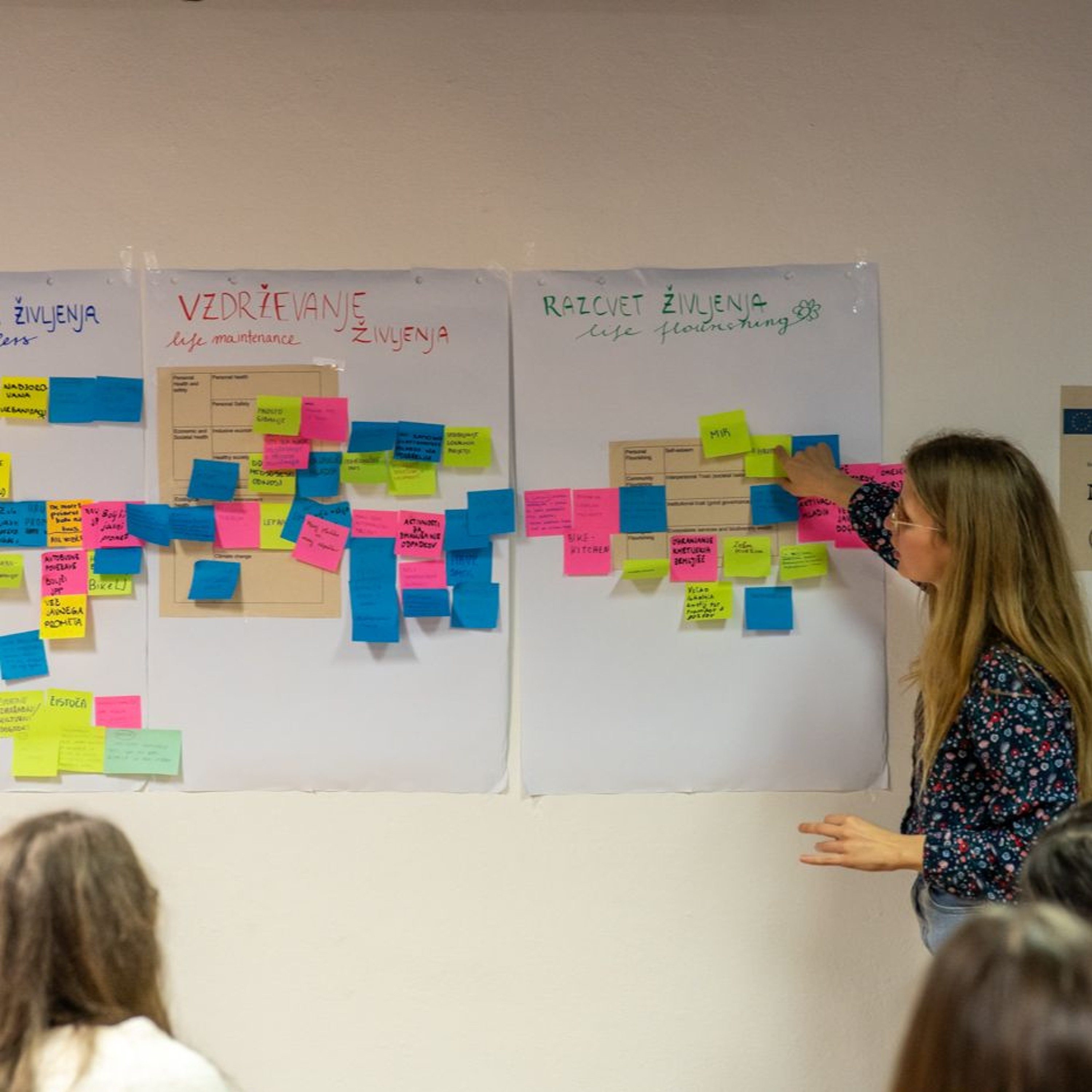
And we often saw that there is a lot already written about quality of life but it's really rare that it focuses on young people. And then we did one on one deep interviews and after we got these two results we organized living labs. And in living labs there was a bigger group of people and they could also interact between each other and then sometimes the interaction was the thing that sparked a new conversation. So it was a different method and we could go deeper and also sometimes got different results compared to the interviews because of these conversations that young people had between each other.
And of all the results the young people created political demands called postulates. They presented them in front of the permanent committee of the Alpine Convention. Later on we'll hear those demands that the young people presented to the politicians and representatives from all Alpine countries. But before we dive into that, let's get some more insights about some of the learnings from this project, what did we discover and what are the right indicators to consider when discussing quality of life.
We saw that in the past the indicators that were used were mostly material indicators like for example asking about hospitals or kindergartens or shops and these kinds of more materialistic indicators. But when we start working with young people we soon realize that indicators that matter to young people are not what they're listening. They're about how do they feel in society? Do they feel appreciated?
Do they feel good in their hometowns? They often told us it is for me the quality of life is that in my hometown I can express what I think. And we saw that in cities this was often possible but in villages it was not. A lot of young people coming from rural areas told us I cannot address however I want.
I cannot say whatever I want because I will be judged. And also one indicator that we found out was the mental health. A lot of young people told us they would like to have more, especially free mental health support for example they pointed out psychotherapy I remember. And it does exist but at least in case of Slovenia you need to pay for it.
So they would like to have easier access to it. Also these are the surprises I would say the learnings were that young people do like to live in the Alpine regions. Most of them would like to stay there they would like to build a life there. But there is a lot of obstacles for that.
And one of the biggest obstacles is the masterism and the issue that local governments are putting the needs of tourists before the needs of local people. It's good learning that we know that there is young people who want to stay in the rural areas who want to stay in the Alps. But often they don't have an option. And when I speak with older people they say that oh but Alps are easy, accessible, there is a lot of old and empty houses you can buy.
And often they say to us young people that it's not hard to buy a house there that's not really the case anymore because Alps become more like luxurious area for people who want to have a second home there for the weekend escape. So it's not so easy anymore to afford. Also one thing that was a surprise regarding the tourism was the rental market. A lot of young people would like to rent but then the issue is that they cannot rent for the whole year because the landlords say that you need to go out in the summertime.
So you can only rent for example from October to May. But then also when we had discussions we were like joking between each other like with young people but okay what do you do between May and September? You just pitch your tent or what do you do? So yeah it gives you a lot of uncertainty and you don't feel safe.
A lot of people are worried about creating families because if they don't have accommodation and safety with jobs you don't feel safe to. For example have a kid one of the things that really stood out in all the countries was mobility. They all would like to have a good access to public transport and as well one of the things that stood out a lot was nature protection and issues regarding the climate change. So for a lot of young people quality of life is to have a healthy nature around them and to have a good and easy access to the nature.
And we saw a lot in the living labs and in their interviews that this climate anxiety is a big problem. So let me summarize. Previous studies often overlook climate change and mental health as influencing factors. But young people from across the Alps are convinced that climate change will have a significant impact on their future quality of life.
Our project results show that young people today consider a healthy environment, diverse jobs with sufficient free time, tolerance of different beliefs, mental health support and affordable and available housing as crucial parts of their quality of life. To me that sounds pretty straightforward doesn't it? At some point we started to ask ourselves like are we really asking too much and the answer is no. Like what young people are asking it's really let's put it like this straight forward.
It's really the basic human rights like to have the access for public transport to have housing like we are really speaking not about the luxurious things that young people would like it's really something basic. So it's like how come that as a society we cannot find solutions or I would say like this we do have solutions. So there is solutions a lot of young people is speaking about the regulation of market regulation of housing market putting higher taxes regulating people who have more houses and regulating the issue of empty housing. Like we had really interesting discussions with young people and we realized that there is already a lot of solutions even around Europe we can see some really good examples going on in Sweden in Netherlands for example with the public transport in Sweden with the housing issues.
So the question is really not how but I think like more who will do it and maybe even more why they don't do it yet. So what to do now neither of us would wish that this is just another research that will end up in the I don't know in some corner of the office or something like this. We are really happy with the results we got and it's also important for us to now work on these results and this is also I think a message we would like to spread to all the ministries to all the delegations that research is good but once you have a research you need to do the action you don't need another research. So now my wish is what is going to happen is that we together work on the action steps we need to understand that we cannot tackle these issues like each of us alone on our little hills and having young people pointing it out and having NGOs trying to do something and ministry trying to do something and things like that but it's really a complicated issues that we really need to work together also all across Alps.
My personal wish would be that one of the delegations or even it can be a person inside one delegation would feel the importance and come to us and say let's work on this together let's create a better policy let's do something. The Alpine Compass project has shown that young people answer questions about quality of life in similar ways. The demands are quite simple and clear yet decision makers have done too little in this area so far. A team of six young people from Slovenia, France and Germany analyzed all the results from the living labs, the desk research and interviews that we did with 15 young people from across the Alps.
They summarized the problems and proposed solutions for a good life in the Alps for young people. As a result they formulated their demands into three postulates. Now let's hear from the young voices and their demands. First up we have Osian who work on the project during her internship at Zebra France.
She tells us about the postulate on nature protection and what it entails. We live in nature and we can also see the effects of for example tourism on nature. When I go hiking for example I can see the slowly erosion I can see the for example the bad behaviors of tourists with animals with wildlife in general. We can see the consequences with our eyes as we live in the Alps and because we are quite aware of climate change we know how important nature is and so we are even more aware of the nazistia of preservation of nature and the environment in general.
What young people want is to protect more biodiversity and stop pre-arising economy of a nature of preservation. We also want to give more space to nature, more green spaces in the cities, more trees, more parks and less construction, less roads. We also want more access to this nature through public transport, more mobility which is linked to one of the other postulates and also human activities on these nature such as tourism which has lots of negative impacts on nature and so taking it more into account in order to preserve more of the environment. When I was thinking about quality of life I didn't really take into account the political side but it's very accurate when you think about it.
Maybe they can see the impacts more and more because we can see that there are people living in the Alps, we can see the effects on climate change on the Alps and so if they want people to stay, I mean if they want young people to stay in the Alps and if they want climate change not to be too bad on people living in the Alps, maybe the priorities are to change. I guess now they are more prioritising economy and now they really have to consider taking nature and young people into the top priorities because without young people you cannot have life in the Alps anymore. Thank you, Osean for these insights. Next we spoke with Leah from Slovenia.
She recently completed her master's in Ljubljana and joined a project through a friend. Leah talks about the demands related to transport issues. The main things were that public transport is available meaning that scheduling and there are possibilities that we can take public transport in most convenient ways so when we needed that there is available bus or train for us and the other price so the fees that it's affordable. At the end we focused on three main requests.
The first was high quality public transport so higher frequency and longer operating hours so again that it's accessible that we can take public transport whenever. Then the other new route according to the needs mostly of local people and not just touristy time and then the last one is reduced public fees so like I said that it's also on the price is affordable for young people. So we decided on that because it was very clear these topics were repeating itself constantly. Not only in Slovenia I think that was quite interesting that this was mentioned also in France and Germany.
I think young people and the discussions that we have it's quite clear that there is a big wish for better public transport and also a need for it mainly because young people are aware that owning a car is not very sustainable and most of the time they can't afford it or many times they don't even wish to own a car for example they wish they want to be sustainable. They know the importance of the public transport but I think it's also quite inconvenient a lot of times you have to put a lot of effort when you go traveling across Europe and it's so much easier to go by plane than by train. The feeling that I had like and the thoughts about transport and the issue that I noticed were confirmed and the repetition of this issue that is not just in my area or in Slovenia that it's actually the same results came out of the living lives in France and Germany. So then we can see this red thread of the same challenge of public transport that is not just me and my anxiety that I wish to do better but I don't know stuck because the buses are not arriving on the time.
It's not just my issue but it's yeah many of us. For a final thought I mean I would say that yeah it was an amazing project I really think it was a good one especially because we collaborated with different countries I think that was really a great opportunity to be part of. Thank you Leah and finally we hear from Matthias. He's from the south of Germany and is working and studying in the field of sustainability management.
Matthias shares his insights on the postulates about a new era of work and leisure. Working and earning money and having leisure activities it's the cornerstone of every society. So if there's no possibility to work to earn money to have a social network in the area you're living there's no reason for you to live there. So a lot of young people raised the concern that they're on the one side missing leisure activities in rural or alpine areas.
For example cinemas were quite often mentioned. On the other hand it was also mentioned that it's very valuable to have nature as a leisure activity or a possibility to spend your free time in. Especially considered that it's cheap or sometimes even free of charge compared to cities where you basically have to spend money for everything you're doing. So many areas heavily rely on tourism as an income.
These areas often are focused around seasonal working. So let's say in winter you're able to work there but in summer there aren't as many tourists in these areas. So you miss job opportunities. So combining this with remote working could actually build up systems that are very attractive for young people to move there.
It surprised me how connected all these topics were from reaching to reaching. So there was no such thing as the German concerns and the Slovenian concerns and the French concerns. So young people face the same challenges, face the same wishes in all the regions for us speaking general as the young people. It's very important to keep active, to keep our voice heard.
But like to say actions speak louder than words, to actually do something. So to show politicians, to show the society in general, we're not only capable of telling you what is bad. We're not only capable of telling you what needs to change. We're actually willing and we're actually working on making these changes that we wish for possible.
And so one way for me that is to see why I see so the youth part of CIPRA where it's also thought about the up and countries but on an international level and you're able to take part to actually get into doing something and not just hearing about it or talking about it but actually making an impact and connecting yourself to other people that have the same concerns, the same wishes in the end. So also to have like this community where you feel you're not alone and show people we're here and we're not here only complaining but we're here also trying to go or to walk the change that we're wishing for. Thank you, Matias. And thank you for joining us in this episode, exploring the demands of young people for a good life in the Alps.
You can find out more about the results and demands in order to see on quality of life and young people in the Alps on our website. The Alpine Compass Project was co-founded by Erasmus Plus. I'm Veronica and this has been the CIPRA Podcast. If you like our podcast, let us know by leaving a positive review or writing us your thoughts.
A podcast by CIPRA. A podcast by CIPRA. The Articla Podcast. The Articla Podcast.
The Articla Podcast. Three pre-podcast. Interviews, background talks and voices from all Alpine countries. Listen to this and more in the podcast of the International Commission for the Protection of the Alps.
www.cipra.org. Forward slash podcast.