
EPISODE · Jul 11, 2025 · 19 MIN
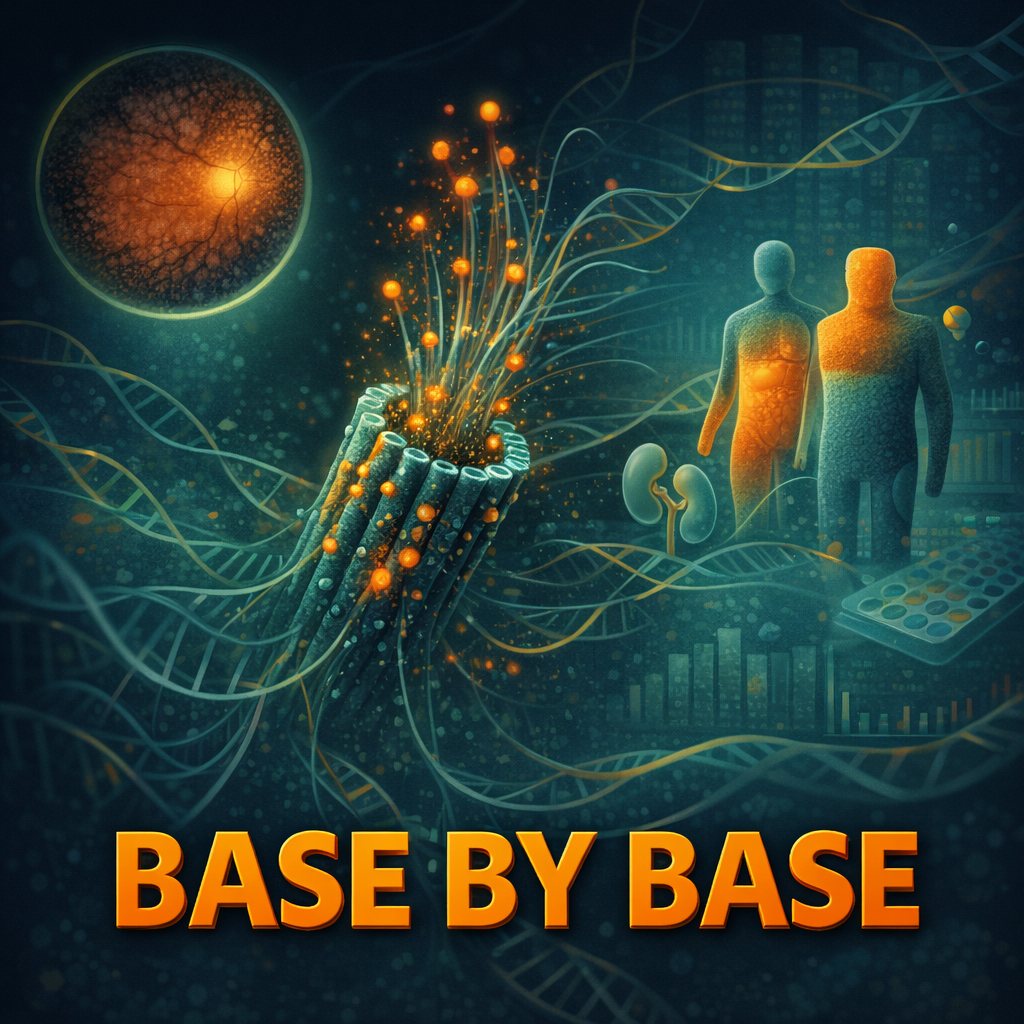
72: POC5 ciliopathy: retinal, endocrine and neuromuscular syndrome
from Base by Base · host Gustavo Barra
Vulto-van Silfhout AT et al., Genetics in Medicine - A cohort study of twelve families shows that bi-allelic loss-of-function variants in POC5 cause a multisystem syndrome characterized by rod-cone dystrophy, early-onset insulin-resistant diabetes with partial lipodystrophy, renal disease and muscle cramps. Cellular studies in patient fibroblasts reveal reduced POC5 expression due to nonsense-mediated decay and mislocalization at centrioles, supporting a ciliopathy mechanism. Key terms: POC5, ciliopathy, retinitis pigmentosa, insulin resistance, lipodystrophy. Study Highlights:Twelve families with bi-allelic POC5 loss-of-function variants were characterized clinically and molecularly, revealing a consistent multisystem phenotype including rod-cone dystrophy, insulin-resistant diabetes with partial lipodystrophy, kidney disease and muscle cramps. RNA studies showed reduced POC5 transcript levels consistent with nonsense-mediated decay for predicted truncating variants. Immunofluorescence in proband-derived fibroblasts showed loss or reduction of POC5 centriolar localization and altered centrin distribution with largely preserved ciliogenesis and SHH signaling. These data support that POC5 LoF causes a pleiotropic ciliopathy that includes metabolic and adipose tissue dysfunction. Conclusion:Bi-allelic loss-of-function variants in POC5 cause an autosomal recessive multisystem ciliopathy marked by retinal dystrophy, insulin-resistant diabetes with partial lipodystrophy, renal disease and neuromuscular symptoms, and are associated with reduced POC5 expression and mislocalization at centrioles. Music:Enjoy the music based on this article at the end of the episode. Article title:Bi-allelic loss-of-function variants in POC5 cause a syndromic retinal, endocrine and neuromuscular ciliopathy First author:Vulto-van Silfhout AT Journal:Genetics in Medicine DOI:10.1016/j.gim.2025.101513 Reference:Vulto-van Silfhout AT, Jazet IM, Yzer S, et al. Bi-allelic loss-of-function variants in POC5 cause a syndromic retinal, endocrine and neuromuscular ciliopathy. Genetics in Medicine (2025). doi: https://doi.org/10.1016/j.gim.2025.101513 License:This episode is based on an open-access article published under the Creative Commons Attribution 4.0 International License (CC BY 4.0) – https://creativecommons.org/licenses/by/4.0/ Support:Base by Base – Stripe donations: https://donate.stripe.com/7sY4gz71B2sN3RWac5gEg00 Official website https://basebybase.com On PaperCast Base by Base you'll discover the latest in genomics, functional genomics, structural genomics, and proteomics. Episode link: https://basebybase.com/episodes/poc5-ciliopathy-retinal-endocrine-neuromuscular QC:This episode was checked against the original article PDF and publication metadata for the episode release published on 2025-07-11. QC Scope:- article metadata and core scientific claims from the narration- excludes analogies, intro/outro, and music- transcript coverage: Audited transcript sections covering POC5/ciliopathy background, identification of variants and NMD analysis, centriolar localization and ciliogenesis SHH results, and comprehensive clinical phenotype (retinal dystrophy, diabetes with insulin resistance, lipodystrophy, renal disease, muscle cramps) with translational i- transcript topics: POC5 and ciliopathy overview; Bi-allelic LoF variants in POC5; NMD and CHX RNA analysis; POC5 centriolar localization and centrin; Ciliogenesis and SHH signaling in fibroblasts; Clinical phenotype: retinal dystrophy and metabolic features QC Summary:- factual score: 10/10- metadata score: 10/10- supported core claims: 5- claims flagged for review: 0- metadata checks passed: 4- metadata issues found: 0 Metadata Audited:- a...
Embed this episode
NOW PLAYING
72: POC5 ciliopathy: retinal, endocrine and neuromuscular syndrome
No transcript for this episode yet
Similar Episodes
No similar episodes found.
Similar Podcasts
No similar podcasts found.