#725 The Trail Foot Trap: Why Your Draw Setup Might Be Causing a Slice
from eCoach360°: The Global Platform for Innovative Technologies and Teaching Concepts. Hosted by eCoach360°
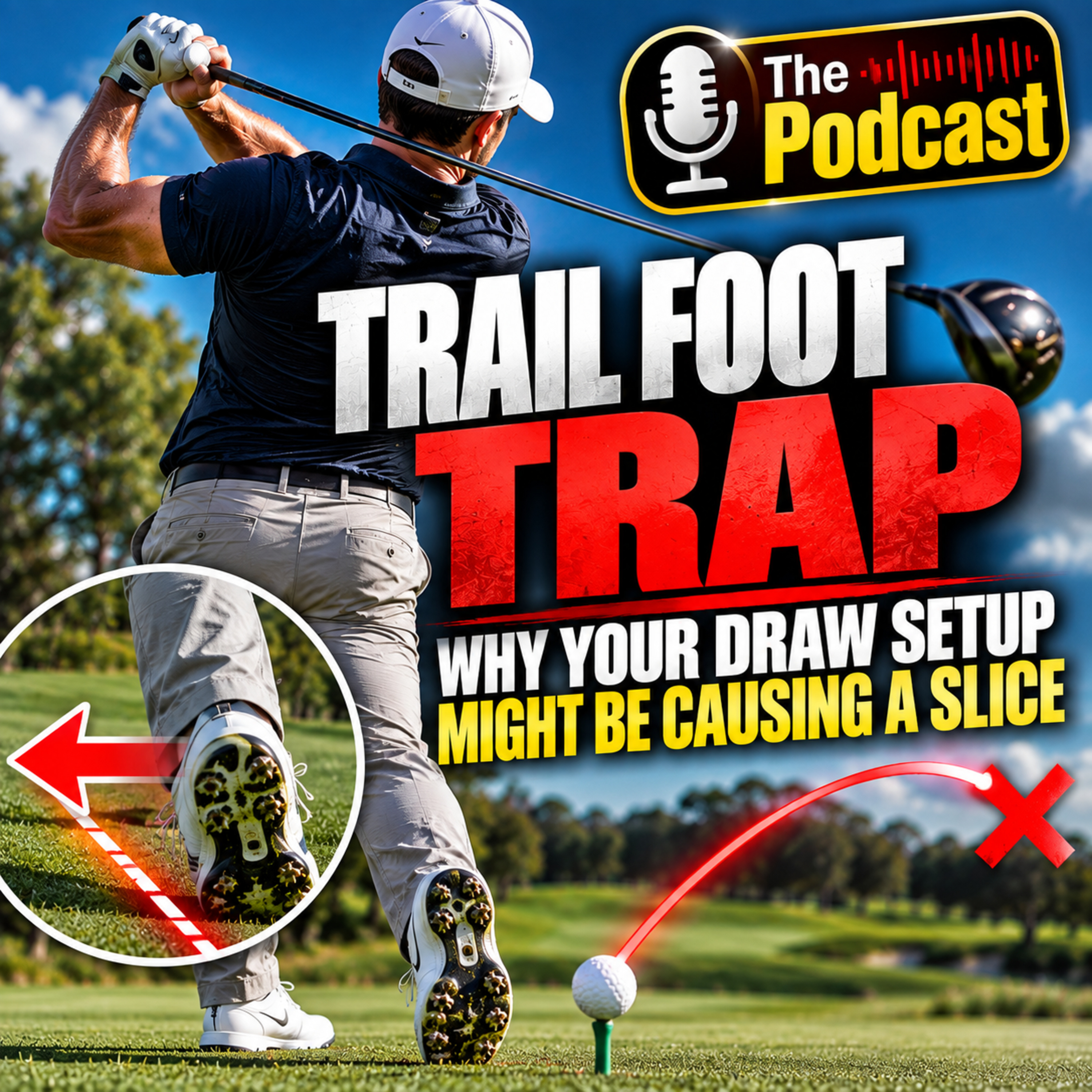
For golfers fighting a slice, one of the most common fixes is dropping the trail foot back. For a right-handed player, this creates a closed stance that appears to provide more room to swing from the inside. The logic sounds simple: close the stance, move the path right, and create a draw. But biomechanics is rarely that simple. Alignment is not just the foot line. It is a 3D system involving the feet, knees, pelvis, thorax, forearms, and clubface. These components establish the golfer’s starting geometry and influence rotation, hand path, pressure distribution, and ultimately club delivery. The problem begins when the trail foot moves back while the pelvis remains neutral and the shoulders become square or even open. This creates a crossed-alignment pattern. The lower body says “closed,” while the upper body sends a completely different directional message. The result can be surprisingly counter-intuitive. Feeling restricted around the trail hip, the golfer may instinctively move the hands outward during transition. The shaft steepens, the path shifts left, and the intended draw setup produces exactly what the golfer was trying to avoid: slice geometry. Elite shot-shaping demonstrates how subtle these differences can be. Measurements may show only a few degrees difference in rotation between a draw and fade. What matters more is where the body’s centers are positioned while rotating and how sway, tilt, pelvis motion, thorax orientation, and hand path interact. This is why setup must be functional, not simply visual. If a closed stance restricts trail-hip mobility, the body must compensate elsewhere. A better approach is to organize the entire trail side from the ground up: foot, ankle, knee, hip, pelvis, thorax, and head. The goal is not maximum closure. It is **coherent geometry** that creates space for the hands to work deeper without restricting rotation. WatchItGolf helps make these relationships measurable. Instead of judging setup purely by appearance, coaches can evaluate how changes influence body motion, hand path, and club delivery. Alignment influences movement—but does not dictate it. A functional draw comes from coordinating setup geometry, movement, and face-to-path control. The best setup is not the one that looks most closed; it is the one that gives the golfer the best movement options. My Blog The Explainer www.ecoach360.com
Embed this episode
No transcript yet.