
EPISODE · Apr 1, 2026 · 20 MIN
728-The Evolution of Human Cerebellar Synaptogenesis
from Paper Talk
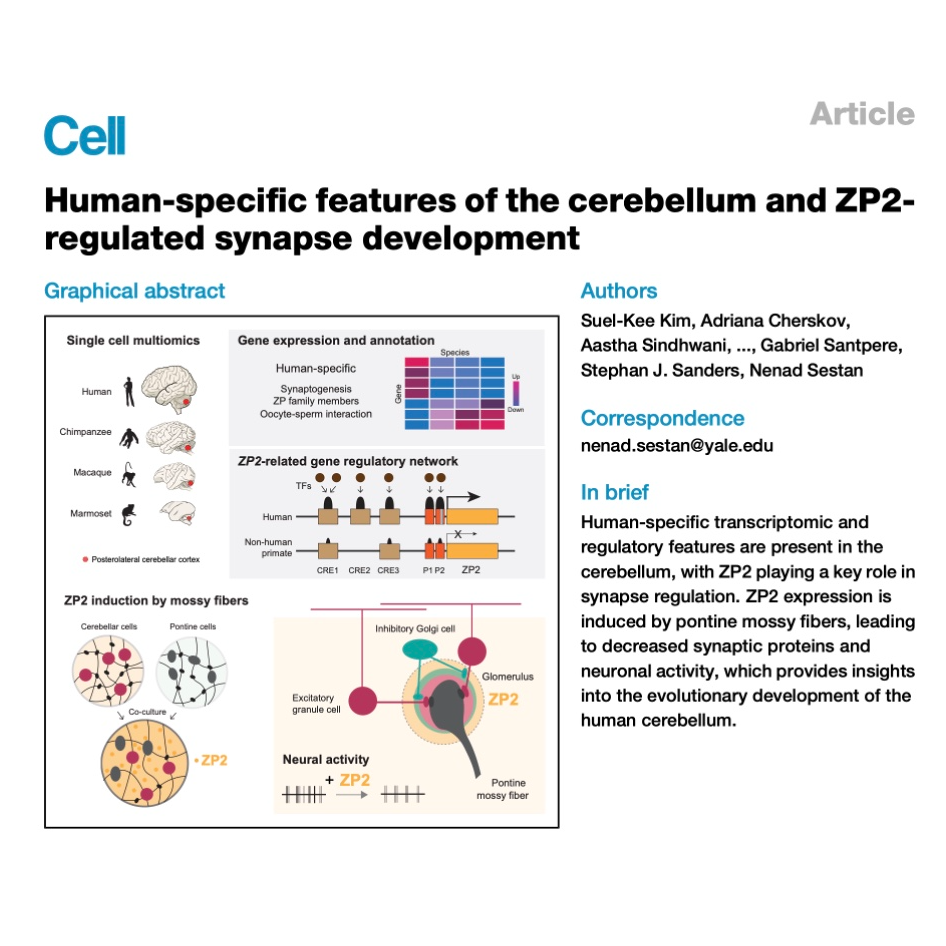
This study presents a single-nucleus multiomic atlas of the adult primate cerebellum, comparing humans with chimpanzees, macaques, and marmosets to identify species-specific evolutionary features. While most cerebellar cell types are conserved across primates, researchers discovered that human granule cells exhibit significant transcriptomic divergence, particularly in genes related to synaptogenesis and synaptic maturation. A key finding is the human-specific expression of ZP2, a protein typically associated with reproductive fertilization, which has been repurposed in the brain to regulate pontocerebellar glomerular synapses. Experimental data show that ZP2 acts as a feedback mechanism induced by pontine mossy fibers to restrict synapse formation and reduce neuronal activity during development. This molecular adaptation may explain the neotenic maturation and increased complexity of the human cerebellum compared to other primates. Additionally, the study links these evolutionary genetic changes to various neuropsychiatric and neurodegenerative disorders, providing a resource for understanding human brain dysfunction.References: Kim S K, Cherskov A, Sindhwani A, et al. Human-specific features of the cerebellum and ZP2-regulated synapse development[J]. bioRxiv, 2025.前往小宇宙评论区与主播互动
Embed this episode
Ready to play
728-The Evolution of Human Cerebellar Synaptogenesis
No transcript for this episode yet
Similar Episodes
No similar episodes found.
Similar Podcasts
No similar podcasts found.