
EPISODE · Oct 13, 2026 · 21 MIN
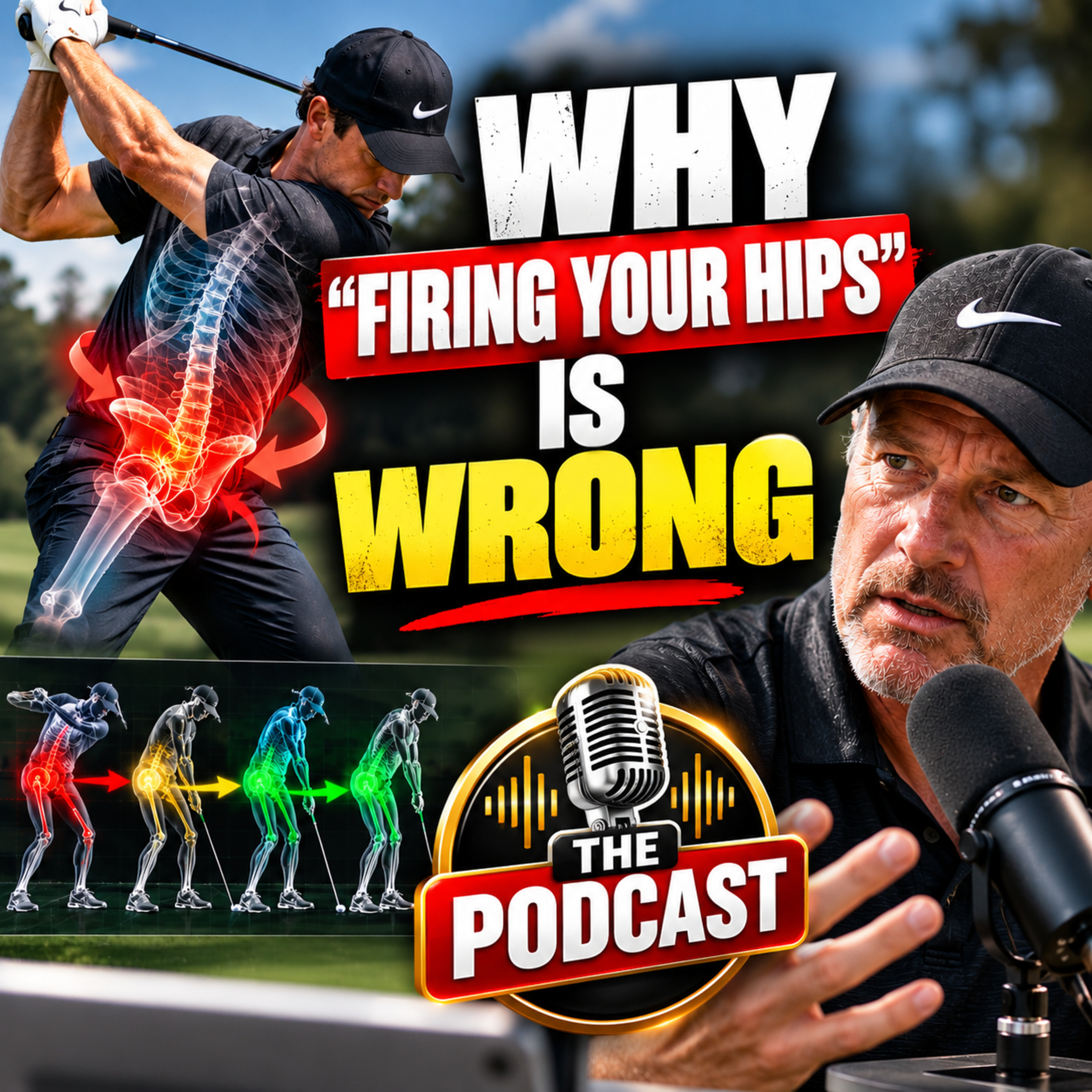
#738 Why “Firing Your Hips” Is Ruining Your Golf Swing
from eCoach360°: The Global Platform for Innovative Technologies and Teaching Concepts. · host eCoach360°
“Fire your hips and let your arms drop!” This popular golf instruction sounds powerful, but 3D biomechanics reveals why it often creates trapped arms, steep club delivery, inconsistent contact, and lost clubhead speed. 1. The Pelvis Leads — But Must Not Run Away The pelvis initiates the downswing before the chest, arms, and club. However, excessive hip rotation can leave the trail elbow trapped behind the torso. The result? Early extension, stalled rotation, wrist flipping, and unstable impact. Leading means starting the sequence, not dominating it. 2. The Golf Swing Works Like a Multi-Stage Rocket Efficient speed generation follows a coordinated kinetic chain: Pelvis → Chest → Lead Arm → Shaft → Clubhead Each segment contributes to accelerating the next. The chest must take over from the pelvis, the arms accelerate, and the clubhead receives the final speed. This is why segmental speed gains matter more than simply rotating the hips faster. 3. Deceleration Creates Speed One of golf biomechanics' most misunderstood principles is that proximal segments slow down after reaching peak speed. The pelvis accelerates early, then decelerates as the chest and arms accelerate. Even the hands typically reach peak linear speed before impact and then slow down as the clubhead accelerates. Deceleration is not necessarily stalling. It is part of efficient energy transfer. 4. Your Arms Are Not Passive 3D measurements show that peak chest and lead-arm speeds occur remarkably close together. The arms actively accelerate during the downswing rather than waiting for the body to finish rotating. Passive feel does not mean passive biomechanics. 5. Create Space Instead of Spinning Faster Efficient players organize their arms early through: - Trail-shoulder external rotation - Lead-arm adduction - Maintaining trail-elbow flexion toward impact - Coordinating hand path with body rotation These movements help keep the trail elbow in a functional delivery position and prevent premature arm extension. The WatchItGolf Transition Model Load → Pelvis Initiates → Chest Responds → Arms Reorganize → Hands Accelerate → Clubhead Delivers Speed Stop trying to fire your hips harder. Start developing coordinated movement, functional space, and efficient speed transfer. The question: Are your hips helping deliver the club, or are they running away from your arms? WatchItGolf — Technology Supports the Golf Professional. My Blog The Explainer www.ecoach360.com
Embed this episode
Ready to play
#738 Why “Firing Your Hips” Is Ruining Your Golf Swing
No transcript for this episode yet
Similar Episodes
No similar episodes found.
Similar Podcasts
No similar podcasts found.