
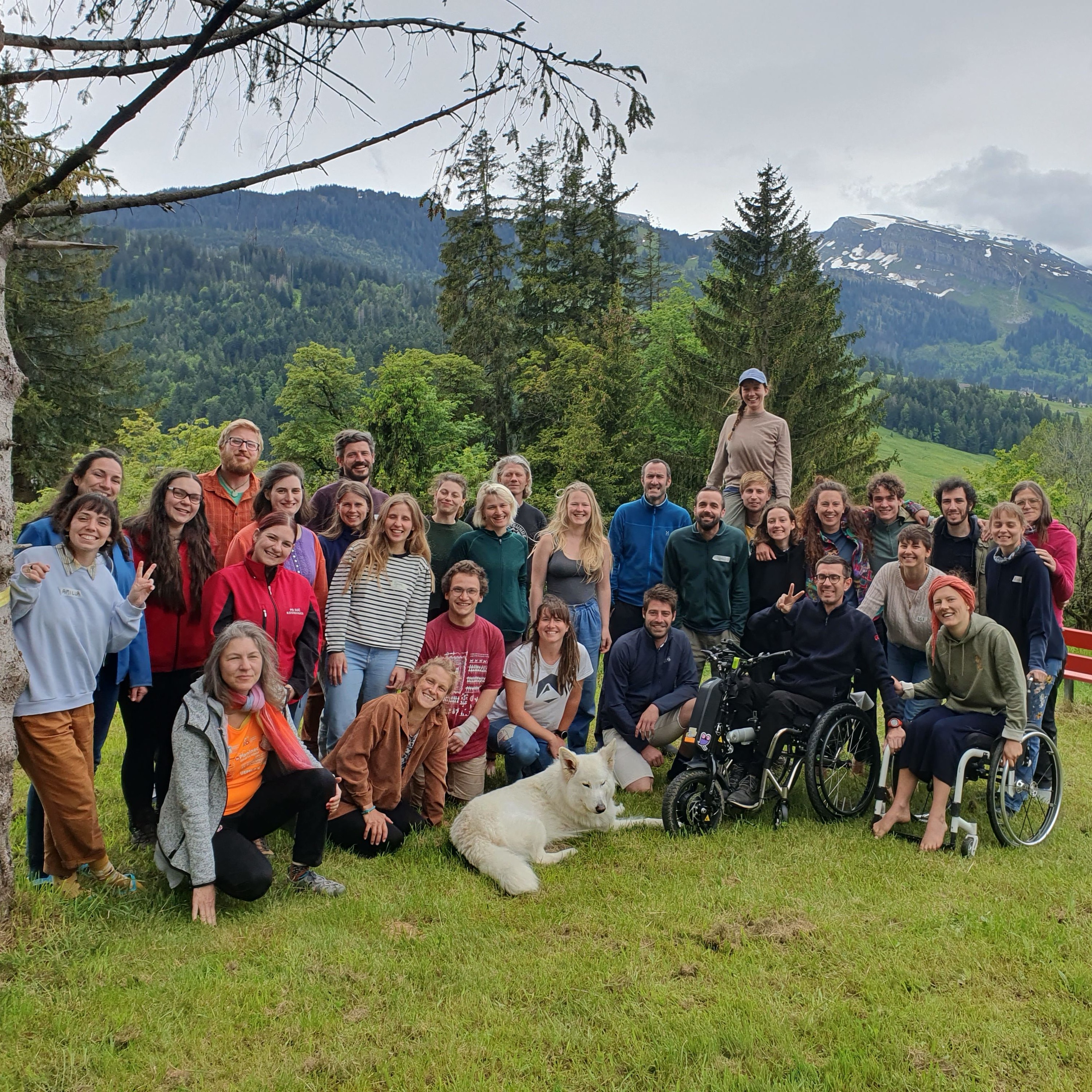
A podcast by Ciprah The Artipa Podcast The Artipa Podcast Interviews, background talks and voices from all Alpine countries Listen to this and more in the podcast of the International Commission for the Protection of the Alps www.ciprah.org.port.cast High King is one of the most popular forms of outdoor recreation Offering many psychophysical benefits Although it is considered an easily accessible form of recreation We quickly realize that it's not equally accessible to all groups of people Fortunately there are individuals and organizations Who in the spirit of inclusiveness Are working to create opportunities where people with disabilities Can also have authentic mountaineering experiences In this episode of our podcast we visited the Swiss village of Viltaus At a training organized by Ciprah Switzerland and Ciprah International as part of the Via Ipina youth project The international training is aimed at youth workers and all those who are somehow related to the topic of mountains and inclusion There I met Maria Tachic, the deputy head of the civilian health and association board in Fenneneth A project that helps people with disabilities to enjoy the mountains Maria Tays volunteer, winner of the Slovenian Outstanding Achievement in Volunteering Award for 2020 creator of the Inplanites Committee program of the Slovenian Health and Association and initiator of the campaign's deaf people serving mountain heads very gliding, no barriers for the blind and partially signed and many others Term inclusion is often used but not very familiar to everyone I asked Maria Tays what inclusion in the mountains means to her Inclusion I think it's the best to describe that we are making inclusion hikes so that means that we try to adapt or choose the right path if the environment makes it possible we make one path for movement impairment and the other for all those who can walk as well we have to think about excessive toilets and some other things but we do inclusion not only to bring people with disabilities into modernering we bring us when modern years within people with disabilities so if there is no ordinary people there then we cannot speak about inclusion Can you introduce the committee for persons with disabilities and special needs in Fenneneth? Yeah so the head of committee is Yochuk, the main power to run everything and there are some professors, some people being active in different fields so we have two doctors of kinesiology and some teachers and I think we are really a great group to cover different aspects so yeah the committee mainly is there to support the basic work, the connection to the Alpano Association and underneath there are different working groups they are connected to a target group and what I think is great and it's a step forward to inclusion that a head of this working group there are people from the target group so we have this in planning that's with hearing impairment and the deaf person is there to run it and we have a group like the SESIF step for blind and as well the most of the people in that working groups are blind and as well there is a movement impairment so the head of that working group is someone alone in the wheelchair and there is no other diversity so there are some people with autism working in advance so when we prepare something a special activity is already people there to guide us not to overlook something that would make harder for participants to be with us or even to come with our for example hikes and how did you design the communities program like what activities does it cover? so mainly we have inclusion hikes so different ones it's like really a shorter like four kilometers and it's on the road so accessible for everybody there are some longer ones some on mountaineering pads for example there is a storage in three-glow and we will go even higher and further and across the border and we will conquer bright horn. sounds amazing so how many people are involved with the work of the community?
you mentioned the working groups maybe a word or two about volunteers who are the people that are involved with the work maybe what is their background motivation? so there are around 40 volunteers that are like in the committee and working groups but to be able to conduct such a huge amount of inclusive hikes and even with so many people different people there so the the hugest was we were already over 200 people there yeah we really do need different volunteers and for that we are connected with different organizations that are working with you so this is Scaldy from Slovenia, Tabornike, Sloletzka Caritas and some smaller organization and we have a really great connection with Manipura those are hosting volunteers from all over the world I think this is like an extra added value for us we have visited from abroad and as well for them and we use social media so if we really like volunteers then there is some response to our social media questions or invitations so we have quite a good response for our hiking associations and we try to connect with them locally so if we go for example to start each week go to people that are living in the beach and they know the surrounding, they can tell us everything that is special around there the food, the view, the tales we cannot provide that from ourselves and what was the journey from having this idea then to realizing it into the project itself? so we had the idea to make inclusive hikes but before that we started with training so we saw that there is quite some fear towards people with special needs and we were lucky that three deaf persons were there in our workshop or the training but we knew that they were deaf but we didn't really prepare or something so the deaf person came and there was no trouble with communication because they have to interpret them with them and after the first day there was a guy and he was a set there but why wouldn't we serve in the mountain hunt? why shouldn't deaf serve in mountain hunt?
so this was the start and then the next year we did this action and our idea was that we make this inclusion hikes and each year we will put special force to one group but it didn't end up like that so not that we changed and do only one target group all the others came and now we are covering all together but what I think is a great attitude value that these different target groups can support themselves between each other it's when the deaf and black had support someone with movement impairment and it's really a big win with situation for all of those who are there and in real life I think it would be really extra thing that they would come together and support themselves we can give an opportunity to people with less opportunity to be supportive, to be a part of it, to manage something I think that it's really a big goal and a win for everyone and we know that mountaineering is somehow almost embedded in the civilian culture what was the public reaction to the creation of the committee and then to your work itself? so I didn't get like the public feedback so because we started slowly we were connecting with different persons with different organizations and it was slowly growing and becoming like today I would say it's really huge at the beginning so when we attend locals it was quite some scary in their eyes a woman she's a guy she said I wasn't sleeping the whole night I was thinking how am I going to support a black person to the mountain hut and then when she was going from the hut she said yeah but it wasn't a trouble I thought we would be back like really late almost at night but it was really quick and she went yeah I don't know why did I trouble myself so much because it's not such a big deal you mentioned some of the organizations do all work with? so to support or to inform we are working with Sushita this is people with trouble in mental development and Sondchek there's mostly cerebral pulses and there is a small organization for youth with autism and there is paraplegic and dystrophy and multiple sclerosis I think these are the most but we do not only connect with them or invite them we are open that anyone who wishes who is able that can join us so it's quite a big network and maybe a word or two about how our activity is financed so we are co-financeed by Ministry of Health we are co-financeed by Fijo and we get some donations and as well if anyone is willing to drop a coin on our inclusive hikes there's always a box really inviting for some change what was maybe the biggest challenge in setting up the project the committee? so with the committee only one person needs to be asked to join us otherwise with the committee there was not a big challenge sometimes it is challenging to get a door open because some people I don't know maybe they have a fear maybe a different point of view or maybe need more time to see that inclusion is only a benefit to everyone that is covered and connected with it you also organize inclusive hikes together in the mountains as we mentioned which must be quite an organizational challenge how do you prepare them?
so it is an extra challenge when we make this inclusive hikes for movement impairment so at first we have to decide what would be an accessible goal and then we go there to see if it's really okay if there is a park space really important so if there is not an accessible toilet we always arrange and we have these portable toilets really great then we write an invitation and see how many how much interest do we get and after that there is the part for inviting the volunteers if there are less there are phone calls and some friends can you what can we do sometimes it is a bit hectic and afterwards if it's really like hundred people on one hike it's really crowded to take a look at the time to set the pace to connect a person in a wheelchair with volunteers it is quite the challenge so if it's not a really steep road then two volunteers are needed for one person in a wheelchair otherwise there is one to support or even if it's an electrical wheelchair if it's steep the person has to be there not to push it but just to make a small force in the back so it's not reversing on the climb and what is really unique that we do when we come to the hut or our goal we all sit together and we have like a small introduction who is everywhere there so the head of our working group for movement environment is always very keen on helloing everyone and yeah telling some impressive sentences so I think when we come together on one place it doesn't matter how fast on what was our way of coming there it's really amazing and so another thing is why it is important that we do talk a bit when there are people with visual impairment it's really good that they get something like who is there so it happened on one of our first of one of our hikes that when we were back home and we went over to the bus the two blind person said oh you are here today as well and then it clicked okay yeah so we have to do something or they have to do something in between them not to make this happen again and how often do the hikes take place so this year we have 55 hikes like one two no we can yeah that's quite a high number yeah this year but the next year I think we're going there's going to be less okay do you maybe have a story or an anecdote from the hike that will always stay in your memory there are quite some so there was a blind person assisting a guy on a wheelchair and on one point he went like where are you driving where are you driving and then the blind person behind told him but yet you have to tell me where to drive so when we came down from the mountain hut a guy came to our guide and he said so yeah are you going to fetch my harvests I left it at the hut and then the next question was so do you have your keys from apartment yes I have and yeah it happened even I have a second stay at the hut we solved it so no one had to go really to fetch it okay yeah so it's all got solved you have also published an infinite handbook in a diary and you organize training for anyone who would like to participate or introduce these practices in their work with people with special needs can you maybe say a word or two about this so our training slides for 3 days they are really intense and from the last one what I got was that participants said that what she cherries that it can be felt that we are all connected with all the trainers and they cherish the me and the colleague was there all the time to support them and those who do not have any interaction with people with disability gain really really a lot and a lot of teachers said that if they would have this training before they started to work at schools it would be much much easier from there to follow ahead my fear was because there were people coming from organization that are working with people with disability it's going to be boring for them but it was really an opposite of it because they also gained a lot and it was like something new and something refreshing and like yeah I think it's really a universal thing the manual is support for the training and inside of it's the information about different disabilities and then there's the diary where we try to encourage people with disability to collect stamps and there is as well easily that pictures and then they put the dates inside and there are some pictograms so they can rely on it and so it can be really used for everyone Inclusivity requires many skills which would you say is the key? so if you don't fear you just need to be there to take a look and to let people do everything they can by themselves and support them only there they cannot and you are also spreading the message of inclusiveness in hiking across borders you also mentioned some ideas which international associations do you work with? so on our trainings there were participants from Italy from Croatia and from Macedonia but we do like neighbor collaboration with Croatia so they come for a high-code to Slovenia and then give the visit back to them what are the plans for the coming year? for the coming year so I hope that we would get some project from it maybe a rasmus and yes the next year it's really important it's our 10th anniversary and we are already working at that because it's going to be quite big and with that it's a challenge to prepare it really good not to leave anyone out of our through-bration what advice would you give to others who would like to start the project of this kind?
so yeah you are welcome to connect with us otherwise just go ahead take small steps and if you don't know ask it's a great advice thank you so much for chatting with us thank you for your work and for contributing so wholeheartedly to creating a more inclusive society bringing mountains and hills closer to everyone and I really hope that this conversation might have inspired someone to help make the world more inclusive and maybe even join you on your hikes this was an interview with Maria Tatchic at our international youth workers training in the village house Switzerland if you want to know more about our project via alpina youth check out our website www.zeepra.org my name is Julia Kralberga thank you for listening a podcast by Sipra a podcast by Sipra the ATCPRA podcast three print podcasts interviews background talks and voices from all Alpine countries listen to this and more in the podcast of the International Commission for the Protection of the Alps www.zeepra.org.org.org.org.org.