
EPISODE · Apr 11, 2026 · 21 MIN
779-Microbio-Nicotinic Acid Regulate Colon Regional Identity
from Paper Talk
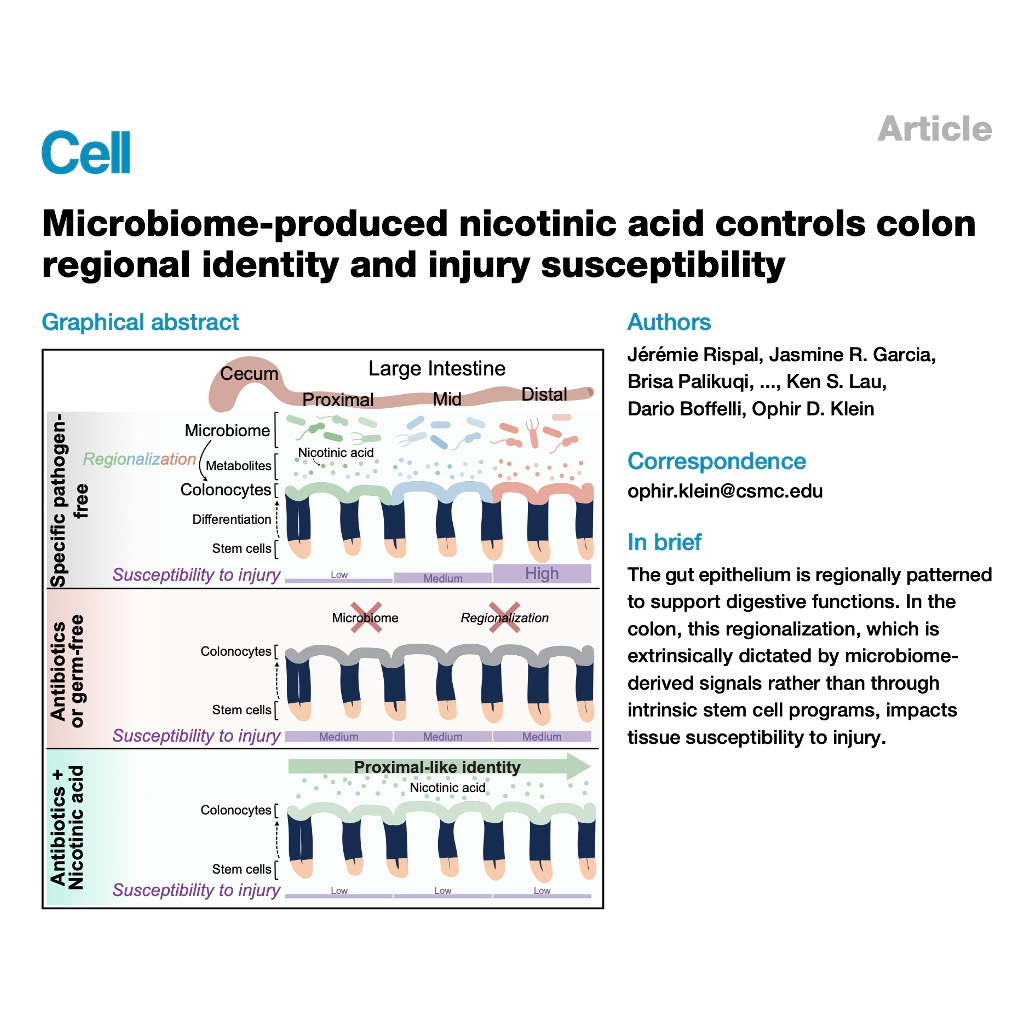
Research in Cell reveals that the biological identity of different colon regions is primarily established by the microbiome rather than being an inherent trait of intestinal stem cells. The study identifies nicotinic acid as a critical microbial metabolite concentrated in the proximal colon that triggers the PPARα signaling pathway to define local cellular characteristics. When the microbiome is depleted via antibiotics or in germ-free environments, this regional specialization is lost, leading to a more uniform and vulnerable intestinal lining. Restoring these microbial signals or the specific metabolite can reinstate proper regional identity, which provides essential protection against tissue damage. These findings are clinically relevant as humans with Crohn’s disease exhibit a similar loss of proximal colon identity, suggesting that microbial-driven patterning is vital for gut health. This work shifts the understanding of organ development by demonstrating that external microbial cues, not just internal genetic programs, dictate tissue functionalization.References: Rispal J, Garcia J R, Palikuqi B, et al. Microbiome-produced nicotinic acid controls colon regional identity and injury susceptibility[J]. Cell, 2026.前往小宇宙评论区与主播互动
Embed this episode
Ready to play
779-Microbio-Nicotinic Acid Regulate Colon Regional Identity
No transcript for this episode yet
Similar Episodes
No similar episodes found.
Similar Podcasts
No similar podcasts found.