At Capital One, we don't just use technology, we architect it. Our teams have true end-to-end product ownership, shipping distributed systems that handle high concurrency at scale. No single-server bottlenecks, engineered beyond legacy downtime, and operating right here in downtown Toronto. That's technology at Capital One. Search technology at Capital One Canada.
We'll be right back. Welcome to the Backpack Purchers Podcast, a family-friendly show that is tips and tails with a sense of humor. With me today is the guy who tells you you're almost to the top of the hill when it's still miles away. Jesse Mantai, how's it going? It is going well, and with me today is Mandrioli, the outlaw of the grocery aisle. Mandrioli, not Carl Mandrioli, just Mandrioli. Oh yeah, I'm going to call you Mandrioli for the rest of the episode. Mandrioli, because that sounds like an outlaw name. You know, that sounds like, you know, kind of like running from the law. Mandrioli, on the run. Going after Mandrioli. Yeah. Carol, Carol, I mean, it's not a great outlaw name. Oh my goodness.
Are backpackers really breaking laws, Jesse? I think there's more than they realize and more than they want to admit. I think that's- Really? Yeah. I think it's out there. I think we're touching on a soft spot in the backcountry genre niche community that, you know, people don't want to talk about, Carl, but it's there. And we know it. We're watching. I'm watching you guys. We're watching you. I don't- We're reporting. I don't think we've done an episode like this before. And I just kind of, I feel like there's some things out there we're just going to talk about. There's, yeah. So we're going to get to all this. But first, we have the Bible verse of the episode, John 1-7. For the law was given through Moses. Grace and truth came through Jesus Christ.
What's the worst law that you've ever broken? Mine's like, it's like actually kind of bad. I was young and stupid and we were fooling around with fire and we had found out how to make a Molotov cocktail. Okay. And our plan was to break the Molotov cocktail on the ground. Yeah. Not do any property damage. Not throw it in a car.
but we hit it with a baseball bat because we're planning on breaking it on the ground, which like, thank heavens that didn't happen. Like God was protecting us because that would have been like third degree burns for all of me and my friends. Yeah. But we hit it with a baseball bat. It was on the ground. And instead it actually like hit the side of a building in my neighborhood. It was cinder block walled. No fire went beyond the wall. It was just on the wall. But that's probably the most illegal thing I've ever done. And it could have been really bad. Wow. Yeah. So I think the statute of limitations is up by now. So I think I'm good to say that out in public. But what about you? Well, it's funny you mentioned the statute of limitations. I actually had to like research that to make sure I was allowed to say that.
Have you consulted your lawyer? Yeah, I want to make sure that, yeah. Because when I, yeah, I was, I mean, I assume you were young when you did yours, right? Yeah, like I was like 13, 14. Yeah, so same time frame for me. And this is before that I had started attending Bible study regularly. I had been invited by Rocky. And so I was getting into a lot of mischief, to be honest.
On the surface, I think I was a good kid and getting good grades, but I think there was like a lot of not so good stuff going on inside. And so there was an opportunity. We heard a rumor, like, you know, I see these rumors with kids that there was an abandoned house in a nice neighborhood. So it's not like some scary like ghost house, but like a nice house that was abandoned that had a stash of baseball cards up in the attic. Why anybody would know this or why there'd be baseball cards in this abandoned house with no furniture? I don't know. But all it really was like in retrospect was a house that was on the market for sale. They just hadn't sold yet. That's all it was. Like as a kid, I didn't, like, I don't know real estate. And so we just thought it'd become like, well, abandoned house. Like, what if we go in there?
and search the house and find these baseball cards. And what if we do like a little sleepover in the abandoned house? You guys actually? Yeah. So breaking and entering was my worst lot I've broken. Yeah. Did you guys actually stay the night? Yeah. That's also squatting. Also squatting. Also like three years of prison up here in Canada, I think. Yeah. I guess squatting. There was no damage done. We didn't do anything bad. It was just more breaking. Yeah. That is a wild story. And I'm like, sorry. The boy side of me is like, that's kind of cool. That's kind of cool and bad, but kind of cool story to have. But no baseball cards, by the way. No baseball cards. Yeah. There you go. Yeah. I've definitely mischievous kids.
So all that to say, like, I don't know if I've carried some of these things over this, like, for you destruction or breaking entering for me into the backpacking world. We're gonna talk about it. So we've got, I think we've got eight laws. Backpackers break mostly without getting caught. Mostly. How would you define a law? Like, in your eyes, are we talking about, like, actual laws that Congress, state Congress, or, you know, our federal Congress has made? Maybe. Maybe. But probably more so talking about, like, you know, backpacking rules, like, taboos, things that every backpack, like, it's gotta be well-known enough that, like, you know you're not supposed to do it. You've heard it enough. You've been told.
Yours are a little softer than mine. Mine are like, I think definitely rules, but I think the ones that I've got, I have at least one, possibly two legitimate laws. on my list here. And then in addition to that, the ones that aren't laws, like you can either, you can get fined for it. Like these are actual finable offenses. Some of mine are finable offenses. And I've also like to put it into perspective, mine are all something that if somebody saw you doing, you could get in trouble for. Like they're all something that like you could get a fellow backpacker coming up being like, what are you doing? Shame on you. Yeah. So like, and I, but I think some people are guilty of these. I might be guilty of these. Some are like real bad. Like don't do this folks. Right. Some are like, Hey, like you just try not to get caught and do this. Right. What about you? Are yours all like, don't do this or yours? Like don't do this and try not to get caught.
I think a mix, but I've got some pretty aggressive ones. Yeah, I've definitely got a few that are like, stop doing this, folks. Okay, let's get to it, man. Let's get to it. Number one, what you got? Okay, number one is...
This goes against Leave No Trace principles, and yet I don't know a single backpacker who doesn't do this, Carl. All of us almost do this. Burying toilet paper. You are technically supposed to pack it in, pack it out. You are technically supposed to pack your toilet paper out with you and not bury it in your cat hole. That is in almost every national park across North America. Really? Yep. Every backpacker does that. I get told when I get my permits in these national parks. Are you trying to pull off some Canadian Leave No Trace stuff and accuse Americans of violating it? I could be wrong about the American national parks, but I know Leave No Trace principles are toilet paper is supposed to be packed out.
It is not supposed to be buried in your cat hole. Only natural people. And leave no trace is not the police, just to clarify, right? Laws, rules. Somebody's going to wag your finger. Technically speaking, you're not supposed to be. Do I? Yeah, of course I do. But like, I know so many people. It's a law. It's a rule. You don't agree? Yeah, I think it's a soft answer right there is what that is. Yeah, I think that, yeah, I don't know anybody, unless there's a park that has like a really fragile ecosystem. I don't know anybody that's like actively packing out their toilet paper. That's what I'm saying. I shouldn't say that. I'm not aware of them. There might be people that are doing that and they're just not bragging about it. No, that's what I'm saying. I don't know anybody who doesn't, but they're technically supposed to.
Okay. According to Leave No Trace, but Leave No Trace is, the idea behind it is good, but it's a scam. It's like a sham. Leave No Trace. Like, we want no trace in the wilderness, except for these trails that we bulldoze into the mountainside.
That's okay. But don't walk to the one edge of the trail because you're going to walk the trail. Like, come on, man. Like, we're making trails. We're leaving a massive trace. You guys, he just called Leave No Trace a scam. Like, meet me in the comments. Meet me in the comments. We met with them years ago. They were at the outdoor retail show years ago. I called them out to their pace. This is not a new thing. That is, yeah. You don't think that Leave No Trace is like backpacking law? Like, I feel like most backpackers think Leave No Trace is backpacking law. I feel like most influencers talk about it. Like, it's backpacking law. Like, you are not supposed to break these things. I think it's people that like to do the little, like, shame, shame thing on people. I think they use that as backpacking law. And I think most people use it as more.
like guidelines than actual, just like, what would No Trace say about this? I don't think that they're having that little LNT person on their shoulder looking over everything you're doing. But see, even the like little people who are like, shame, shame, and they're all going after other people. Even those people, Carl, bury their toilet paper. That's what I'm saying. That's what I'm saying. It's a law. Even for the people who are like, I'm so strict on this. They're like, yeah, but I'm going to leave that there. I'm not packing that out. Yeah. I still think that you got some better ones on your list. That's my prediction. So I'll go the opposite then. I'm going to go with like an actual law. This isn't a lot of backpackers, but this is like minority. So I'm not talking about like a lot of people. This is definitely a law.
People are breaking without getting caught and they're going into areas with guns and they're doing target practice and they're shooting and they're not getting caught. I've been in areas, backpacking areas a number of times where I'm hearing gunfire in areas I absolutely know I should not be hearing gunfire. I'm not going to go like find out who these people are. I'm not going to go. That's fair.
hey, the gunfire sounds like it's getting closer. Let me go approach them. And then even if I am somehow going to come from behind and be like, hey, hey, guys. Put those guns away. Just so you know, I got your license plate. I'm going to report you. Please don't shoot me. Yeah, exactly. And then if I am one of those like rare gun-toting backpackers, I'm not going to have like a Wild West showdown with them. So unless there happens to be law enforcement out there, chances are they're not getting caught. Yeah, they're just getting away with it. I definitely feel like this is more of an American problem than a Canadian problem up here, but it happens even here. There's boundaries where you're not allowed. Are you allowed guns in the national parks down there? I don't.
backpack with a gun because I think it's a dumb thing to bring. So I'd have to look it up. But I think you are in some or, I don't know, like we had a guy bring one into Glacier when we had, when we were going to be in grizzly bear territory basically. And then we had a ranger come up to us and tell us like, hey, that's fine that you have it, but it's not going to do anything. Like if you have a handgun with a grizzly bear, you're going to lose basically. Yeah. Oh man, that's a whole conversation. I'm so passionate about that conversation too, but we won't get into it. Because yeah, I think guns against grizzlies is dumb. Unless you're hunting. Knives are better is what you're saying, right? I like the element of surprise. I just go boo. Okay. So yeah, I think people are getting away with that.
Those aren't people in my group and those aren't people I want to go backpacking with. All right, number two, or number three she got. Yeah, okay, this is, again, not everybody does this, but I think most backpackers have at least, I think all backpackers have been tempted to do this. And I think most backpackers have probably done this at some point. And that is, you're not supposed to put your own food, garbage, into outhouses on the trail. Into, yeah, exactly. You are not supposed to do that. Yeah. But man, everyone has had that point where they have rehydrated a whole meal. They've gotten like six bites in or half a bag in and they're stuffed. Or they've gotten vomit in a bag and they're like, I cannot finish this.
Right. And you're going to pack out that entire, what is now like two, three pounds of rehydrated food. Right. Everyone's been tempted. And many of us have snuck into the outhouse, squeezed that thing into the toilet and walked away. Okay. And have we gotten caught? Not yet, folks. Not yet. There's no cameras in there. You're not weighing your pack before and after the outhouse. Someone is testing the deposits and they are telling you that is some spam and a ramen bomb. Okay. That's all I'm saying.
And it's not processed. It's not processed. Bodily processed. It's a different kind of process. And there is some elk juice in it. No, sorry. Yeah. Oh my gosh. I've never done this before. And here's what I am more likely willing to do. I've burned food in the fire before, which is also controversial. I don't know if it's against the law, but because it's getting completely consumed, but I burned food in the fire. And then when I was out on a longer trip this past summer, I had my bag of trash and I went through it.
Like we hiked through a primitive campground. They didn't have like dumpsters and things. And I found somebody who happened to be like wrapping up their own trash and leaving. And they were willing to take off my hand. So I like hand it off to them to get rid of. And that was super nice. I, okay. So I had the opposite of this. And this is a no, no. Like this actually like made me so angry. I went to an outhouse and someone had left their whole bag garbage in the outhouse. Okay. And it was my last day. And I actually packed out their trash because they literally just left it in the outhouse, like expecting some ranger, expecting somebody to come by and clean it up. And I'm like, that's not going to happen. And I was like, it's my last day. So like, whatever, I'll load it up. But that like, that infuriated me.
infuriated you to become a backpacking hero, Jesse, because I think we, I think round of applause for Jesse. Like he, he kind of, he saved the day. Like I think that neutralizes anything you've actually put in the outhouse. I think now you're back to even. Oh, great. That just took a huge load. I'm conscious, like load off myself, my shoulders. I had a similar situation, but it was like.
10 times worse as far as what people left behind. Somebody that, like, wasn't a backpacker was trying to backpack and then ended up ditching a lot of their stuff along the way. But it wasn't all at once. It was, like, I found a group of utensils, eating utensils in the middle of the trail, and I was like, that's weird to find these. Maybe they just dropped them. So I picked them up, and then I found a freeze-dried food bag that was half-eaten. So it was already, like, rehydrated and kind of heavy, and I was like, oh, man, like, I don't want to pick this up. This is, like, heavy. But I did. I picked it up, and then I got to this, like, campsite that had one of those, like, roll-up sleeping bags, like, they kind of used for sleepovers, not for backpacking, and then a whole bunch of stuff was just abandoned. It was just, like, they had been
Well, hey, if you're calling me a hero, you're the one who's packing out rehydrated food. So like that's, I was going to, and then I was like, this is a trail crew that needs to do all this stuff. So I just helped like consolidate everything. Next one, number four. Number four, I've got, let's go with, I don't know if this is up in Canada, but we have something called some of the parks we have here, the timed entry pass. And this is to reduce crowds where you actually have to reserve a spot to go into a national park ahead of time. So you pay for it and it actually does work. And so I actually do like this system. And the bummer is you can't just like show up to a national park and gain entry, but for the most part, you can't.
But there is a way around the system. And the way around it is you go way early or way late into the national parks to gain access. And not only do you not have to pay, but you can get in without the time to entry pass. You can basically skirt the system and not have to pay. And I guess that the gates are open. So technically you're allowed to. But really, if you go into the national park on a particular day, you're supposed to pay. And so people are getting by by going in at like 5 a.m., let's say. And they're violating this rule. So you don't have to pay if you go super early? Correct. Oh, that's interesting. Because they don't check it on the way out.
In Canada, they'll like check license plates just like driving around in parking lots and whatnot. And if you haven't registered your license plate, so you have to have a pass or have paid that day, even if you go there early. Because you're right, like even here, the kiosks won't be open at a certain point at a certain time at night, but you still have to have a pass. Yeah. So I think that, yeah, they need to have like a meter made system. They really want to be punitive about that kind of stuff. I think that there's so few people that are coming at that time that basically it's not that big of a problem and they're still getting their money. So here's the thing. Is that a law though, Carl?
Are they breaking the law? It's a finable rule. That's what I'm saying. It's finable. So if you were, if they were like, hey, if you did have a meter made, they're like, hey, where's your pass? You know, are you supposed to be here during this time frame? You're like, yeah, I don't have one. They can either force you to pay or give you a fine. There you go. You're trying, yeah, you're trying to find holes in mine. It's not going to work, Jesse. I just want to say it's a soft answer because that's what you said to me and it just kind of hurt, Carl, okay? Hurt my feelings. No, it didn't. It's not hurt at all. Okay. All right, number five, what you got? Again, not a, well, actually it is a finable offense in certain parks here in Canada and it's controversial. I...
Oh, should I own up to this? I will own up to this. I won't do it. Hypothetically, I know a certain villainous backpacker who... I will bring...
my instant coffee and my pot into my tent while I sleep so that in the morning I can make my coffee first thing in the morning in my tent, sipping it, relaxing, and then getting started with my day. And so that's like a taboo. Bringing food into your tent as a whole is kind of like risky. And like I said, in certain parks here in Canada, it's actually findable. I'm not sure about it in the States. I imagine in Glacier it would be. Similar grizzly problems. I don't know if it's findable here. That's interesting. But I'm just going back to something you said a couple weeks ago on the baffling mistakes that rookies make. And you're saying that you're fine to start hiking cold. And so this is the opposite of that. You're starting hot.
No, this is like before I get out of my tent. I want to like, yeah, it's like I want to like relax and chill. And then when it's time to start, you start, you get out of that sleeping bag, the coffee's done. Now it's time to be uncomfortable. But for those first like 15 minutes, man, it is the sweetest thing waking up with a cup of coffee by your bed. And like I will start my pot and go back to sleep for the next like 30 seconds to a minute, have a quick snooze. And the other thing I love about this is that I don't have to boil my water. I just get it to that perfect drinking temperature. Take it off.
Put the instant coffee in, stir it, and start sipping. You're really, really excited about this. I think you want to have some coffee right now. It is one of my favorite things. I wish I could do it at home. Sierra and I found an alarm clock that makes a pot of coffee right by your head side. So it wakes up, it's there. It even has a little refrigerated element for the cream. It's like $250, so I can't justify buying it. But if I could, if I could. You get it. Put that on your wish list there. They've got Waking Bacon, where you wake up with the smell of bacon.
People eat bacon when you wake up. Bacon, bacon. Is it just the smell of bacon or is it actually like it cooks bacon? No, it's bacon. It's actually bacon. I had to bring that out of the back country. You're waking up with bear bacon. Correct. So really what you're saying is you're willing to risk your life so that you can have some coffee in the morning. Is that accurate? Not only my life, Carl, but everyone else in the campsite as well. I'll trust you that it's finable in your area, man, because I don't know that it's finable there. And I'm super aggressive with like being aware of where bears...
are, you know, willing to take your food, willing to go to your camp, willing to climb trees. I want to know if I'm in one of those areas, I need to be hyper careful with my food or on the contrary, in most places where I can probably just have my food inside my tent. And so we had Andrew Serka on a few months ago and he basically said, unless you're in those hyper aggressive bear areas, he just sleeps with food, literally not even in his vestibule, but inside his tent. Yeah, that's, yeah, I like definitely want to talk about that at some point, maybe in a future episode because yeah, I think it is a risk thing, but I know, so I have to look into the rules specifically. I know that any kind of abandoned food is a findable offense. And so like, you're not allowed to keep food in your tent. That's findable. I assume that
I want to look into this now because I've just, I guess I've taken that as like food inside your tent. You could get fined. But like in Glacier, you have to have a bear canister. So you're telling me if food's not in your bear canister, they wouldn't fine you? I'm saying, well, Glacier is a totally different spot because they...
They've got like wires where you can hang your food and things like that. And they will aggressively tell you that you're in a spot where there are aggressive bears. So in those situations, then I will abide by the rules. I'm abiding by the rules no matter what. But if there's no requirements for bear canisters, there's just like suggested practices, I'm putting the food in the tent. But what I'm saying is on the law breaking, you're telling me that if you went to Glacier where you have to have a bear canister and you had your food outside of your bear canister in camp, like not just because you're using it. They would just be like, oh, you have to bring the bear canister, but food doesn't have to be in it. Of course it has to be in it. They find you. Glacier is probably the best example too because they have so many stinking backcountry rangers that are looking to get you.
Like they're looking to get you. I mean, we had one that was checking our permit. Our permit was legit. And they, I don't know, she's like looking down her nose like, huh, sure you're going the right way here? I think you also have a headlight that's out. She was nice. She was nice in the end, but it was like, I was like, should I be nervous about this? We're following the rules. Anyway, there's a moment. All right, man, you just share one that you broke. So I'll share one that I definitely broke. And this sounds like a minor issue, but this is actually like a really big deal to a lot of people. And in areas, not national parks, more like National Forest or other types of areas, you're still required to have your dog on a leash. You're going backpacking with your dog. When I go backpacking with my dog,
We have our dog on a leash, but if we're in areas that are like pretty remote or places where we're not going to see people, we just let the leash just drag behind the dog. And then if we see somebody coming, we'll of course grab the dog. But for the safety of the dog and for the safety of other people and then potentially other animals and other dogs, you're supposed to have it on a leash and be physically holding the leash. And that is absolutely findable. Not even just a national forest. We have like local wreck areas, like local trails where they will aggressively find you, especially if they've warned you before and you're still violating that. They'll just find you. Yeah, that's a law that people break all the time. I don't know. I guess I don't have much more to say to that because you're right. I think people do that all the time. I've been in the back country where you're in a national park.
you were supposed to have that dog on a leash. And yeah, the dog just comes. Now it's like, I always feel bad. Like, I don't want to be like, dream on you. Cause it's like a beautiful golden retriever who's just like made your day. And you're like, yeah, such a cute little dog. And they're like, by the way, you're supposed to have this dog on a leash. So I just let it go. But yeah, technically speaking, you're right. It's a lot that so many people break. I think the dog is a hindrance. So they're like, they're running into your legs or something, or they're just like all over the place. So they're clearly just not well behaved. Or if you're like scared of the dog, it doesn't look like a friendly dog. I think that, I mean, I don't know. Like our dog can look a little bit scary at first, just the look of the dog. And so I get why people might be like, I don
I've had somebody who's like, oh, my dog's aggressive and he wasn't on a leash. And I was kind of like, then your dog should be on a leash. If you know, but like whatever. He's like, my dog answers to commands really well. And it's like, okay, but it's also aggressive to other dogs and people. I don't trust your voice commands as much as a leash. And the bottom one is like, if you're a dog lover, you have a dog and you go backpacking with your dog, you're probably gonna get away with it. Yeah. Yeah. Yep. Fair enough. I'm not a dog owner. I love dogs, but yeah. So it's a lot of people break. Okay. So my... Number seven. Number seven. My last one is...
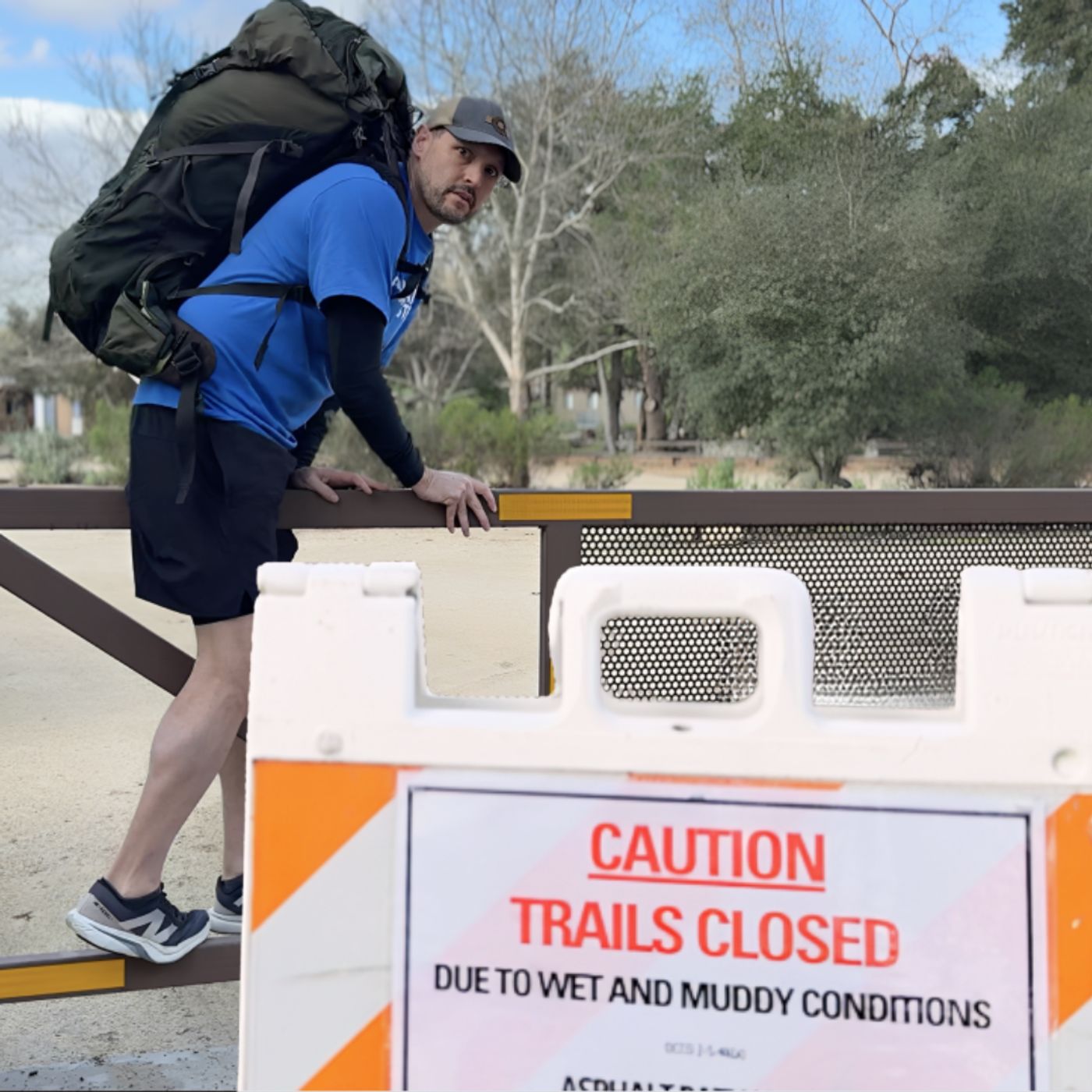
You had mentioned it earlier in the trail, so I was trying to decide if I should change it, but I actually am a nitpickler, stickler with this. Nitpickler, stickler. I will pickle these sticks. Braiding trail. Not talking about busting the crust. I know that's a whole different thing, but braiding trails is something you're not supposed to do. It is backpacking. Rule. Leave no trace. And yet...
Every backpacker gets to a certain point where they're like, this trail is muddy. This trail is filled with water. This trail is so deep and cut into the, it's like a trench that you finally get to the point where you're like, I can't do it anymore. And you step off the trail and you start making, stepping into another path that you can see how somebody else has made or, or make a new one yourself or walk on the grass. Everyone does this. We're not supposed to. And I do actually think it's a bad thing because I've seen national parks where the trail went from like a single track to like, I'm not even joking, like two to three yards across because people are just braiding it like crazy and muddy sections.
Is that fine-able, though? I don't think you're getting, like, if you step off to the edge of the trail and you encounter, like, I don't know, like a gun-toting ranger, I don't think they're giving you a fine. I'm not literal on the laws. I said earlier, my expectations were, like, somebody could come and be like, hey, stop this, and yet people still break these laws. So you can call it soft again if you want, Carl. Yeah, because I don't know, like, now you're misrepresenting the whole title of the episode, and I think people are going to get mad at you about this, because now they want to know what laws people are breaking, and you're talking about, like, stepping onto grass. It's a backpacking taboo, and I stand by it, okay? Double down. Okay, I actually do this, and...
Don't feel bad about it because I think that if the trail is poorly designed where it's just going to become just, yeah, like a mud pit, then that's not my fault. And typically I'm not widening the trail. Like it's usually a step up out of the mud pit. It's not always a step to the edge. It's usually some sort of a gully that they've made where it's like, you know, there's water drainage or something. You're making a face. What do you got? What do you got? How do you step up out of a trail, but not like you're not off the trail. You're just on the edge of the trail. Like you are. No, I'm off the trail. I'm saying it's like, it's typically the reason why there's mud or where it's soaked is because it's like some sort of a trench, right? The trail's like cut down. So if I'm stepping up.
then I'm not cutting down an extra section of trail, even if a lot of people are stepping up on that. The issue is if it's just like this wide, flat, like bog, kind of like mud zone and people are constantly widening it. And for that, like, I don't know, I feel like you're going to be in mud no matter what. Yeah, but I've even seen it in like, the issue with trail braiding is it doesn't happen when traffic or like weather patterns are perfect. It always happens when it's rainy, muddy, all those different things. And I think...
I push back on like your assumption that the trail is designed, but so many of the trails that I walk on, they're not designed. They're just like old historic trails that people have walked on long enough that finally the national parks was like, yeah, okay, we're going to make this a trail. So some of them just exist. Some of them are horse trails or whatnot. I don't know the history of trails. I'm not a trail maker. Most trails aren't made. They're not like designed. They're just people have walked. There's a lot of trails that are designed, like newer trails specifically with drainage purposes. Like in my area, we have a lot of new trails around us that are very well designed. And that's right. There are some that are designed, but like, I think most of it just becomes.
human user and the more we use it and the more we use it wrong, the worse the trail ends up getting. Alright, so we'll go with it. Last one I've got. This one is also something that's like an actual law. An actual law. Opposed to my fake laws. Okay, I see how this goes, Carl. Alright, you know? We just don't have as many laws up here in Canada. Probably, yeah. It's just a free-for-all there. Wild North. Taking things from the backcountry that you're not supposed to take. Stealing, basically. The most common issue where that's like an actual, actual problem. There's like the petrified...
National Park in Arizona where they're like, don't take petrified wood. And literally everybody's taking the petrified wood home and they bring it home as like a souvenir and you're just not supposed to grab it. And people do that. That's like a pretty common one. I don't really know all the rules and laws. Like, are you supposed to take like oversized pine cones or whatever? Are you supposed to take big chunks of log to do whatever with? Like some areas are, National Forest encourage that because it thins things out and other places are like, yeah, don't do it. So you kind of have to know the area, but I do know that for sure people are taking things you're not supposed to.
And getting away with it. You know, it's a big one up here, believe it or not, is fossils. Is that one that you guys ever run into? We probably have that too. Yeah, there's certain areas where like people, like there'll be signs, leave the fossils alone. And yet like every tourist on the backpack, on their trip, hike, backpacking, will like, oh, a fossil and pack it up and put it in their pocket. But wow. Yeah, no, it's findable. Yeah, it's a real law. That should be on your list then. Yeah, well, you know, I just didn't think about it at the time. Stealing? Like you didn't think of stealing and breaking the law? You know, I did think about stealing and I was going to like, like implicate you as a mooch stealer. Like you're actually not mooching. It's on the verge of theft. And like, you know.
maybe that's a problem. It's like kindly asking and stealing are very different. Maybe we need an intervention for your kleptomaniac. That's all I have. Another future episode. Oh my gosh. I don't know if the trip that we were on, like you definitely shared a lot of food. No, I was so, I shared like, I don't know if you remember there was a moment and I knew people were light on food where we were all gathered around. I think it was some like petroglyph area and I pulled out some moon cheese and it was the wrong time. And I was like, can I have some, can I have some? And I just, I didn't get it back. Like I was like, just, just take it.
Hey, I, and I actually like, I shared, yeah, I shared, I had brought like a lot of food to share some Canadian classics. And I also ended up, yeah, like I had to give Rocky food on the last day. When does that ever happen? I was like surprised by, I was like, what are you guys like? Oh, you over pack. And I'm here like doling out sweets and snacks and I gave granola bars away. I like, you're giving a lot of stuff. I really helped the crew there. So that's the opposite. We got the opposite of villain Jesse this episode. Opposite of being a thief, moocher. I was, I was being generous. Yeah. So thank you. But I mean, that whole trail was kind of a villainous plot. It was way harder than any of us were expecting. So more on that later, probably.
Okay, anyway, I got a couple honorable mentions. So people litter a lot of times without intending to. They're not, you know, things just fly out of their packs, whatever, like a little scrap happens. That's, you know, like that's a lot they break without getting caught. Intentionally like not bringing up bear canisters or not storing their food in their bear canisters properly in areas where they're required. And then I've seen people like straight up violate permits where they have a permit for say four people and they've got six in their group and they're just like, ah, it's just two more, like whatever. Like they're not even thinking it's a big deal. Yeah, I mean, I've literally been to campsites before where people don't have a permit for that campsite and take a spot and somebody else comes in later on and they're like, oh, I have a permit. We're like, but...
What are you going to do? Go to each spot and be like, I want to see your permit. Right, right. I actually have a friend who's like, he was telling me, he's like, if we get to that site and we don't have a spot, I'm going to each tent to be like, I want to see visible sign of your permit because I paid for this. I want this. It's like a popular. Right. It's different when there's multiple spots available at a site. Like I've gone to places where it's like, if you reserve that spot, you're the only person, like only one group can stay at that spot. So if somebody's already there, they are 100% in the wrong place. And that's not a fun conversation. We have a lot of like, can't like, um.
tent pads. Like that's how most of it are. So it's like those each are bookable. So if you get to a site that has six tent pads and there's six people on each tent pad, you've got to figure it away. I usually am just like, I'll go off into the bush somewhere. And if a ranger comes, I'll be like, here's my permit. I don't know which one of them doesn't have permit. I do. I just couldn't sleep with them. But I'm going to give you my honorable mention because you were calling some of mine soft and I had to change mine on the last minute. But wait till you see this one. I was going to say, as one of my laws that all backpackers break is that we don't shower.
before we go swimming in Alpine Lakes. What? Shower before you get in the pool. We all know it's a law, and yet we all jump in sweaty, gross, covered with bug spray and sunscreen, and we pollute the lakes up there. We're all lawbreakers, okay? You can call that soft there. Well, I don't do that, so I'm not part of that group. I have years of evidence of not doing that. Yeah, I don't know. Is that a rule to not go into it? Like, you obviously can't shower. Like, I guess you could gather water and, like, give yourself a bath. It's a joke.
J-O-K-E joke. No, I don't know. Maybe you're supposed to. I'm asking. Canada's got some weird stuff up there. Well, they say in general, like, again, proper leave no trace principles is that you're not supposed to swim in lakes. That was all right. Because your own body oils, but more importantly, bug spray and sunscreen pollute the lakes. But, like, who does that? Everyone jumps in alpine lakes. Everyone goes swimming. You cross through rivers when you have to. But, yeah, it was just weird. You know what's weird? You got me thinking about this. Is that, like...
people use Leave No Trace as like some sort of banner of approval for something or a banner of shame for others. But there's not really like, who are you thinking of? Like, I'm making this person happy. There's not really like a caricature or some sort of like themed character at all of the Leave No Trace person. There should be some spokesperson or somebody that you can feel good about pleasing when you succeed, right? I don't think, see, that's the opposite. I think human nature goes the negative. It's that...
Everyone gets to be the right person when they shame other people for not following the rules. And I think I'm not like this, but there are so many people who like inherently like, I like to have rules and I like to tell people when they're breaking them. Like I had a cousin who was like doing a minor renovation in his basement because there was some like water damage. So like just had to replace some drywall and his neighbor saw him bringing in a sheet or two of drywall and assumed he was doing like a major renovation without a permit. Literally called bylaw on him.
And he's like, I had a kid who threw something through the wall. There was some water damage. I replaced the drywall. Do I need a permit for that? But his neighbor was just like, yeah, I caught him. He broke the rule, even though he didn't. Those people definitely exist in the backpacking world. Exactly. Not part of this podcast, though. That's not who's listening right now. No, but that's why Leave No Trace works, is it gets those people all up in a tussie so they can be like, ugh, they're not supposed to do that, and I get to be the one who catches them. If you want to be the face of that person, you can apply to Leave No Trace, and we'll leave a link in the show description. Jesse should be that face. Isn't that what Rob Pelton is? Isn't he secretly the face of Leave No Trace? Or publicly the face? I'm just doing it to please Rob Pelton.
He's been the face of a few different things. I should ask that. That's a good question. Yeah. All right. If you want to please, Rob Pelton, just let him know how you're leaving no trace in the back country. Send him an email, a voice message, whatever. Just kind of bug him, basically. We approve. All right. If there's, okay, what other laws we miss or which ones you disagree with, please let us know. But there you go. Eight backpacking laws or so-called laws that people break and get away with it. Okay. We've got the backpacking magazine support line coming up right after this. It finally happened.
Costco is on DoorDash, which is great news when the house is suddenly running low on everything. Restock your pantry, fridge, and essentials now delivered with the speed and convenience of DoorDash. The backpack magazine support line is brought to you by Magna Designs. Handmade order in Bend, Oregon. Magna Designs gives you the most vetted backpacking products with the smallest environmental footprint. Through hiker design, tested, built, known. Check out the Alpha 90 hoodie, their best-selling product using Polartec Alpha 90 direct fabric. It's ultra light, compressible, hydrophobic, breathable, quick drying, and just 4.5 ounces, and I love it. Google Magna Designs for the best backpacking gear. All right, folks, if you want to...
jump in on this backpacking support line. If you want to ask Jesse to basically solve one of your biggest backpacking problems in life, please reach out any which way. But here we go. When you're having trouble on the trail, call the backpacking magazine support line. Okay, this one's from Paul. I think he reached out to me on Facebook. He says, I had someone ask me if I knew how he could tie his boots to stop his foot hurting. I explained one technique I use because I have a high instep. He took his boots off and just handed them to me, expecting me to do it for him.
Well, Paul, you know, some people have told you your whole life shoot for the stars. But what you didn't realize on this backpacking trip is that you'd find your true purpose in life. It's not in the stars. It's not on the hiker's feet. You need to just look around at people's feet, get on one knee, tie their shoelaces properly, be the best shoelace tire you can possibly be.
and everything else will be better. I just think you just ignore me. Keep on walking, buddy. Thanks for calling the support line. All right. So we've got, I just got one tidbit, my friend. We got, let's see here. We have some interesting bonus episodes that have been released and coming up on Patreon. We've got through hikers versus real backpackers. We had like a, one of the most prolific through hikers on our show just for this bonus episode. And we had this like a legit down-home debate. We've got experts sharing one thing that they stopped bringing. We're talking Dan Becker, Justin Outdoors, and a lot of the folks we've had on the last couple months sharing their one thing they stopped bringing backpacking.
They're doing Andrew Skirka. What does he stop bringing? And we got a couple other ones coming out as well. So not to mention Patreon trips. What you got? Can I ask who was the like prolific thru-hiker? Or is that just secret? You're going to have to find out. Yeah. Prolific thru-hiker, like somebody who's done all the main long trails in the United States. Not somebody who's done the GDT in Canada. I get it, Carl. Okay. He's done the GDT in Canada. He's done it. Oh, yeah. Oh, okay. He's done a lot of them. I think just a lot of the foreign trails. And he's done a lot of them. I don't want to get away. But he's done a lot of them harder than anybody else has done them. Like it's been more complex and more challenging than anybody else has done them. So.
I'm intrigued. Yeah, so that's what's coming up on Patreon. So please check it out. We'd love to have you as part of the Patreon family. It helps keep our podcast going. You got anything else? I got nothing. Okay. All right. And remember, if you're ever accused of stealing a board game, it might be a risk you should be willing to take. That was good. I like it. Have a good weekend. God bless. Yo, B&B, it's Rock. And I first want to thank you all again for so many of your prayers for Jennifer. She is continuing to improve, continuing to get better.
Her arm, her right arm, which has been paralyzed, is starting to defy some laws of physics, laws of gravity. Not sure exactly which laws. I'm not a scientific guy per se. Three times in the morning over the last eight or nine days, her arm has involuntarily raised above her head, like high above her head, straight above her head, like she's raising her hand type thing, but she can't control it. And then all of a sudden, after a few seconds, it's just fallen back down and stayed there. And she can actually lift it much better than she has been able to in a long, long time. And I just want to thank you all for your prayers. We love you guys. And again, Jennifer's arm was breaking laws, right? Well, guess what? Unfortunately, I've broken the law. In fact, I...
On the way to the last backpacking trip that Carl planned for kids that I was able to go to, which was now about two or three years ago. On the way there, I got two speeding tickets within 20 minutes of each other. The first one, definitely speeding, not good, and I really had to repent. The second one, I was in the 30, and I kept hitting these downhills, and I'm going, I do not want to let the car go too fast. I was keeping that thing, 37, 38, somewhere in there, and I'm going, man, I'm trying to get it back down. Well, the cop pulled me over and said I'd been going 52, and I knew I hadn't. I knew I'd really been watching it closely. So did break the law twice right there, but that was not the worst law breakage ever.
The worst law that I've ever broken. Jennifer has a law in our house not to leave, you know, that nozzle on your sink, not to leave it on the one where the water fans out because it'll oftentimes splash her. Well, one day she was finally able to put on makeup again. She put on makeup, right? She went downstairs. This was, I was at work and she turned on the water full blast and I had left it on that setting and the water splattered all over her face and it didn't help her makeup. Check that one off as the worst law I've ever broken.
Thank you so very much for listening to the show. Please take a moment to rate, review, and subscribe. It really does help the show to grow. Thank you for listening.