
EPISODE · Mar 31, 2023 · 19 MIN
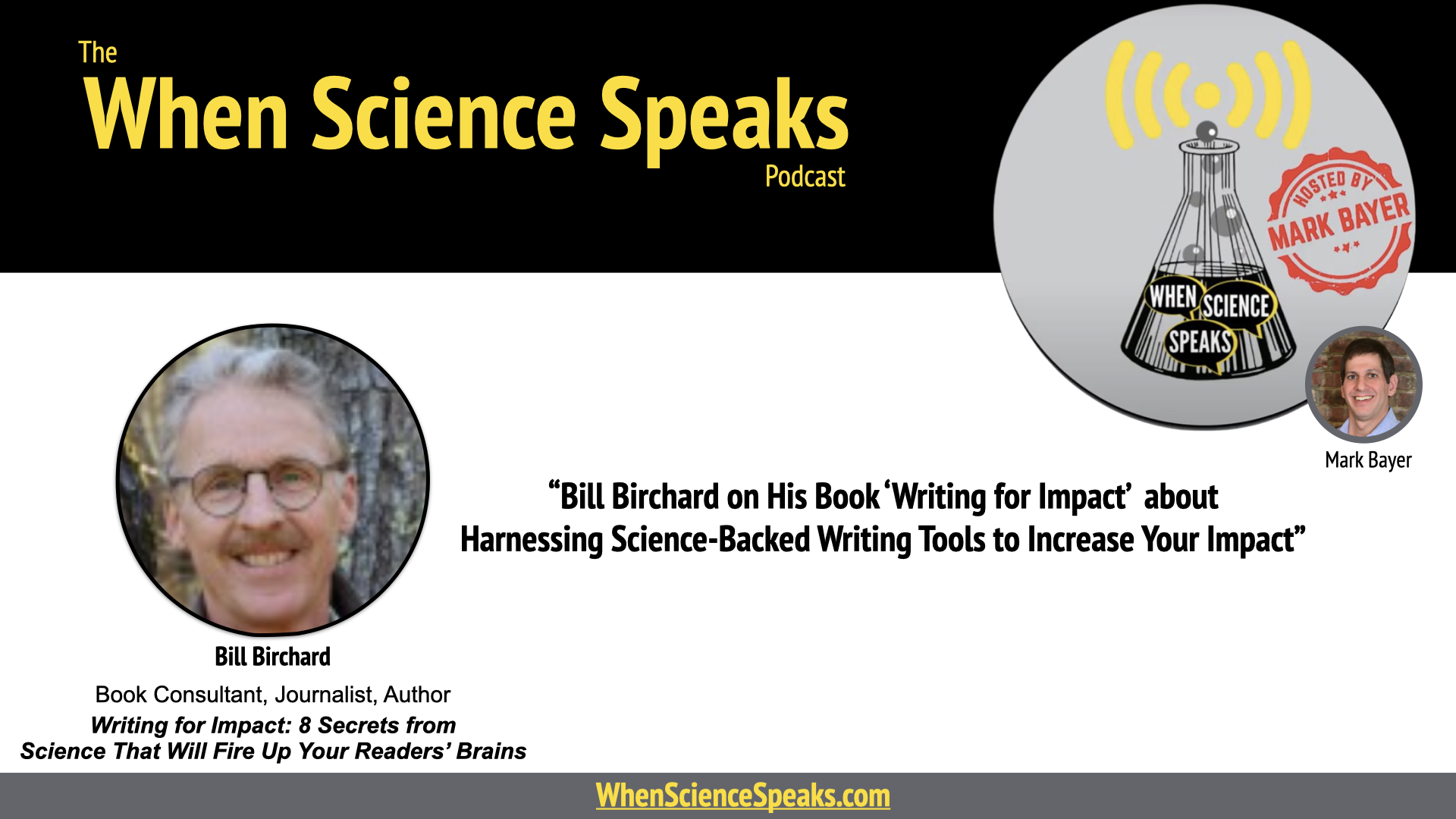
8 Neuroscience-based techniques for writing in ways that engage and excite your readers with author Bill Birchard
from When Science Speaks · host When Science Speaks
In this episode of When Science Speaks, host Mark Bayer sat down with veteran journalist and author Bill Birchard to talk about his latest book, Writing For Impact, 8 Secrets From Science that will fire up your readers' brains. The book delves into the science of how the brain processes language and how writers can use this knowledge to engage their readers. Here are three tips from the episode on how to write for impact: 1. Use vivid language: Research shows that using vivid language can create more impactful writing. As Birchard explains, "The brain loves specific sensory stimulation. The more sensory information the writer provides, the more the scene comes alive." 2. Write in a conversational tone: Writing in a conversational tone can make readers feel like they are having a conversation with the author. This can make the writing more enjoyable to read and can help to build a connection between the writer and reader. 3. Use storytelling: Using storytelling in writing can be a powerful tool for engaging readers. As Birchard says, "Stories stick in our brains because they're more vivid and more memorable than facts and data." Writing for Impact provides a fascinating look into the science of writing and how writers can use it to create more engaging content. If you're interested in improving your writing skills, be sure to check out this episode of When Science Speaks. Main topics in the interview and when you'll find them in the audio recording [00:03:38] The Science of Effective Writing [00:07:01] Measuring Brain Response to Reading [00:10:29] Simplifying Writing for Reader Engagement [00:13:54] Writing Strategies and Chatbot Algorithms [00:17:09] Universalizing the Podcast Message Key quotes from the episode [00:16:50] What's the 1 sentence that captures what you're going to say in your book? In my book, of course, I'll just emphasize here, what's the message of my book? It's reward your reader. 3 words, reward your reader. [00:10:03] In the book, I've isolated 8 strategies that are supported by science that drive the reward circuit. [00:02:48] Turns out there's a mountain of research when it comes to how the brain processes language. [00:10:32] The research shows that people desire, they learn from, and they act done, things are expressed simply. [00:08:15] So When I talk about the brain consumes words, the way it consumes just about everything else, that's the reward circuit that I'm talking about. [00:13:02] Keep it insightful. Keep the "ah-ha's" flowing because that's what you wanna aspire to as a writer. [00:07:46] If what you read is activating the motor circuit in the brain, and that in turn is activating the reward circuit in the brain, then you can make inferences as to what's engaging readers and what's a better way to write. [00:03:24] And when you start looking at that, you start to see, at least as a writer, you start to see that the brain reacts in different ways to all those four kinds of writing. [00:12:20] Readers aren't reading your writing because they like your style. They're reading your writing because they like the reward they get from your writing. [00:09:32] And in reading, you're gonna not only start reading, you're gonna keep reading and presumably be persuaded to act on what you're reading. [00:14:20] The arrival of Chat GPT does not mean that people are going to stop learning how to write. You could say that instead, the chat GPT is just going to raise the level of writing. [00:11:15] The period never comes soon enough. Bring closure to thoughts in a small way as you possibly can readers are gonna comprehend that quicker and they're gonna be more engaged. [00:06:13] And my undergraduate degree was in biology. I never happened to use that, but having written my whole life, I've often wondered what happens in the brain? [00:12:04] Keep it simple. And there's another great phrasing you came up within the book. [00:01:44] His newest book, which we're gonna talk about in just a moment. It's called Writing For Impact, 8 Secrets From Science that will fire up your readers' brains. [00:04:55] Words and meaning are processed very much the same way as stimuli of other kinds. [00:15:29] Can you get the software to say, okay, we started with clarity and we wanna leap to being engaging, can these strategies then be incorporated in the software? [00:08:45] It's the reward circuit in the brain that's doing that. [00:14:57] How do you raise your writing from clear and educational, informative writing to engaging and rewarding writing. And I believe the strategies in my book help you do that. [00:15:09] You might say you could make the argument and guess I'm making the argument that you are with Chat GPT gonna start at a higher level, and then you're gonna go up up a level. [00:05:04] The brain is looking at whether that word is worthy or not worthy. The same way it's looking at whether something or to drink is worthy or not worthy or eat or establishing a friendship. [00:02:18] We're gonna have a link in the show notes so you can preorder Bill's book, which will be released on April 4, 2023, and also a link to an offer on Bill's website, where you can get an accompanying workbook for free by pre- ordering the book. Resources mentioned in the book Link to Writing for Impact: 8 Secrets from Science That Will Fire Up Your Readers' Brains by Bill Birchard Bill's website where you can get a free workbook if you pre-order the book: Link to the episode transcript Link to the special 15% discount for When Science Speaks readers at OneSkin (enter SCIENCE15 at checkout)
Embed this episode
NOW PLAYING
8 Neuroscience-based techniques for writing in ways that engage and excite your readers with author Bill Birchard
No transcript for this episode yet
Similar Episodes
No similar episodes found.
Similar Podcasts
No similar podcasts found.