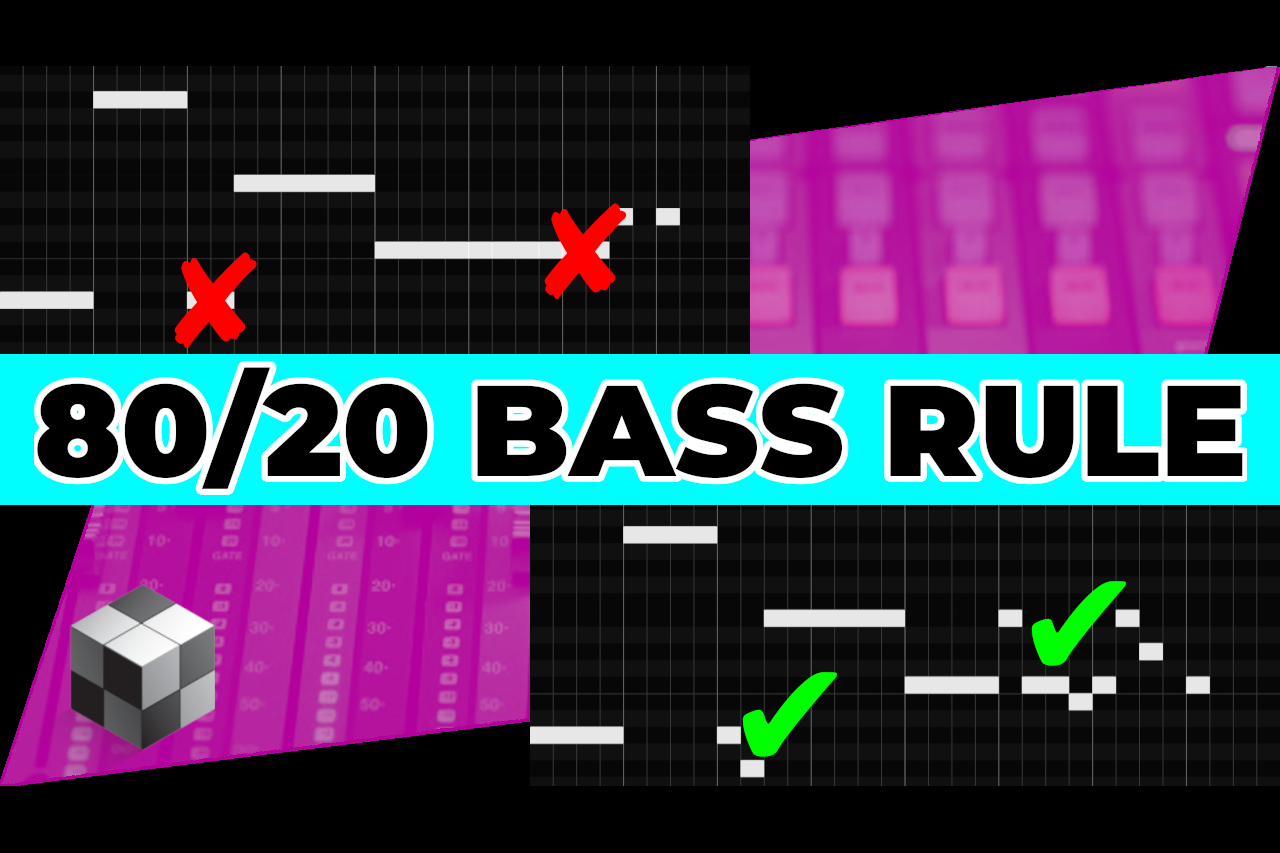
80/20 Bass Rule
from Ray Harmony Hosted by Hack Music Theory
80/20 Rule for Better Bass Lines In this tutorial, you'll learn the secret 80/20 bass rule that will forever change the way you write bass lines. But first… Tea! Hello revolutionary music makers, we are Kate and Ray Harmony (AKA Revolution Harmony), and welcome to Hack Music Theory, where we help you make great music that stands out! And if you’re new to theory, or if you just want a refresher, then read our free book “12 Music Theory Hacks to Learn Scales & Chords”. It’ll give you a super solid theory foundation in just 30 minutes. Wooohooo!!! You’re a mere 30 minutes away from being even smarter than you already are. Just head on over to your inbox now for your free download. There was an error submitting your subscription. Please try again. “The most brilliant, fast, easy & fun music theory book I’ve ever seen!” DEREK SIVERS, CD Baby founder We use this field to detect spam bots. If you fill this in, you will be marked as a spammer. DOWNLOAD FREE BOOK /* Layout */ .ck_form { /* divider image */ background: #EAE9EA url(data:image/gif;base64,R0lGODlhAQADAIABAMzMzP///yH/C1hNUCBEYXRhWE1QPD94cGFja2V0IGJlZ2luPSLvu78iIGlkPSJXNU0wTXBDZWhpSHpyZVN6TlRjemtjOWQiPz4gPHg6eG1wbWV0YSB4bWxuczp4PSJhZG9iZTpuczptZXRhLyIgeDp4bXB0az0iQWRvYmUgWE1QIENvcmUgNS41LWMwMTQgNzkuMTUxNDgxLCAyMDEzLzAzLzEzLTEyOjA5OjE1ICAgICAgICAiPiA8cmRmOlJERiB4bWxuczpyZGY9Imh0dHA6Ly93d3cudzMub3JnLzE5OTkvMDIvMjItcmRmLXN5bnRheC1ucyMiPiA8cmRmOkRlc2NyaXB0aW9uIHJkZjphYm91dD0iIiB4bWxuczp4bXA9Imh0dHA6Ly9ucy5hZG9iZS5jb20veGFwLzEuMC8iIHhtbG5zOnhtcE1NPSJodHRwOi8vbnMuYWRvYmUuY29tL3hhcC8xLjAvbW0vIiB4bWxuczpzdFJlZj0iaHR0cDovL25zLmFkb2JlLmNvbS94YXAvMS4wL3NUeXBlL1Jlc291cmNlUmVmIyIgeG1wOkNyZWF0b3JUb29sPSJBZG9iZSBQaG90b3Nob3AgQ0MgKE1hY2ludG9zaCkiIHhtcE1NOkluc3RhbmNlSUQ9InhtcC5paWQ6MUQ5NjM5RjgxQUVEMTFFNEJBQTdGNTQwMjc5MTZDOTciIHhtcE1NOkRvY3VtZW50SUQ9InhtcC5kaWQ6MUQ5NjM5RjkxQUVEMTFFNEJBQTdGNTQwMjc5MTZDOTciPiA8eG1wTU06RGVyaXZlZEZyb20gc3RSZWY6aW5zdGFuY2VJRD0ieG1wLmlpZDoxRDk2MzlGNjFBRUQxMUU0QkFBN0Y1NDAyNzkxNkM5NyIgc3RSZWY6ZG9jdW1lbnRJRD0ieG1wLmRpZDoxRDk2MzlGNzFBRUQxMUU0QkFBN0Y1NDAyNzkxNkM5NyIvPiA8L3JkZjpEZXNjcmlwdGlvbj4gPC9yZGY6UkRGPiA8L3g6eG1wbWV0YT4gPD94cGFja2V0IGVuZD0iciI/PgH//v38+/r5+Pf29fTz8vHw7+7t7Ovq6ejn5uXk4+Lh4N/e3dzb2tnY19bV1NPS0dDPzs3My8rJyMfGxcTDwsHAv769vLu6ubi3trW0s7KxsK+urayrqqmop6alpKOioaCfnp2cm5qZmJeWlZSTkpGQj46NjIuKiYiHhoWEg4KBgH9+fXx7enl4d3Z1dHNycXBvbm1sa2ppaGdmZWRjYmFgX15dXFtaWVhXVlVUU1JRUE9OTUxLSklIR0ZFRENCQUA/Pj08Ozo5ODc2NTQzMjEwLy4tLCsqKSgnJiUkIyIhIB8eHRwbGhkYFxYVFBMSERAPDg0MCwoJCAcGBQQDAgEAACH5BAEAAAEALAAAAAABAAMAAAICRFIAOw==) repeat-y center top; font-family: 'Montserrat'; line-height: 1.5em; overflow: hidden; color: #000000; font-size: 16px; border-top: none; border-top-color: #666666; border-bottom: none; border-bottom-color: #3d3d3d; -webkit-box-shadow: none; -moz-box-shadow: none; box-shadow: none; clear: both; margin: 0px 0px; } .ck_form, .ck_form * { -webkit-box-sizing: border-box; -moz-box-sizing: border-box; box-sizing: border-box; } #ck_subscribe_form { clear: both; } /* Element Queries — uses JS */ .ck_form_content, .ck_form_fields { width: 50%; float: left; padding: 5%; } .ck_form.ck_horizontal { } .ck_form_content { border-bottom: none; } .ck_form.ck_vertical { background: #fff; } .ck_vertical .ck_form_content, .ck_vertical .ck_form_fields { padding: 10%; width: 100%; float: none; } .ck_vertical .ck_form_content { border-bottom: 1px dotted #aaa; overflow: hidden; } /* Trigger the vertical layout with media queries as well */ @media all and (max-width: 499px) { .ck_form { background: #fff; } .ck_form_content, .ck_form_fields { padding: 10%; width: 100%; float: none; } .ck_form_content { border-bottom: 1px dotted #aaa; } } /* Content */ .ck_form_content h3 { margin: 0px 0px 0px; font-size: 0px; padding: 0px; } .ck_form_content p { font-size: 14px; } .ck_image { float: left; margin-right: 5px; } /* Form fields */ .ck_errorArea { display: none; } #ck_success_msg { padding: 10px 10px 0px; border: solid 1px #ddd; background: #eee; } .ck_label { font-size: 14px; font-weight: bold; } .ck_form input[type="text"] { font-size: 16px; text-align: center; margin-top: 20px; margin-bottom: 0px; padding: 8px 8px; width: 100%; border: 1px solid #d6d6d6; /* stroke */ -moz-border-radius: 4px; -webkit-border-radius: 4px; border-radius: 30px; /* border radius */ background-color: #fff; /* layer fill content */ height: auto; } .ck_form input[type="email"] { font-size: 16px; text-align: center; margin-top: 0px; margin-bottom: 15px; padding: 8px 8px; width: 100%; border: 1px solid #d6d6d6; /* stroke */ -moz-border-radius: 4px; -webkit-border-radius: 4px; border-radius: 30px; /* border radius */ background-color: #fff; /* layer fill content */ height: auto; } .ck_form input[type="text"]:focus, .ck_form input[type="email"]:focus { outline: none; border-color: #aaa; } .ck_checkbox { padding: 10px 0px 10px 20px; display: block; clear: both; } .ck_checkbox input.optIn { margin-left: -20px; margin-top: 0; } .ck_form .ck_opt_in_prompt { margin-left: 4px; } .ck_form .ck_opt_in_prompt p { display: inline; } .ck_form .ck_subscribe_button { width: 100%; color: #fff; margin: 0px 0px 0px; padding: 8px 8px; font-size: 18px; background: #d74128; -moz-border-radius: 4px; -webkit-border-radius: 4px; border-radius: 30px; /* border radius */ cursor: pointer; border: none; text-shadow: none; } .ck_form .ck_guarantee { color: #626262; font-size: 12px; text-align: center; padding: 5px 0px; display: block; } .ck_form .ck_powered_by { display: block; color: #aaa; } .ck_form .ck_powered_by:hover { display: block; color: #444; } .ck_converted_content { display: none; padding: 5%; background: #fff; } /* v6 */ .ck_form_v6 #ck_success_msg { padding: 0px 10px; } @media all and (max-width: 403px) { .ck_form_v6.ck_modal .ck_close_link { top: 30px; } } @media all and (min-width: 404px) and (max-width: 499px) { .ck_form_v6.ck_modal .ck_close_link { top: 57px; } } Scroll down to listen to the podcast episode of this tutorial. Right, so here’s what a regular bass line sounds like, and this was written in the same way that most bass lines are written these days: MIDI Screenshot: Bass exclusively playing root note of each chord – this is not a bass line! It’s in the key of A minor, so that’s all the white notes from A to A, and the chords are: Am→Em→Cmaj→Dsus2. Now, because most songwriters and producers don’t know about the secret 80/20 bass rule, most bass lines nowadays simply copy the chord progression by playing the root note of each chord. So in the example you just heard, the bass copied the chords by playing: A→E→C→D. But, that is not a bass line, that is merely the root note of each chord. And that is not a musical approach to bass, it’s a sonic approach, because the bass is so boring that it actually blends into the background and is heard as a frequency, not an instrument! When we approach bass from a musical perspective, we realise that it obviously wants (and deserves) its own melody. However, this is where we run into the bass paradox: To give the bass an independent melody, it needs to venture off the root note of each chord, but if it does that, then it takes away the music’s stability as it’s no longer providing a solid foundation for the other instruments. So, how can you write a bass line that’s both a solid foundation and also an independent melody? That’s where the 80/20 bass rule comes in. It’s so simple: it is the percentage of time spent on root notes versus the percentage of time spent on other notes. Root notes in the bass build a solid foundation, but it’s the non-root notes that transform the bass into an independent melody. This is the magic bass balance. Get it right, and your bass lines are pure magic! Get it wrong, and it could literally ruin your whole song. If your bass spends too much time on root notes, it’ll be nothing more than a frequency. On the other hand, if your bass spends too much time on non-root notes, it’ll step forward into the spotlight like a diva and start stealing attention from your lead melody. Remember, the spotlight is only big enough for one! So, what’s the perfect ratio? 80% roots, 20 % non-roots. And obviously every song is different, and every section within every song is different, but the 80/20 rule will ensure that every bass line you write starts out in the sweetspot, then you can adjust the percentage up or down, depending on what the other instruments are doing. For example, if there isn’t a lead melody in a section, then there’s space for your bass to step forward and take the spotlight, without any musical fights! However, if a section has a lead melody and a backing melody, then your bass should definitely spend a little more time on root notes, for extra stability. In our example, our bass line is 81% root notes and 19% non-root notes. And of course, you don’t actually have to calculate the exact percentage, just get it somewhere in the 80/20 sweetspot. MIDI Screenshot: Bass line with about 80% roots and 20% non-roots (highlighted) And by the way, if you want our step-by-step guide for writing great bass lines, then download our Songwriting & Producing PDF, which also contains all our other essential music making hacks. Finally, let’s talk about those non-root notes. There are three possibilities for these: harmonic notes, non-harmonic notes, and non-diatonic notes. Harmonic notes are notes that are in the chord. For example, over the Am chord, the harmonic notes are A, C and E. And A is obviously the root, so the options are C and E. Next, non-harmonic notes are notes that are not in the chord, but are still in the scale. So over the Am chord, the non-harmonic notes are B, D, F and G. Then lastly, non-diatonic notes are not in the chord either, but they’re not even in the scale. These notes are super spicy, so in the same way that you don’t add chili peppers to every meal, you don’t wanna add non-diatonic notes to every bass line. In our example, we do actually play a non-diatonic note (C♯) under every other Dsus2 chord. But, it’s just a 1/16 note. That’s like throwing a tiny sliver of chili pepper into the pot for flavour, not for heat. Okay now I’m hungry, but before we head off to cook up a yummy vegan chili, let’s have a listen to the Before & After of our bass line, so you can hear what a game-changer this 80/20 bass rule is. Just before the playthrough though, we’d love to share one more thing with you. Next Regarding the current situation around the world. As music teachers, we can’t offer much help through this difficult time. However, as most people are now stuck at home, what we can offer, is a meaningful and productive timeout from the difficulties. It’s with that intention in our hearts that we offer you 50% OFF our online course Apprenticeship #1. It contains 17 hours of video that teach every step of the writing process, from blank screen to finished song. You will literally learn everything you need to know in order to write great songs, and finish them! We know that most people are sadly on unpaid leave right now, so we hope this half-price offer helps alleviate some suffering, and we truly hope you and your families are all safe and healthy. Lastly, please remember that music is magic, so keep pumping those uplifting tunes! Thanks for being here, and until next time, happy songwriting and producing. Want More? Sign up for our newsletter, and get tutorials like this delivered to your inbox. Wooohooo!!! You're now one small step away from joining the Hack Music Theory revolution. Just head on over to your inbox, open the email we've sent you, click the link to confirm, and you're in! There was an error submitting your subscription. Please try again. Email Address SUBSCRIBE /* Layout */ .ck_form.ck_naked { /* divider image */ background: transparent; line-height: 1.5em; overflow: hidden; color: #666; font-size: 16px; border: none; -webkit-box-shadow: none; -moz-box-shadow: none; box-shadow: none; clear: both; margin: 0px 0px; text-align: center; } .ck_form.ck_naked p { padding: 0px; } .ck_form, .ck_form * { -webkit-box-sizing: border-box; -moz-box-sizing: border-box; box-sizing: border-box; } .ck_form.ck_naked .ck_form_fields { width: 100%; float: left; padding: 3%; } /* Form fields */ .ck_errorArea { display: none; /* temporary */ } #ck_success_msg { padding: 10px 10px 0px; border: solid 1px #ddd; background: #eee; } .ck_form.ck_naked input[type="text"], .ck_form.ck_naked input[type="email"] { font-size: 16px; font-family: Montserrat; text-align: center; padding: 10px 8px; width: 34%; border: 1px solid #d6d6d6; /* stroke */ -moz-border-radius: 0px; -webkit-border-radius: 0px; border-radius: 30px; /* border radius */ background-color: #fff; /* layer fill content */ margin-bottom: 5px; height: auto; float: left; margin: 0px; margin-right: 1%; height: 42px; } .ck_form input[type="text"]:focus, .ck_form input[type="email"]:focus { outline: none; border-color: #aaa; } .ck_form.ck_naked .ck_subscribe_button { width: 100%; color: #fff; margin: 0px; padding: 9px 0px; font-size: 16px; background: #d6432c; -moz-border-radius: 0px; -webkit-border-radius: 0px; border-radius: 30px; /* border radius */ cursor: pointer; border: none; text-shadow: none; width: 30%; float: left; height: 42px; } .ck_converted_content { display: none; padding: 5%; background: #fff; } /* max width 500 */ .ck_form.ck_naked.width500 .ck_subscribe_button { width: 100%; float: none; margin-top: 5px; } .ck_form.ck_naked.width500 input[type="text"], .ck_form.ck_naked.width500 input[type="email"] { width: 49%; } .ck_form.ck_naked.width500 input[type="email"] { margin-right: 0px; width: 50%; } /* max width 400 */ .ck_form.ck_naked.width400 .ck_subscribe_button, .ck_form.ck_naked.width400 input[type="text"], .ck_form.ck_naked.width400 input[type="email"] { width: 100%; float: none; margin-top: 5px; } .ck_slide_up, .ck_modal, .ck_slide_up .ck_naked, .ck_modal .ck_naked { min-width: 400px; } .page .ck_form.ck_naked { margin: 50px auto; max-width: 700px; } /* v6 */ .ck_slide_up.ck_form_v6, .ck_modal.ck_form_v6, .ck_slide_up.ck_form_v6 .ck_naked, .ck_modal.ck_form_v6 .ck_naked { min-width: 0 !important; } .ck_form_v6 #ck_success_msg { padding: 0px 10px; } @media all and (max-width: 403px) { .ck_form_v6.ck_modal .ck_naked { padding-top: 0px; } } @media all and (max-width: 499px) { .ck_form_v6.ck_modal .ck_naked + .ck_close_link { color: #fff; top: 10px; } } .ck_form_v6.ck_slide_up .ck_naked + .ck_close_link { right: 10px; top: -5px; } @media all and (min-width: 600px) { .ck_form_v6.ck_slide_up .ck_naked + .ck_close_link { right: 35px; } } Podcast Listen below, or on any podcast app.
Embed this episode
No transcript yet.