
EPISODE · Apr 22, 2026 · 24 MIN
836-Genetic Architecture of an Allosteric Hormone Receptor
from Paper Talk
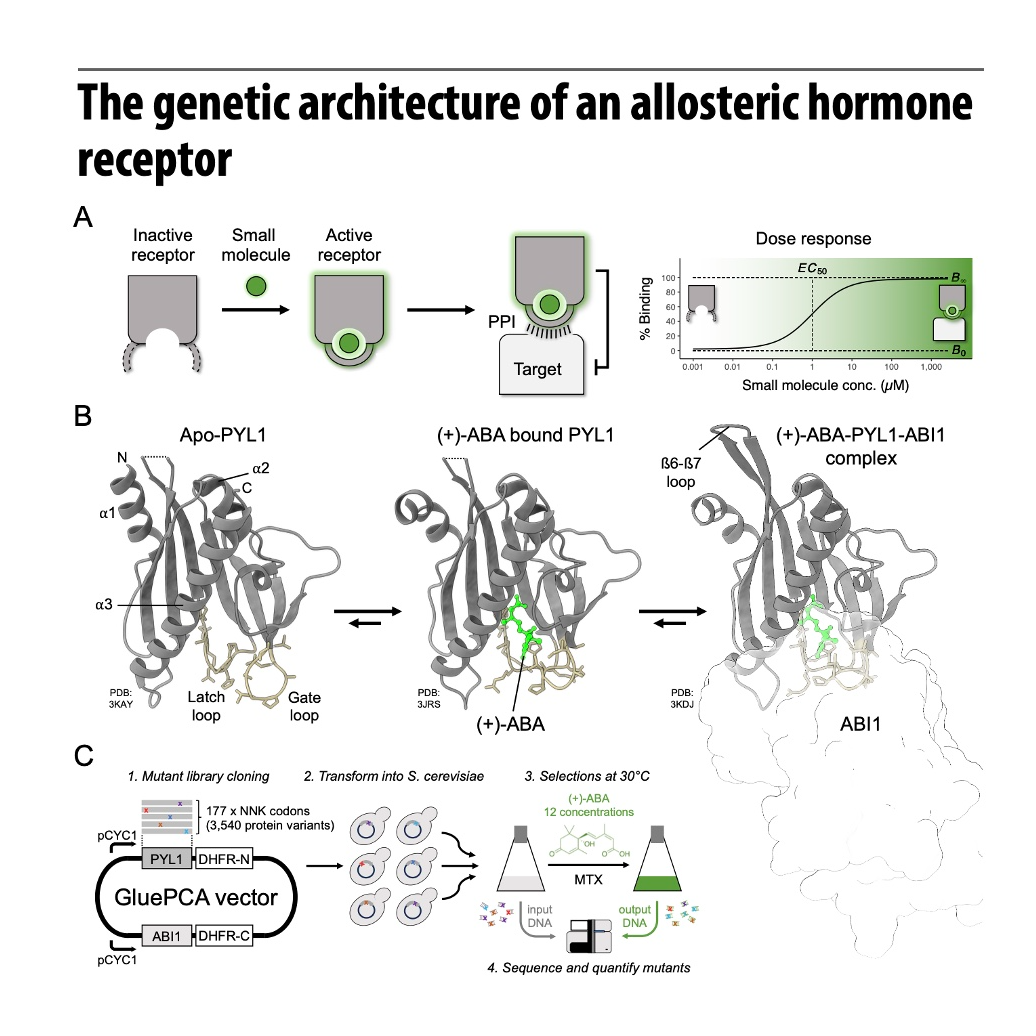
This article introduces GluePCA, a high-throughput method used to map how thousands of mutations affect the PYL1 hormone receptor, a molecular switch in plants. By analyzing over 40,000 measurements, the researchers discovered that nearly 90% of mutations alter the receptor’s response to chemicals, primarily through changes in protein stability. The study reveals a modular genetic architecture where different regions of the protein independently control sensitivity and activity levels. Notably, specific rare mutations were found to create innovative signaling behaviors, such as inverted or "band-stop" responses. Ultimately, the data illustrates the evolutionary flexibility of allosteric proteins and provides a scalable framework for engineering future biosensors.References: Stammnitz M R, Lehner B. The genetic architecture of an allosteric hormone receptor[J]. bioRxiv, 2025: 2025.05. 30.656975.前往小宇宙评论区与主播互动
Embed this episode
Ready to play
836-Genetic Architecture of an Allosteric Hormone Receptor
No transcript for this episode yet
Similar Episodes
No similar episodes found.
Similar Podcasts
No similar podcasts found.