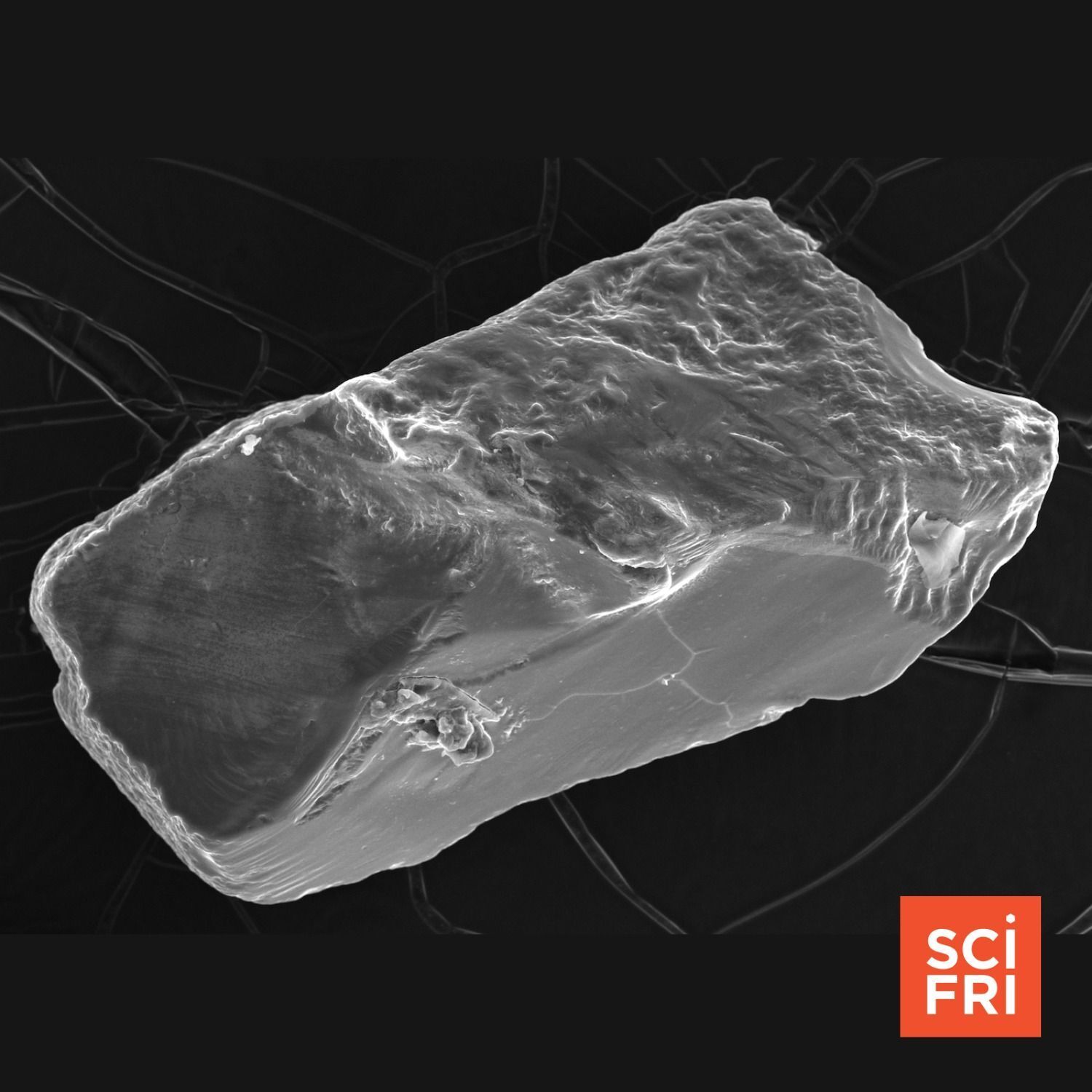
Earth May Once Have Had A Ring Like Saturn | An AI For Sand episode artwork

EPISODE · Sep 20, 2024 · 22 MIN

Earth May Once Have Had A Ring Like Saturn | An AI For Sand

from Science Friday · host Charles Bergquist, Kathleen Davis, Ira Flatow

The ring would have gradually fallen to Earth as meteorites, correlating to a spike of impacts seen in the geological record. Also, a new AI tool can judge whether sand came from a beach, a river, a glacial deposit, or a wind-blown dune.Earth May Once Have Had A Ring Like SaturnHundreds of millions of years ago, Earth may have looked quite different when viewed from space: Scientists propose it may have had a Saturn-like ring, made up of lots of smaller asteroids.The new paper, published in Earth and Planetary Science Letters, proposes that this ring formed around 466 million years ago. A major source of evidence is a band of impact craters near the equator. The researchers also posit the ring would have shaded this equatorial area, possibly changing global temperatures and creating an icehouse period.Ira speaks to Rachel Feltman, host of the Popular Science podcast “The Weirdest Thing I Learned This Week,” about this and other top science stories of the week, including how lizards use bubbles to “scuba dive” underwater, and ancient cave art that possibly shows a long-extinct species.An AI To Identify The Environment A Grain Of Sand Came FromIf you were given a bucket of sand and asked to determine where it came from, you’d probably have a hard time guessing if it was from a beach, a riverbank, the playground down the street, or a Saharan sand dune.There are experts who can make a guess at that sort of ID, using a categorization process that takes skill, a scanning electron microscope, and hours of time. Now, however, researchers report in the Proceedings of the National Academy of Sciences that they’ve developed an AI model that can quickly judge whether a sample of sand came from a beach, a river, a glacial deposit, or a wind-blown dune.That type of identification isn’t just of interest to geologists. Sand is one of the world’s most in-demand resources, second only to water in use. And different applications need different types of sand—for instance, making concrete and mortar requires angular sand for good adhesion and stability. These kinds of needs have given rise to illicit sand mining, sand theft, and sand smuggling. A way of rapidly identifying the origins of a sample of sand could be useful to investigators, or to companies seeking to ensure sustainability goals.Michael Hasson, a PhD candidate in Stanford’s Department of Earth and Planetary Sciences, joins SciFri’s Charles Bergquist to discuss the new SandAI, and the challenges of tracking grains of sand.Transcripts for each segment will be available after the show airs on sciencefriday.com. Subscribe to this podcast. Follow our show on Instagram, TikTok, Facebook, and Bluesky @scifri and sign up for our newsletters. Got a science question that’s keeping you up at night? Call us: 877-472-4374 Hosted by Simplecast, an AdsWizz company. See pcm.adswizz.com for information about our collection and use of personal data for advertising.

The ring would have gradually fallen to Earth as meteorites, correlating to a spike of impacts seen in the geological record. Also, a new AI tool can judge whether sand came from a beach, a river, a glacial deposit, or a wind-blown dune.

NOW PLAYING

Earth May Once Have Had A Ring Like Saturn | An AI For Sand

0:00 22:30

No transcript for this episode yet

We transcribe on demand. Request one and we'll notify you when it's ready — usually under 10 minutes.

No similar episodes found.

Sunbury Life news & features Sunbury Life Hear the weeks news headlines from the Melbourne suburb of Sunbury in our weekly news wrap - out every Friday. There's reports on Hume City Council meetings, news from across Sunbury, and occasional feature interviews.SunburyLife.au is a hyperlocal news website run by dedicated volunteers serving the town of Sunbury in north/west Melbourne. Elevatin' The GetRight Spot & The Love Algorithm Elevatin' The GetRight Spot & The Love Algorithm A podcast that expresses the journey of taking ideas and turning them into a successful website and business. Using an ideology, philosophy and mental science as motivation, we shall Elevate Bodybyloud! and The GetRight Spot. We also inspire everyone to elevate their lives and go after their dreams, desires., and abundance. The Health Odyssey: Navigating Tomorrow's Medicine Podcast Welcome to 'The Health Odyssey: Navigating Tomorrow's Medicine,' where we embark on an adventurous journey through the ever-evolving world of healthcare. Each episode is like a treasure map, guiding you through the rich tapestry of ancient healing arts mixed with futuristic tech wizardry. We’ll chat about the wild west of health data privacy, the corporate giants reshaping our care, and the mind-bending potential of psychedelics for mental wellness. Think of us as your trusty sidekicks, unraveling the mysteries of modern medicine while keeping it real and relatable. Let’s dive into the stories, the science, and the soul of healthcare, paving the way for a healthier tomorrow. Chosn Conversations: Beyond the Journal Chosn AI Journal Welcome to Chosn Conversations: Beyond the Journal, where your AI hosts explore the transformative power of conversational journaling and emotional intelligence. Each episode takes you beyond traditional journaling methods, diving deep into voice journaling techniques, mental wellness strategies, and the science behind AI-supported emotional health. We share inspiring user stories, analyze the latest research in digital mental wellness, and provide practical guidance for incorporating journaling into your self-care routine. Whether you're curious about AI therapy alternatives, looking for mental health support tools, or wanting to optimize your journaling practice, our conversations extend beyond the written page into meaningful audio experiences that offer evidence-based insights in an accessible, compassionate format. Join us as we navigate the intersection of technology and mental well-being, helping you track your emotional journey and build lasting resilience through the power of

Frequently Asked Questions

How long is this episode of Science Friday?

This episode is 22 minutes long.

When was this Science Friday episode published?

This episode was published on September 20, 2024.

What is this episode about?

The ring would have gradually fallen to Earth as meteorites, correlating to a spike of impacts seen in the geological record. Also, a new AI tool can judge whether sand came from a beach, a river, a glacial deposit, or a wind-blown dune.Earth May...

Can I download this Science Friday episode?

Yes, you can download this episode by clicking the download button on the episode player, or subscribe to the podcast in your preferred podcast app for automatic downloads.
URL copied to clipboard!