
EPISODE · Apr 28, 2026 · 21 MIN
868-pH-Dependent Condensates Calibrate Inflammatory Response
from Paper Talk
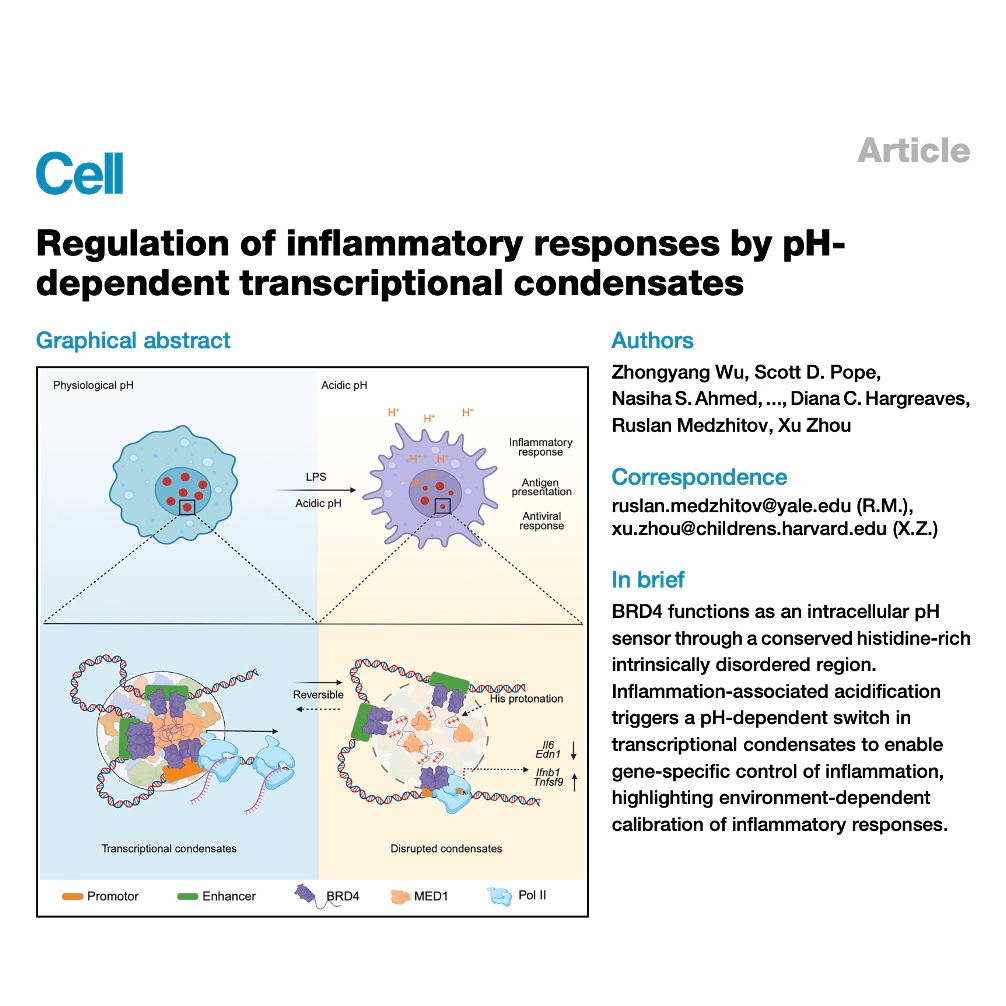
This research investigates how macrophages utilize intracellular pH as a critical sensory mechanism to calibrate inflammatory responses. Researchers identified that acidic environments, commonly found in inflamed tissues, disrupt transcriptional condensates formed by the proteins BRD4 and MED1. This disruption occurs because BRD4 acts as a molecular sensor through a histidine-rich region that reacts to protonation, functioning as a negative feedback loop to prevent excessive inflammation. While initial defense genes remain unaffected by pH changes, later enhancer-dependent genes are selectively repressed, effectively decoupling the immediate immune demand from long-term tissue damage. This discovery suggests that pH-dependent phase separation represents a distinct layer of gene regulation that allows cells to integrate environmental data directly into their transcriptional output. Ultimately, the study highlights how the microenvironment can dictate the magnitude and quality of the immune system’s defense strategy.References: Wu Z, Pope S D, Ahmed N S, et al. Regulation of inflammatory responses by pH-dependent transcriptional condensates[J]. Cell, 2025, 188(20): 5632-5652. e25.前往小宇宙评论区与主播互动
Embed this episode
Ready to play
868-pH-Dependent Condensates Calibrate Inflammatory Response
No transcript for this episode yet
Similar Episodes
No similar episodes found.
Similar Podcasts
No similar podcasts found.