
A podcast by Sipra. In podcast, De la Sipra. In podcast, De la Sipra. De la Sipra, podcast.
In podcast, De la Sipra. Interviews, background talks and voices from all Alpine countries. Listen to this and more in the podcast of the International Commission for the Protection of the Alps. www.sipra.org.
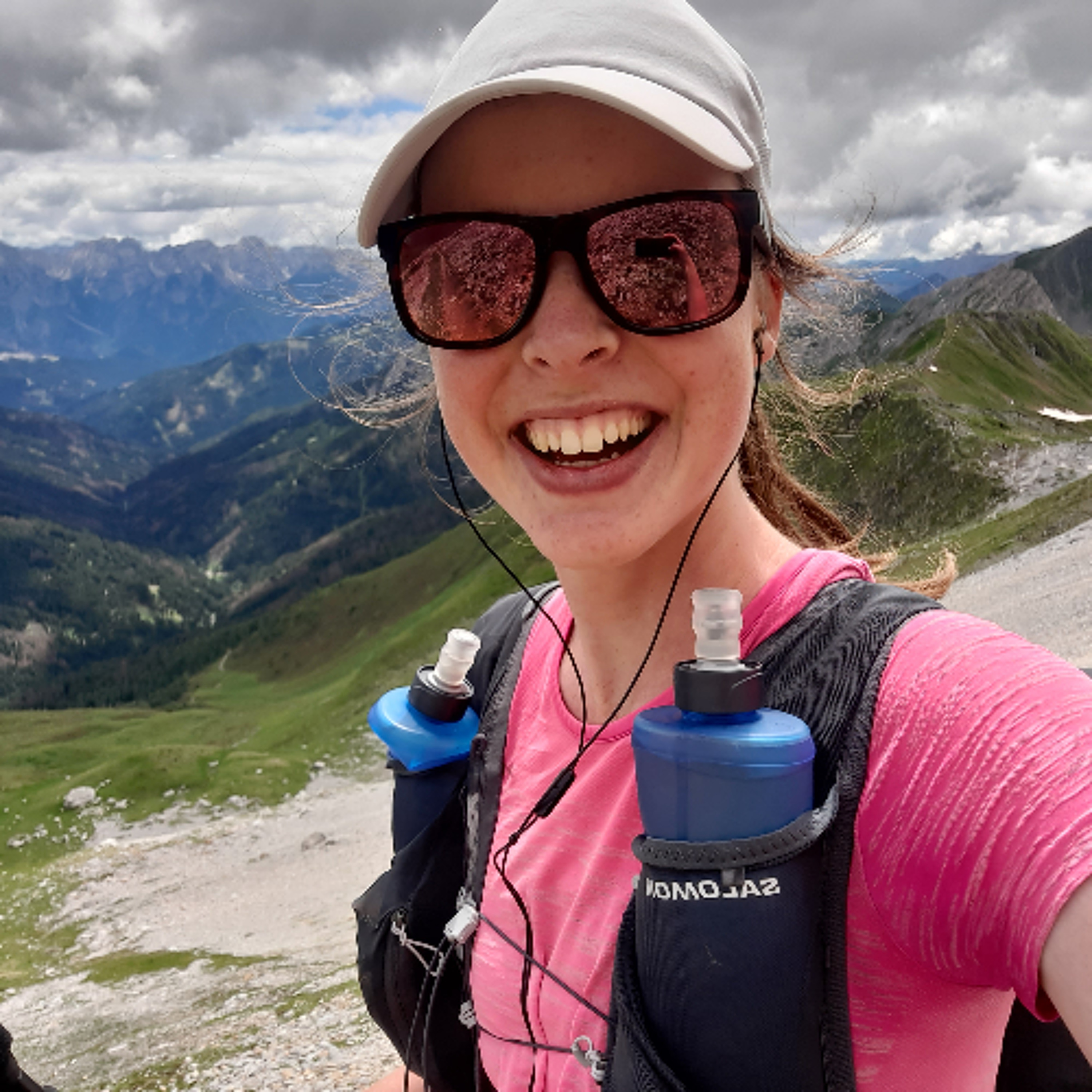
Port slash podcast. Hello and welcome to the current episode of Voices Along the Villal Pina. My name is Michael Gums and today we are joined by Ellen from Belgium, a passionate long distance hiker, language enthusiast, and a new member of the Villal Pina volunteers team. After completing the full red trail on the of the Villal Pina in 2024, she's now excited to contribute her skills as a volunteer to the communication team of the Villal Pina.
With a master's degree in multilingual communication in Dutch, English, and Italian, Ellen brings a unique blend of linguistic and cultural insight to her work. Her love for the mountains, languages, and Alpine cultures continues to grow and in 2025, now she's hiking her favorite section of the Villal Pina, the Western Alps, for the fourth time actually. So we are thrilled to have her with us today. Welcome Ellen.
Hi. Thank you very much for having me and thank you also for this lovely introduction. Yeah, we're joined by you today and in our office actually in Lichtenstein. It's nice you dropped by very spontaneously.
How are you feeling right now? Right now I would say very happy to be here and to finally meet Zipra International, but I'm also quite tired, especially after yesterday's rainy day and yes, the body is a bit exhausted but the mind is full of energy. You already said it a bit tired. How long have you been on the trail so far?
For now about two weeks. So four more weeks to go for me. Where did you start? I started in the Karnik Alps, so close to the border with Slovenia and Austria and then I did a small detour in the Dormites to then switch back on the Villal Pina.
It wasn't all easy the first days you told me before, a lot of rain and so on. What's your takeaway from these first days? I would say that I have to enjoy more just being in the mountains and not just being focused on doing long distances every day. In the beginning I was just focused on speeding up and I wasn't really taking time to enjoy the beautiful landscapes, but I soon realized that it is all about just enjoying where you are and this has so far been the most important lesson for me.
Okay, yeah we might have to add that you are not just hiking the Villal Pina, you tried to do it in a trail running mode, so as quickly as possible. How did you come up with this idea? Well five years ago I started through hiking, so then I was just a hiker with a heavy backpack and last year I felt like I needed a new challenge. And also because when I was hiking on the trails I saw many trail runners, so that inspired me to do it as well and yeah it came naturally just after already hiked for three years in the mountains.
It was time for a new step for me. Okay what does a typical day on the Villal Pina look for you? Well I tried to start as early as I can so that means setting my alarm at 5.30 which is still late I think, but yeah I do that to avoid the late afternoon storms because they mostly are rolling at about 3pm so then I try to do as much as I can before that and then I take a long break during the afternoon storm to then continue for two more hours after the storm and then I'm happy if I can reach the final destination by 6.30 or the latest 7pm but yeah because of the weather the last few days that wasn't possible so yeah I don't see the points yeah continuing when it's like pouring outside so then I take shelter but yeah for the last few days that was mostly home my days were looking so then that means that I can only continue when it isn't training and sometimes that means that I'm still on the trails by 8 or 9pm even. Okay what has been your toughest day so far?
I think in the Karnik Alps when I was on the Rich Line and I knew that thunderstorm was forecasted but it wasn't clear when so I had a stretch of like 20k to do and there weren't really options to go down so I had to be quickly in order to avoid the thunderstorm and just as I could finally go down to the Mitra Karbivak the thunderstorm rolled in so I was really happy that I wasn't up there while it was thundering. So you were lucky? Yeah indeed I was very lucky. Yeah and what was your most beautiful day so far would you say?
Well every day is beautiful if you just look to the landscape but on the fourth day I had a really inspiring encounter with Renata who is 80 years old and she was doing the high Karnik way and I was so impressed that it is still possible when you are 80 years old to do this that's my dream and I asked her how she managed to do this at yeah let's say a very unusual age and she told me that every day she hikes and she tried to just eat what is good for the body and yes that was really an amazing moment. You are hiking and running along the Vlpina for the fourth time now but you told me before that some years ago you dreamt about hiking the Pacific Crest Trail which is very well known among people who like to do through hiking Pacific Crest Trail is in the USA but now you are not interested in doing that so much so why did your point of view change here? Well I think because for me being on the Vlpina also means to eat well and that is eating slow food and slow food is food that is really good for your body so no unprocessed food and also food that is good for the environment and when I see that hikers on a PCT fool themselves with McDonald's yeah that doesn't appeal to me anymore and also as a language enthusiast it's really nice to explore all the dialects here in the Alps and culture-wise it's also much more interesting compared to the United States I would say. Okay maybe if we go back to this minimalist fast paced style of hiking your backpack weighs only about 5 kilograms without water with water but more obviously how well is that working out for you so far?
Well of course 5 kilograms is ultra lightweight when you compare it to more tigers but it is still demanding for me because yeah I think that my body weight is 53ish so running with I think that it's more than 10% when my backpack is also filled with water and food is still challenging I can definitely feel it in the evening on my shoulders but yeah I have everything that I need and everything that I need to be safe so I yeah I will definitely not cut weight when it comes to safety and well also my point of view to safety is that if you are lightweight you are much faster and when you are much faster you can much easier reach a place with a shelter from for example when there is a thunderstorm so overall I feel really safe with everything I have and yeah if I see sometimes hikers with backpacks of like 20 yeah even yeah I met hikers with the backpack of 20ish kilo who are struggling to do more than two kilometers an hour yeah that would definitely make me afraid like knowing that you have to hurry up because of a thunderstorm so yes I understand so about this safety aspect this arises also the question to me how did actually your family and friends react when you told them the first time maybe I'm gonna hike the Vialpina and I'm doing it all alone and maybe this time even running the Vialpina or at least a large part of it how is the reaction among family and friends there well I know they are used to this because this is basically my life for five years now and to come back to why I prefer the Vialpina compared to for example the PCT is yeah because there are just so many people out in the Alps during the summer and you have hurts and you can be in the middle of nowhere but at the same time you are for example two hours away from a parking lot where you can descend and go to doctor for example if needed so as a female solo hiker I feel absolutely safe in the Alps and yes I don't think there is need to worry to be out here alone also there are no dangerous animals so yes okay yeah in some parts of the Alps people are afraid of the wolves and the bears coming back but still it might not be the same as somewhere in the u.s the complete wilderness I guess you are also volunteering for the Vialpina how did that come about as being so passionate on the the Alps and the Vialpina it felt like a logical step for me to join the Vialpina volunteer team and also because with my background in motoring or communication I knew that I could mean something for the organization and yeah it also combines my passion for languages and the Alps so that was perfect new project to embark on for me okay great and what exactly have you been able to contribute so far mainly translation so when something has to be translated no law would text me and ask me if I'm available to do that so there is no pressure on contributing to the Vialpina project it is just when you have time that you can yeah embark on something and if it doesn't work for you at that time you can just say it so that's also really nice great Nora just to explain is coordinating the Vialpina for us you've met interesting people on your way already as mentioned the elderly lady who is very fit how do those encounters differ from the ones that you make in everyday life that's an interesting question because they definitely differ well first of all when you're out on the Vialpina you meet like-minded people which is much more complicated for me as a yeah Belgian woman so that's one thing and why is it more complicated because we have no mountains and although I know that there are yeah people that are as passionate as me in Belgium it's still hard to to find them whereas when you go out here in the mountains in the hoods or in the Bivakos it's easier to meet people and of course when you're doing the Vialpina you have time so you're more likely to start having deeper conversations I would say compared to yeah back at home it's actually sustainability a big topic for you in your daily life yes yes it definitely is although yeah it makes me quite yeah yeah sad when I you know think about me entering a supermarket and just buying stuff that isn't good for the environment and for myself but it's yeah somehow the only way to do it because as I'm working full-time for example I don't have the time and the energy to to grow food in a garden so because we have this lifestyle of working 40 each hours a week we do not have another option than just buying food in a supermarket whereas here in the Alps also here you have the space of course to produce the cheese and everything that is more difficult in Belgium it's also a nice way to at least for some time only eat food that is good for the body and the environment what advice would you like to give others who are thinking about taking on the challenge of hiking the Vialpina or even running it but just hiking it maybe first do not let the long distance hold you of embarking on the Vialpina you can easily speed it up and for example make a project of it for like five years and come back every summer because you pass cities where you can take the train so it's not because you don't have three months of holiday that you cannot embark on the Vialpina I know that it's tentative to do for example to the Montblanc because it's like I think 10 days so perfect for one holiday but yeah I think with planning you can make a project out of it and just come back every year to to finish a whole traverse of the Alps instead of doing loops all the time I understand and did you actually we did not talk about it before did you actually walk or hike the whole Vialpina at once already or did you also split it up the first time that was four years ago I did the GR5 so that is from La Clemente to Nis mostly on the French side but the Vialpina is mostly following the GR5 and then the second year I came back to do the Lagrang de Tervisatade de la Alpe so at the Italian side also the western Alps and then last year I started actually in the Karnic Alps because I was planning to start in but because of last year's late snowfall I couldn't start when I actually had planned to start so I had to skip that part so I started in the Karnic Alps and then I followed the Vialpina but I tried to stay mainly in Italy so I used the Vialpina as my main trail but I did some detours to explore the eastern side of Italy and then when I was back in the western Alps I stayed again on the Vialpina okay so actually what I'm yeah no I'm still doing parts on the Vialpina that are new to me but my point of view is that when you cross the Alps you can call it a Vialpina because what would you call it otherwise I think that if you like to explore an area you can just easily make your own way instead of following an official route I think it's just nice to know that you have the official route in case you don't like to plan everything yourself but I really like to study the maps and see all the possibilities so yeah that's why I like to make my own projects of it yeah it's a nice thought to have the Vialpina as an inspiration and then find your own way where you want to go but you also arrived in Monaco last year yeah indeed yeah I would be interested how did you feel what were your feelings when you arrived there must be a mixture of many feelings I guess yes indeed well since I traversed the western Alps already three times Monaco was my destination for three times already and I always like to reflect on how I felt the year before and on everything that's changed during that year and yeah as I've said before you have the famous GR5 as well with a destination in Monaco so you are very likely to meet other hikers that have been through hiking for weeks or months in the Alps and then you always share it with someone else I never arrived there completely alone so I think yeah I think it would be kind of sad when I would be there alone especially because yeah Monaco is again a big city with a lot of people and if you are so you arrive there and you meet other other people who just finish the Vialpina and there is the big Vialpina party or how can I mention that yes I heard from other people that then they they have an overnight stay on the beach and celebrate yeah the end of their Vialpina but I didn't do that well maybe a funny story to tell for example two years ago when I was in the Mont Blanc region I met a woman and she told me that she lives in Monaco and I told her that I was going there and she gave me her number and she told if you if you were there you can come to my house and sleep there so that was what I did and I feel like this is also quite typical especially for the western Alps I would say I had many more of those kind of encounters and that people are just very welcoming to host you and to have you and also if you are hiking the Vialpina with a tent do not be afraid of just asking to to someone and even if you're still looking for a place to put your tent if you can just sleep in their garden because I feel like most people are very welcoming to help you so yes okay you are 26 years old now right because Vialpina is 25 years already there it was founded around the year 2000 so almost your age what are your wishes for your next 25 years and maybe also for the next 25 years of the Vialpina well for myself definitely that I can stay healthy and come back to the mountains every summer and for the Vialpina that it gets more exposure in some way that maybe hoods and towns are more aware of the Vialpina and that they can even more support through hikers but I wouldn't say that I want the Vialpina to be more well known in the world because yeah right now I feel like most of the time people from from from Europe high the Vialpina and although I of course everyone is welcome to hike it I would find it a bit strange to for example all of a sudden have have hikers from yeah America and New Zealand and I well maybe it's just because it isn't there now but I cannot really imagine that it would all of us certainly come very international so yes that's an interesting aspect because of course it's maybe not so sustainable to fly around the world to do a certain hiking trail might be more interesting to find something that's near nearer to your home yeah that's right yes indeed yeah that's all well I do not see the point of going to the United States or New Zealand when we have such a beautiful scenery and landscape so close by and the Alps are just so big so it's endless to explore everything we have here so and I mean of course I come back every summer and I stay here for two months so maybe in ten years I will have seen most of it but yeah as long as there are still some things to discover I prefer to to come here instead of taking a flight to another continent and yes yeah and you you already mentioned before maybe you also want to move to the Alps actually yeah indeed because yeah I know I mean when I started I could have taken the train but it's also just too expensive so yes I opted for a cheap rhinear flight to Venice but I would be much happier if I can just you know live in the Alps and go out in the weekend and it's also such a hassle to come here from Belgium so I will definitely try to find a job here and then I think because of course we are always looking for the best but I think that then I can say that I have everything I need in my life if I have the mountains around me and if I'm able to go out whenever I can that would be my biggest dream because it said you're doing it and you're doing it in a trail running mode the whole this part of the Vlpina is there any goal there where you say I want to do it in I don't know a certain amount of time or did you did you set yourself a time frame for that well as I've said before initially when I was in Belgium I made a big excel list with like you know the elevation change and and kilometers that I wanted to do every day okay but yeah for now I I don't care about that anymore and I yeah I just try to enjoy the mountains so no I don't have like a time frame but yeah I if I cannot do or finish something I will just come back next year and yes that's cool it's a nice change of perspective actually yes yes well as a runner and I feel especially with ultra running it's it's mostly not about competition between all the runners but ultra running is more about challenging yourself and being competitive with yourself so I'm happy that I learned to let go of that and and just yeah really try to enjoy it because it would be such a pity if I didn't and just focused on doing case thank you so much Velen for sharing your journey with us thanks for for being so open and also talking about your experiences and reflections we wish you many more unforgettable moments on the Vlpina and lots of joy in your volunteer work with the team and there's many more stories to come I guess all the best thank you very much you have heard a conversation with Vlpina volunteer Ellen Bouquet if you're interested in her adventures you can also find her on Instagram this was another edition of the multilingual podcast series Voices along the Vlpina you find a link to this project and all other episodes in the show notes we are realizing this podcast series with the financial support of the charitable foundation first the chameartian rad Gidufika in Liechtenstein my name is Michel Gams goodbye a podcast by sebrah in podcast and the lachey podcast the lachey podcast the lachey podcast three-brim podcast interviews background talks and voices from all Alpine countries listen to this and more in the podcast of the international commission for the protection of the apps www.sebrah.org port slash podcast