Skip to content
#89 (de) Wasser und Wintertourismus am Limit: Beschneiung quo vadis? episode artwork

EPISODE · Aug 14, 2025 · 29 MIN

#89 (de) Wasser und Wintertourismus am Limit: Beschneiung quo vadis?

from Audible Alps - CIPRA Podcast: Interviews, background talks and voices from all Alpine countries: Listen to this and more in the podcast of the International Commission for the Protection of the Alps. · host CIPRA International - www.cipra.org

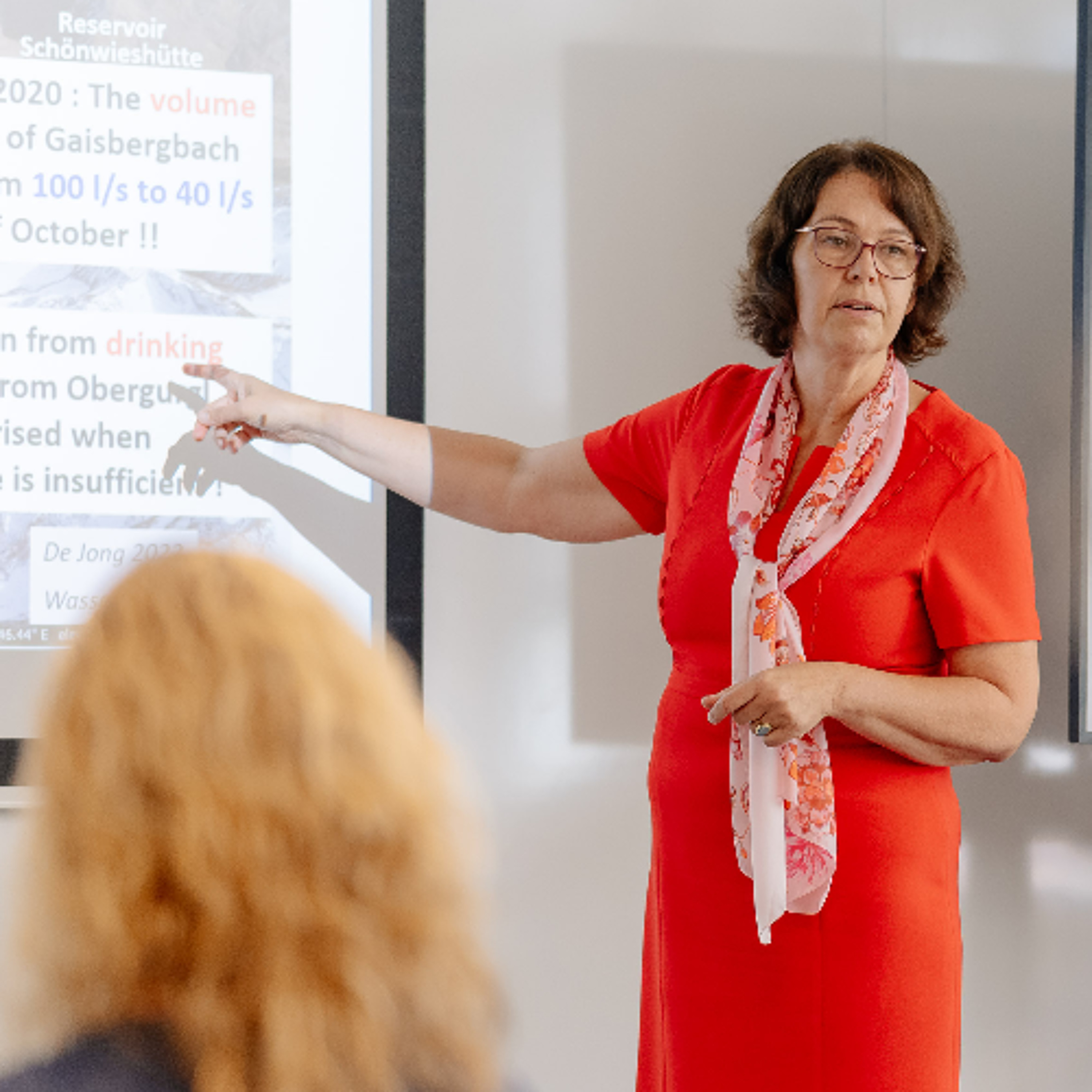
Der Klimawandel verändert den Wasserkreislauf in den Alpen: Dürren, Temperaturen und Wasserknappheit nehmen zu, Schneedauer und -höhe nehmen ab, die saisonalen Abflüsse schwanken stark. Auch der alpine Skitourismus hat sich in den letzten Jahrzehnten stark gewandelt, vom Skifahren auf reinem Naturschnee zu intensiv beschneiten Pisten mit immer grösser werdenden Wasser-, Energie- und Flächenansprüchen. Hydrologin Carmen de Jong beobachtet diese Entwicklung seit Jahren kritisch. Wir haben sie anlässlich des ZukunftsForum Alpen Liechtenstein 2025 interviewt. Im Gespräch räumt sie mit gängigen Falschangaben auf und kontert diese mit wissenschaftlichen Fakten rund um Wasserverfügbarkeit- und entnahmen, Speicherbecken, Beschneiung und Wintertourismus. De Jong plädiert für verantwortungsvolle Lösungsstrategien und touristische anstatt eines weiteren Ausbaus der Skigebiets-Infrastruktur. Ausserdem sprechen wir mit ihr über die Olympischen Winterspiele und ökologische Sünden, die diese trotz aller öffentlichen Bekenntnisse zur Nachhaltigkeit wiederholt begangen und auch in Milano-Cortina 2026 erneut begehen. Carmen de Jong erhielt 2015 einen Ruf auf die Professur für Hydrologie am Institut für Geoinformation, Stadt und Umwelt an der Fakultät für Geographie und Raumplanung der Universität Strassburg, Frankreich. Sie war zuvor 9 Jahre lang wissenschaftliche Leiterin des Hochgebirgsinstituts und Professorin am Hochgebirgszentrum der Universität Savoyen, Frankreich. Sie forscht seit 35 Jahren über Wasserknappheit und natürliche Gefahren in den Alpen, Rockies und Hoher Atlas und im Rheingraben. Während den letzten 20 Jahren lagen ihre Schwerpunkte u.a. in den Umweltauswirkungen von Kunstschnee, Wintersport und olympischen Winterspielen. Moderation und Produktion: Michael Gams Foto (c) Julian Konrad Transkript: https://www.cipra.org/media/files/transkript-podcast-carmen-de-jong_de.pdf Weiterführende Informationen: https://zukunftsforumalpen.li/ --- Water and ski tourism at breaking point: what's next for snowmaking? Climate change is altering the water cycle in the Alps: droughts, temperatures and water shortages are on the rise, while snowfall and snow depths are decreasing and seasonal runoff is fluctuating wildly. Alpine ski tourism has also changed significantly in recent decades, from skiing on pure natural snow to intensively snow-covered slopes with ever-increasing demands on water, energy and space. Hydrologist Carmen de Jong has been critically observing this development for years. We interviewed her at the ZukunftsForum Alpen Liechtenstein 2025. In the interview, she dispels common misconceptions and counters them with scientific facts about water availability and extraction, reservoirs, snowmaking and winter tourism. De Jong advocates responsible solution strategies and tourism instead of further expansion of ski resort infrastructure. We also talk to her about the Winter Olympics and the ecological sins that these events have repeatedly committed despite all public commitments to sustainability, and which they will commit again in Milan-Cortina in 2026. Carmen de Jong was appointed Professor of Hydrology at the Institute for Geoinformation, City and Environment at the Faculty of Geography and Spatial Planning at the University of Strasbourg, France, in 2015. She previously spent nine years as scientific director of the High Mountain Institute and professor at the High Mountain Centre at the University of Savoy, France. She has been researching water scarcity and natural hazards in the Alps, Rockies, High Atlas and Rhine Graben for 35 years. Over the last 20 years, her work has focused on the environmental impact of artificial snow, winter sports and the Winter Olympics, among other things. Moderation and production: Michael Gams Photo (c) Julian Konrad Transcript: https://www.cipra.org/media/files/transcript-podcast-carmen-de-jong_en.pdf Further information: https://futureforumalps.li/

Episode metadata supplied by the publisher feed · Published Aug 14, 2025

Embed this episode

Ready to play

#89 (de) Wasser und Wintertourismus am Limit: Beschneiung quo vadis?

0:00 29:54
of MATCHES

TRANSCRIPT · AUTO-GENERATED

And we'll see you in my next video! I'm very excited to pick up your comments over here and leave us a comment below. And if you like our comments below, visit us at Twitter and Twitter. Tell us below.

I'm a very happy little student. I'm very happy to meet you. We're going to talk about research for our first week. this is a great place to take care of the world.

And we are in the very first place, where we are here in the first place, so the world is a very good place. We are now going to stay behind the scenes to move around the world in the future, where we can't get more involved, but we can't get more involved in the future. We are going to stay behind the scenes to work with the world in the same place, because we are now in the final place. We have to work here with the world in the future.

so, I would like to speak, in the present, what can be developed in the first place? I'm not thinking, because I'm very happy that the people from the country are very happy and happy, so I want to go on the screen and reflect on the conflict that the government can start to grow into, particularly in the future. I'm very happy to be with you. I think the view is likely at a moment in which I get the perspective of the living world.

I see it as a whole thing, in where the world has discovered And this is all distinction between our own family, with this learning experience. These are obviously all perspectives whereas there are there are so many issues such as ways of becoming a professional who are encouraged to be a leader in this sport. It's one of the most important things that we think that we can do next in order to improve our stability of our safety. So, I'm glad you brought this together.

But today we will talk a little bit about how we can do that. and then I was there and I was walking through the building and I was like, oh, okay, so I was there. So I remember that I was a little bit older. I was also a little bit older, and I was like, oh, that's right.

This is how we can continue to look at what people do to make sure that there is a lot of social dialogue inside the world. We have to know about it, but very much, as a result, our country is really important but often, we hope that we can keep things going. We have to make it even easier, and we have to take those things. That's why we need to work togetherammable to open a house.

I am too tired to miss out on this work. I'm not really interested in this work. and on-site. Thank you for watching, I hope you enjoy the video.

I hope you enjoy the video. Until then, I hope you enjoy the video.

No similar episodes found.

No similar podcasts found.

Frequently Asked Questions

How long is this episode of Audible Alps - CIPRA Podcast: Interviews, background talks and voices from all Alpine countries: Listen to this and more in the podcast of the International Commission for the Protection of the Alps.?

This episode is 29 minutes long.

When was this Audible Alps - CIPRA Podcast: Interviews, background talks and voices from all Alpine countries: Listen to this and more in the podcast of the International Commission for the Protection of the Alps. episode published?

This episode was published on August 14, 2025.

Is there a transcript available for this episode?

Yes, a full transcript is available for this episode. You can read the complete transcript on the episode page.

Can I download this Audible Alps - CIPRA Podcast: Interviews, background talks and voices from all Alpine countries: Listen to this and more in the podcast of the International Commission for the Protection of the Alps. episode?

Yes. Use the download control on the episode player to save the publisher-provided media file.
URL copied to clipboard!