
EPISODE · Sep 30, 2020 · 41 MIN
9: Art Isn’t Just Decoration—Cultural Organizing is Democracy’s Secret Weapon
from ART IS CHANGE: Strategies & Skills for Activist Artists & Cultural Organizers
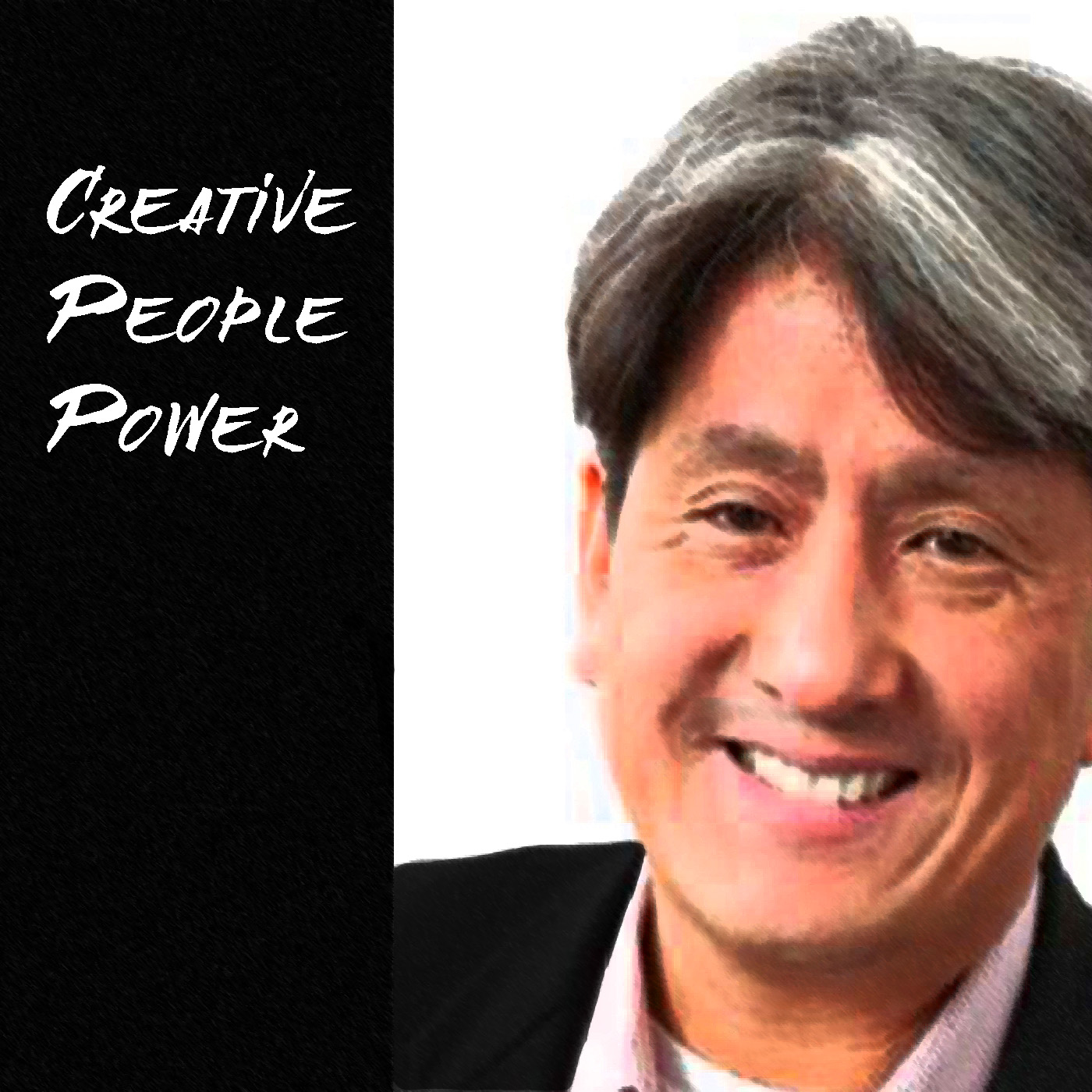
Episode 9: Erik Takeshita - Creative People PowerDear Listener: In this podcast Erik describes agency and connection as essential elements for emergence of creative people power. If you are interested in exploring this idea further here are two resources that might be of interest.Creative People Power Web Site & Report @ Springboard for the ArtsSmall Towns, Big Stories: Arts-based Community Development Makes its Mark in Southwest Minnesota - A Center for the Study of Art and Community Blog PostThreshold Questions & Juicy QuotesWhat do the challenges inherent to equitable philanthropy, light rail construction and the sanctity of sacred space have in common?Art and Culture exists everywhere... it needs to be be nurtured. You know, there is solar power, because the sun exists, or there is wind power because the wind exists. And what we need to do is create the capacity to harness and transmit that (cultural) power that exists. Why art and culture in these challenging times?I would say that art and culture is... most essential when we as individuals, and we as communities are struggling, because it's actually part of what makes us human. It's part of what creates our connections to our humanity, but also our connections to one another. But it's it can be the kind of glue that can help bind this together and common experience and inspiration and ideas. How do human creative capacities contribute to building caring, capable, just communitiesWhen people have hope, and agency, and they have connections, that can then lead to collective efficacy, That's a kind of a necessary underpinning for me about how change happens in communities. And what's interesting to me is that art and culture becomes an easy on ramp for this, it becomes a way to practice some of those skills. it becomes a way to help give people a sense of agency and a sense of hope. TranscriptBill Cleveland: So, what do the challenges inherent to equitable philanthropy, light rail construction and the sanctity of sacred space have in common? Well, according to Eric Takeshita, they all meet in a place he refers to as creative people power. Now, Eric is one of those rare individuals who make an impression and a difference by calling upon both the head and the heart. I spoke to him about his life's path in early 2020, just before the COVID justice/stew began to boil over. From the Center for the Study of Art and Community, this is Change the Story, Change the World, a chronicle of art and transformation. I'm Bill Cleveland.Part One: Shoulders, and Ladders. BC: You are the first person that I have ever seen use one of those back scratchers. Yeah. Erik Takeshita: Oh yeah, I love these. I have one here on my desk, I use it all the time.BC: That is wonderful. That is ET: I have two, I have one here and one upstairs.BC: There you go. Okay, a true addiction. So, I'll just start. You've had a long and a storied career in a world that spans many realms, some of which don't normally come together, our community development, storytelling, art making being a potter. So, I'm just going to ask, how do you describe what you do in the world? ET: I’ll try to answer your question by naming what I'm most interested in. And my passion is this nexus of, of how art and culture can be leveraged to create a healthy, more equitable, and sustainable world and planet and community. I have been very, very fortunate to have had a number of different platforms from which to pursue that passion. I've had the opportunity to work in the community development sector, I've had the opportunity to work in the arts community, I've had a chance to be an artist, I've had a chance to work in philanthropy, I've had a chance to work in government. But what I would say is that through the through line for all that work is really the, for me, it's this intersection of how art and culture really ties to building healthier and stronger communities, particularly within historically marginalized communities, communities of color, in particular, and other historically disinvested [communities]. So that's what I do, right, I do work, but really, it's about supporting those communities, by helping them tap into that the power of art culture that I believe exists in every person in the community. And really trying to help support and facilitate the unleashing and channeling of that energy.I think one of the important things I will mention is that there's no such thing as an art desert, which is sometimes just false. Art and Culture exists everywhere and is available to everyone. Perhaps it needs to be supported somehow seems to be nurtured or it needs to be brought out. But I think that it exists, and it needs to be celebrated and facilitated. I think it's much like, you know, kind of how there is solar power, because the sun exists, or there was wind power because the wind exists, and what we need to do is perhaps sometimes create the capacity to harness and transmit that power that exists. I want to give credit to Helicon Collaborative and Springboard for the arts, because those are ideas that come out of their credit People Power Report. So, this idea that the people power that exists, and that we just need to tap into it. And I very much believe in it. BC: So, there are some people who would say that we live in a very challenging time, and the issues of the day are daunting. Why would something like art and culture be a primary resource for addressing these kinds of things? Why art and culture? ET: I guess I would actually challenge the first part of that statement, which I mean, should be sure we live in challenging times, relative to most many of our lifetimes. Sure, things are kind of interesting right now in terms of geopolitics or climate change. But when we look back at the 20th century, we go back to the civil rights, the Vietnam protests, you know, Kent State, you go back further to World War Two and the Holocaust, the depression, the Great War, the flu pandemic. So that's the 20th century, right. So, I guess, I feel that we have a distorted view of history. I'm not diminishing the difficulty of the pain and suffering. I will be interested in how this era in this period plays out in history.Second, as I would say that art and culture is always essential. And, in fact, it's perhaps most essential in most trying times. Right? It is, is perhaps the most essential when we as individuals, and we as communities are struggling, because it's actually part of what makes us human. It's part of what creates our connections to our humanity, but also our connections to one another. But it's it can be the kind of glue that can help bind this together and common experience and inspiration and ideas. So, to me, the answer is, it's not, why would we do it? It's that in those challenging times, it's the very time in which we must fight. That's, that's the path forward. That's the way that we will emerge from any challenges I think we have right is by seeking that inspiration by seeking that meaning making by seeking those connections that art and culture can uniquely help to provide. BC: So how did you come to this, you have a pretty clear outline, and focus for your work. I would imagine growing up there were not a lot of people doing what you're doing now. And yeah, so what's the path? ET: So, my path is one of a lot of luck is what I would first say. I've been very blessed, I would be quick to say that I've been given a lot of privilege in terms of the opportunities I was given by family, and by parents, and those that came before me, things in terms of education, and more had the access. I was allowed at early age to explore my creative expression, and I found that outlet through ceramics right through as I went through high school and received a scholarship to go to undergraduate offers on the court. And so, I found that as a as a vehicle for expression. Another piece of my journey, though, is being the son of a social worker, and a public-school librarian. You know, this idea of service, this idea of needing to give back.Another piece of my journey is that I'm a fourth generation Japanese American that was born and raised in St. Paul, Minnesota. And I grew up at a time when I thought you were the whiter black and I was neither. And it was through the arts that I was able to find my place in this geography. Right so through the work of Asian American Renaissance, and theatre, moved from fine arts to really help me find my place and identity here in this community. And the other piece, I would say is, and it's also that I might just by biographically for me, it was sent to private high schools and private colleges, I have been given a lot of privilege and a choice along the way to either kind of say, ‘wow, look at me, aren't I great and fortunate, and I'm going to take all my marbles and go home’, or I can make a choice to say now I have an obligation or responsibility to ensure that those are coming behind me have those types of opportunities, right? Like that is...
Embed this episode
What this episode covers
What do the challenges inherent to equitable philanthropy, light rail construction and the sanctity of sacred space have in common? Well, according to Eric Takeshita, they all meet in a place he refers to as creative people power.
Ready to play
9: Art Isn’t Just Decoration—Cultural Organizing is Democracy’s Secret Weapon
No transcript for this episode yet
Similar Episodes
No similar episodes found.
Similar Podcasts
No similar podcasts found.