
EPISODE · Sep 10, 2006 · 4 MIN
9 Baile Caliente - Kalamarka
from Aymara's Music Poscast · host aymaras
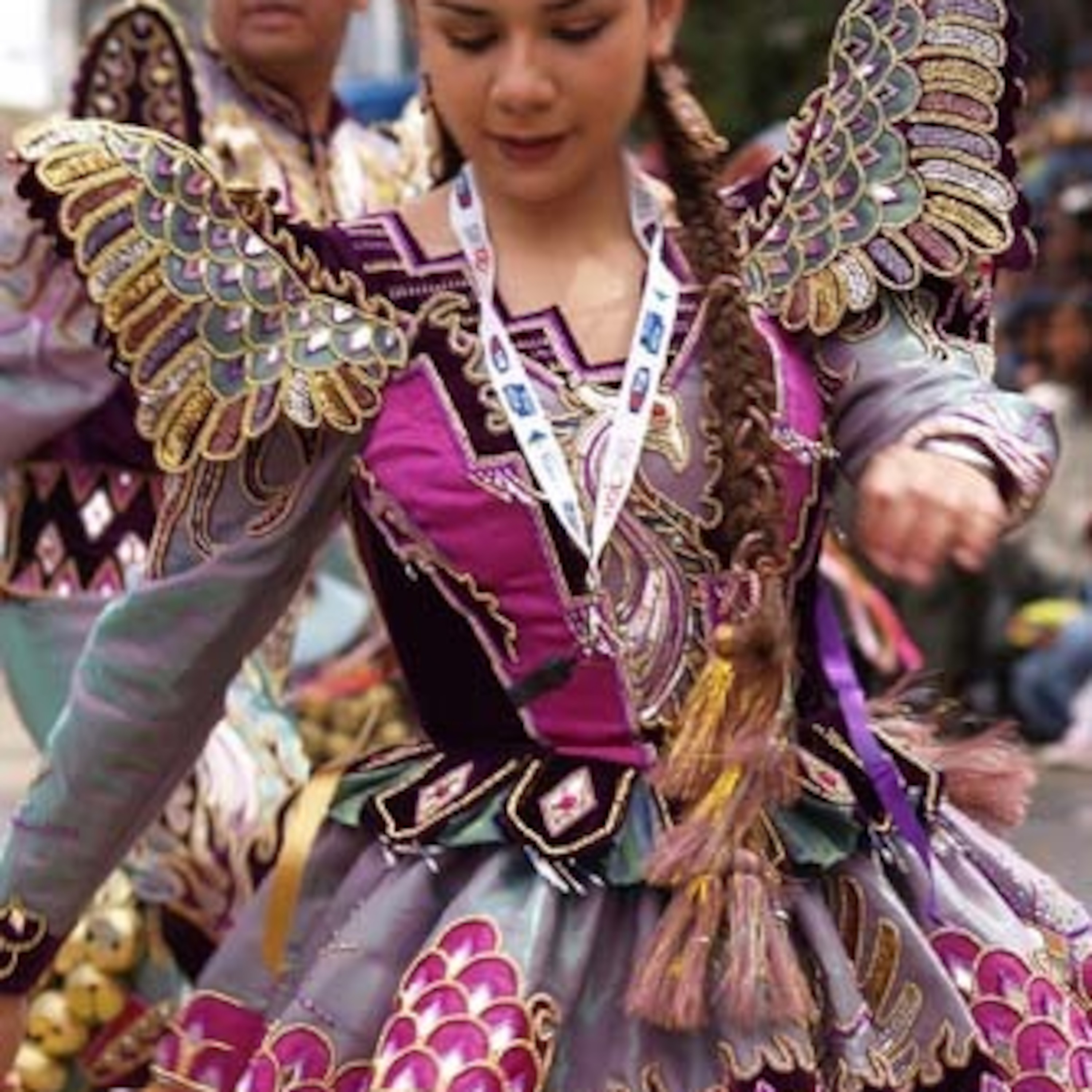
The Saya is originated from the Yungas in Bolivia, the typical dance danced to is known as Caporales, modern version dance evolve contributions from Bolivia and Peru. This dance is a legacy of the Spanish colony where caporales were Spaniards born in the colonies. After the Spaniards left both countries, caporales began as a dance to show that legacy. The dance however has a prominent religious aspect. One supposedly dances for The Virgin and promises to dance for three years of one's life. Caporal or caporales today is a typical andean folkloric dance very popular in the national festivities as Carnival in Oruro, Bolivia and "Candelaria" in Puno, Peru. A male caporal dress would depict an old Spanish military guard. Wearing heeled boots bearing large bells known as "cascabeles", a male dancer carries a hat in his left hand and a whip in his right. A female caporal dress consists of a miniskirt, fancy shoes and a round top hat pinned to her hair. The style and colours of the dress are maintained the same for both the men and women of a certain group, but can vary drastically between groups. Men and women usually dance separately in a progressive march style dance. Caporales is most popular among young men and women in their twenties and early thirties because of its physical demand. More information about Kalamarka: Grupo Kalamarka
What this episode covers
The Saya is originated from the Yungas in Bolivia, the typical dance danced to is known as Caporales, modern version dance evolve contributions from Bolivia and Peru. This dance is a legacy of the Spanish colony where caporales were Spaniards born in the colonies. After the Spaniards left both countries, caporales began as a dance to show that legacy. The dance however has a prominent religious aspect. One supposedly dances for The Virgin and promises to dance for three years of one's life. Caporal or caporales today is a typical andean folkloric dance very popular in the national festivities as Carnival in Oruro, Bolivia and "Candelaria" in Puno, Peru. A male caporal dress would depict an old Spanish military guard. Wearing heeled boots bearing large bells known as "cascabeles", a male dancer carries a hat in his left hand and a whip in his right. A female caporal dress consists of a miniskirt, fancy shoes and a round top hat pinned to her hair. The style and colours of the dress are maintained the same for both the men and women of a certain group, but can vary drastically between groups. Men and women usually dance separately in a progressive march style dance. Caporales is most popular among young men and women in their twenties and early thirties because of its physical demand. More information about Kalamarka: Grupo Kalamarka
NOW PLAYING
9 Baile Caliente - Kalamarka
No transcript for this episode yet
Similar Episodes
No similar episodes found.