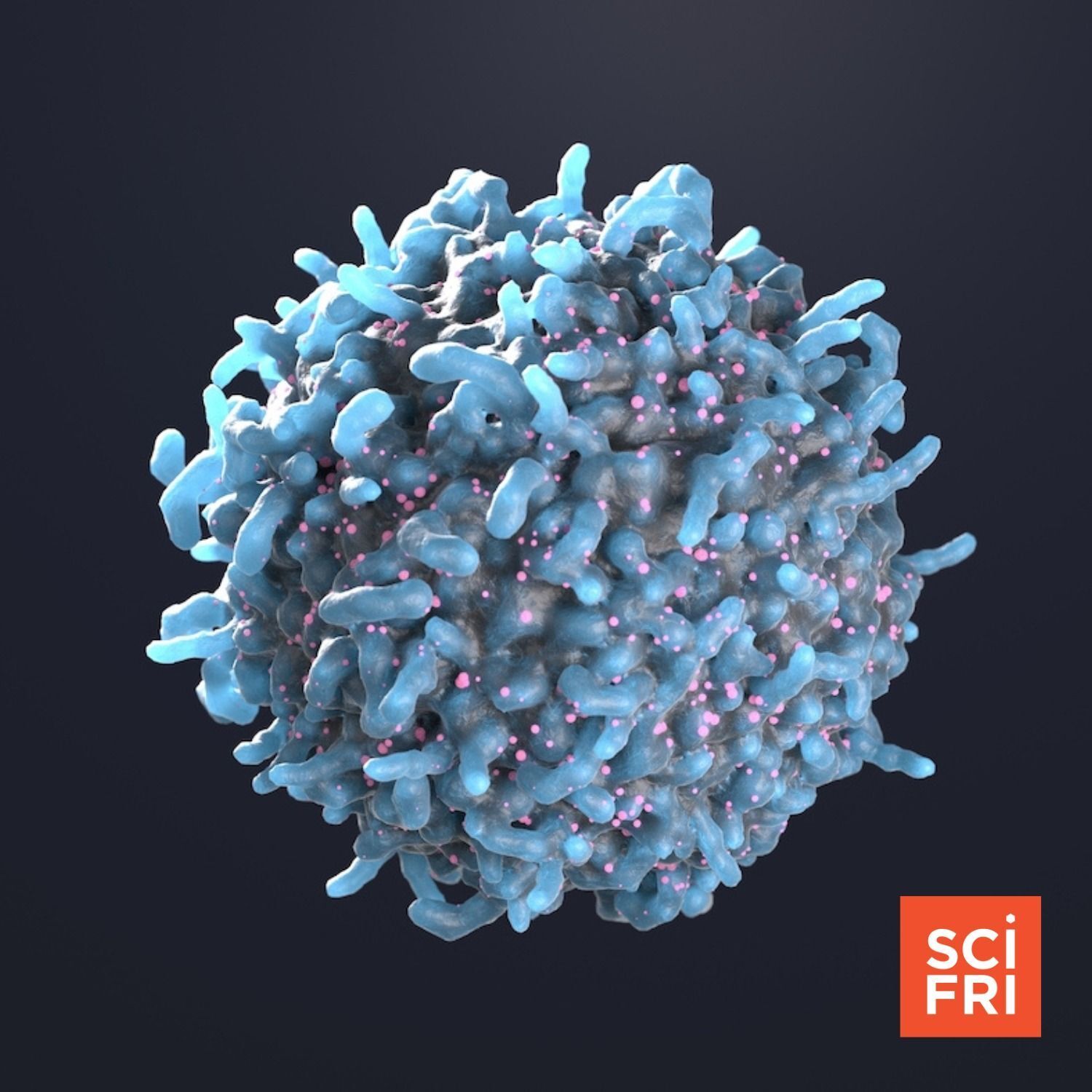
CAR-T Cell Therapy For Autoimmune Diseases | Measuring Early Life Adversity—In Marmots episode artwork

EPISODE · Nov 13, 2024 · 20 MIN

CAR-T Cell Therapy For Autoimmune Diseases | Measuring Early Life Adversity—In Marmots

from Science Friday · host Ira Flatow, D Peterschmidt, Kathleen Davis

In a Chinese study, donor CAR-T cells sent autoimmune diseases into remission. There’s hope that the therapy is scalable. And, scientists used decades of yellow-bellied marmot research to find a way to measure how adverse events affect wild animals’ survival.CAR-T Cell Therapies Show Promise For Autoimmune DiseasesFor decades, immunologists have explored CAR-T cell therapy as an effective tool to fight blood cancer. Increasingly, CAR-T cells are being explored as a potential silver bullet for treating autoimmune diseases, like lupus—which currently have no cure.Thus far, CAR-T cell therapy has largely used CRISPR-modified immune cells from a person to treat that person’s own diseases. But new research from China has made a huge step forward for this treatment: Researchers were successful in using donated CAR-T cells from one person to treat another person’s systemic sclerosis, an autoimmune condition that causes atypical growth of connective tissues.If donor CAR-T cell therapy does indeed work, as posited in this paper, it could mean the therapy is more scalable than it would be otherwise. Joining Ira to talk about this study and its potential impact is Daniel Baker, PhD student in the immunology lab of Dr. Carl June at the University of Pennsylvania.Measuring The Effects Of Early Life Adversity—In MarmotsIt’s well-established in psychology that if you experience trauma as a child, chances are it’ll impact your physical and mental health as an adult, and could even affect your economic status. In academic terms, this is called early childhood adversity. And psychologists have developed a scoring system for measuring the cumulative effect of adverse childhood experiences, which can include abuse and household dysfunction, and it can help predict health risks later in life.So we can specifically measure that in humans. But what about other animals? If you’ve adopted a dog that’s had a turbulent past, you know that that can result in reclusive or skittish behavior as an adult. But there hasn’t been a good way to measure it in wild animals.Well, a new study from UCLA, published in the journal Ecology Letters, establishes a similar index for wild animals, and it used decades of findings from a mammal: the yellow-bellied marmot. So how could it help conservation efforts for other animals?Ira Flatow talks with Xochitl Ortiz-Ross, a PhD student in ecology and evolutionary biology at UCLA, and one of the authors on that study.Transcripts for each segment will be available after the show airs on sciencefriday.com. Subscribe to this podcast. Follow our show on Instagram, TikTok, Facebook, and Bluesky @scifri and sign up for our newsletters. Got a science question that’s keeping you up at night? Call us: 877-472-4374 Hosted by Simplecast, an AdsWizz company. See pcm.adswizz.com for information about our collection and use of personal data for advertising.

In a Chinese study, donor CAR-T cells sent autoimmune diseases into remission. There’s hope that the therapy is scalable. And, scientists used decades of yellow-bellied marmot research to find a way to measure how adverse events affect wild animals’ survival.

NOW PLAYING

CAR-T Cell Therapy For Autoimmune Diseases | Measuring Early Life Adversity—In Marmots

0:00 20:32

No transcript for this episode yet

We transcribe on demand. Request one and we'll notify you when it's ready — usually under 10 minutes.

No similar episodes found.

Sunbury Life news & features Sunbury Life Hear the weeks news headlines from the Melbourne suburb of Sunbury in our weekly news wrap - out every Friday. There's reports on Hume City Council meetings, news from across Sunbury, and occasional feature interviews.SunburyLife.au is a hyperlocal news website run by dedicated volunteers serving the town of Sunbury in north/west Melbourne. Elevatin' The GetRight Spot & The Love Algorithm Elevatin' The GetRight Spot & The Love Algorithm A podcast that expresses the journey of taking ideas and turning them into a successful website and business. Using an ideology, philosophy and mental science as motivation, we shall Elevate Bodybyloud! and The GetRight Spot. We also inspire everyone to elevate their lives and go after their dreams, desires., and abundance. The Health Odyssey: Navigating Tomorrow's Medicine Podcast Welcome to 'The Health Odyssey: Navigating Tomorrow's Medicine,' where we embark on an adventurous journey through the ever-evolving world of healthcare. Each episode is like a treasure map, guiding you through the rich tapestry of ancient healing arts mixed with futuristic tech wizardry. We’ll chat about the wild west of health data privacy, the corporate giants reshaping our care, and the mind-bending potential of psychedelics for mental wellness. Think of us as your trusty sidekicks, unraveling the mysteries of modern medicine while keeping it real and relatable. Let’s dive into the stories, the science, and the soul of healthcare, paving the way for a healthier tomorrow. Chosn Conversations: Beyond the Journal Chosn AI Journal Welcome to Chosn Conversations: Beyond the Journal, where your AI hosts explore the transformative power of conversational journaling and emotional intelligence. Each episode takes you beyond traditional journaling methods, diving deep into voice journaling techniques, mental wellness strategies, and the science behind AI-supported emotional health. We share inspiring user stories, analyze the latest research in digital mental wellness, and provide practical guidance for incorporating journaling into your self-care routine. Whether you're curious about AI therapy alternatives, looking for mental health support tools, or wanting to optimize your journaling practice, our conversations extend beyond the written page into meaningful audio experiences that offer evidence-based insights in an accessible, compassionate format. Join us as we navigate the intersection of technology and mental well-being, helping you track your emotional journey and build lasting resilience through the power of

Frequently Asked Questions

How long is this episode of Science Friday?

This episode is 20 minutes long.

When was this Science Friday episode published?

This episode was published on November 13, 2024.

What is this episode about?

In a Chinese study, donor CAR-T cells sent autoimmune diseases into remission. There’s hope that the therapy is scalable. And, scientists used decades of yellow-bellied marmot research to find a way to measure how adverse events affect wild animals’...

Can I download this Science Friday episode?

Yes, you can download this episode by clicking the download button on the episode player, or subscribe to the podcast in your preferred podcast app for automatic downloads.
URL copied to clipboard!