
EPISODE · May 5, 2026 · 19 MIN
902-The Neural Circuitry of Maternal Aggression
from Paper Talk
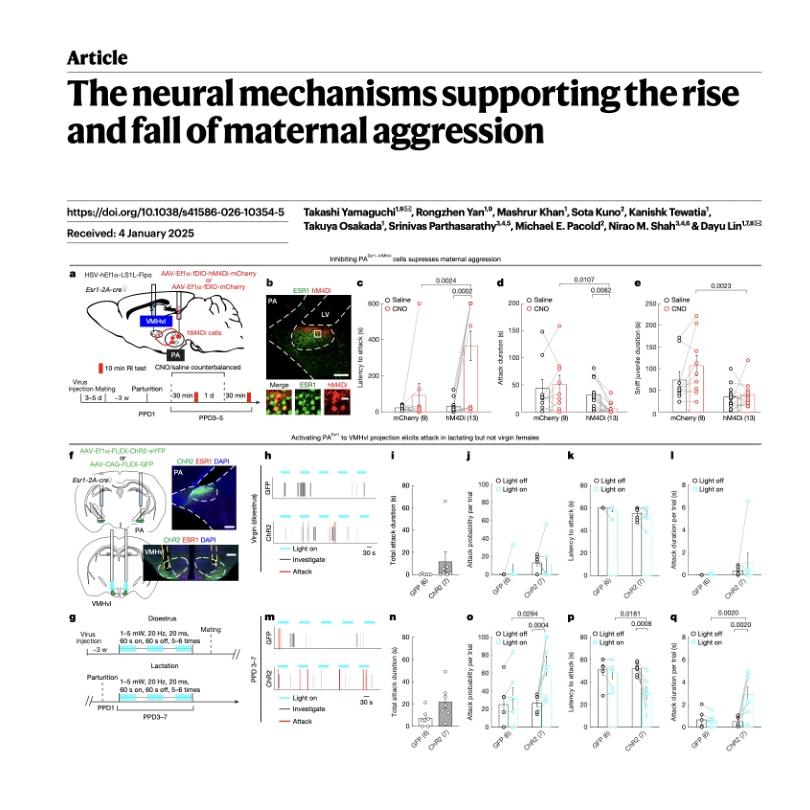
The research identifies a specific neural pathway, extending from the posterior amygdala (PA) to the ventromedial hypothalamus (VMHvl), as the primary driver of maternal aggression in female mice. During lactation, this circuit undergoes significant synaptic and cellular plasticity, making the aggression-related neurons more excitable than in non-maternal states. The study demonstrates that oxytocin acts as a crucial modulator, boosting the activity of this pathway to ensure mothers vigorously protect their offspring from potential threats. When pups are removed, a corresponding drop in oxytocin levels leads to a rapid decline in defensive behavior. Conversely, restoring oxytocin levels or using optogenetic stimulation can reactivate this aggressive drive. These findings ultimately reveal how hormonal changes and sensory cues work together to reorganize the brain’s circuitry for essential survival behaviors.References:Yamaguchi T, Yan R, Khan M, et al. The neural mechanisms supporting the rise and fall of maternal aggression[J]. Nature, 2026: 1-11.前往小宇宙评论区与主播互动
Embed this episode
Ready to play
902-The Neural Circuitry of Maternal Aggression
No transcript for this episode yet
Similar Episodes
No similar episodes found.
Similar Podcasts
No similar podcasts found.