
EPISODE · May 5, 2026 · 22 MIN
904-Prefrontal TMS Therapy for Depression
from Paper Talk
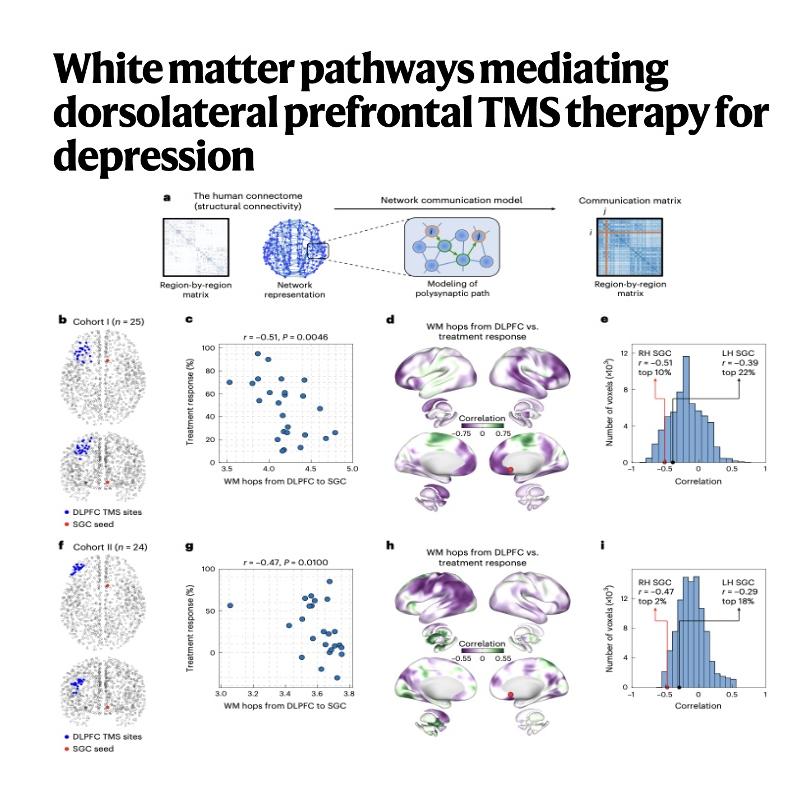
This research investigates the neuroanatomical pathways that facilitate transcranial magnetic stimulation (TMS) for treating depression. Using connectome modeling, the authors demonstrate that the therapy’s success depends on polysynaptic fiber routes connecting the dorsolateral prefrontal cortex to the subgenual cingulate. Their findings reveal that patients experience better clinical outcomes when their specific stimulation sites have shorter, more direct white matter paths to target regions. The study identifies three primary cortical and subcortical circuits, including fronto-thalamic routes, that serve as the structural foundation for signal propagation. By validating these results across independent patient cohorts, the researchers provide a structural basis for why certain fMRI-guided targets are more effective than others. Ultimately, this work offers a promising framework for refining and personalizing brain stimulation strategies to improve psychiatric care.References:Seguin C, Mansour L S, Betzel R F, et al. White matter pathways mediating dorsolateral prefrontal TMS therapy for depression[J]. Nature Neuroscience, 2026: 1-6.前往小宇宙评论区与主播互动
Embed this episode
Ready to play
904-Prefrontal TMS Therapy for Depression
No transcript for this episode yet
Similar Episodes
No similar episodes found.
Similar Podcasts
No similar podcasts found.