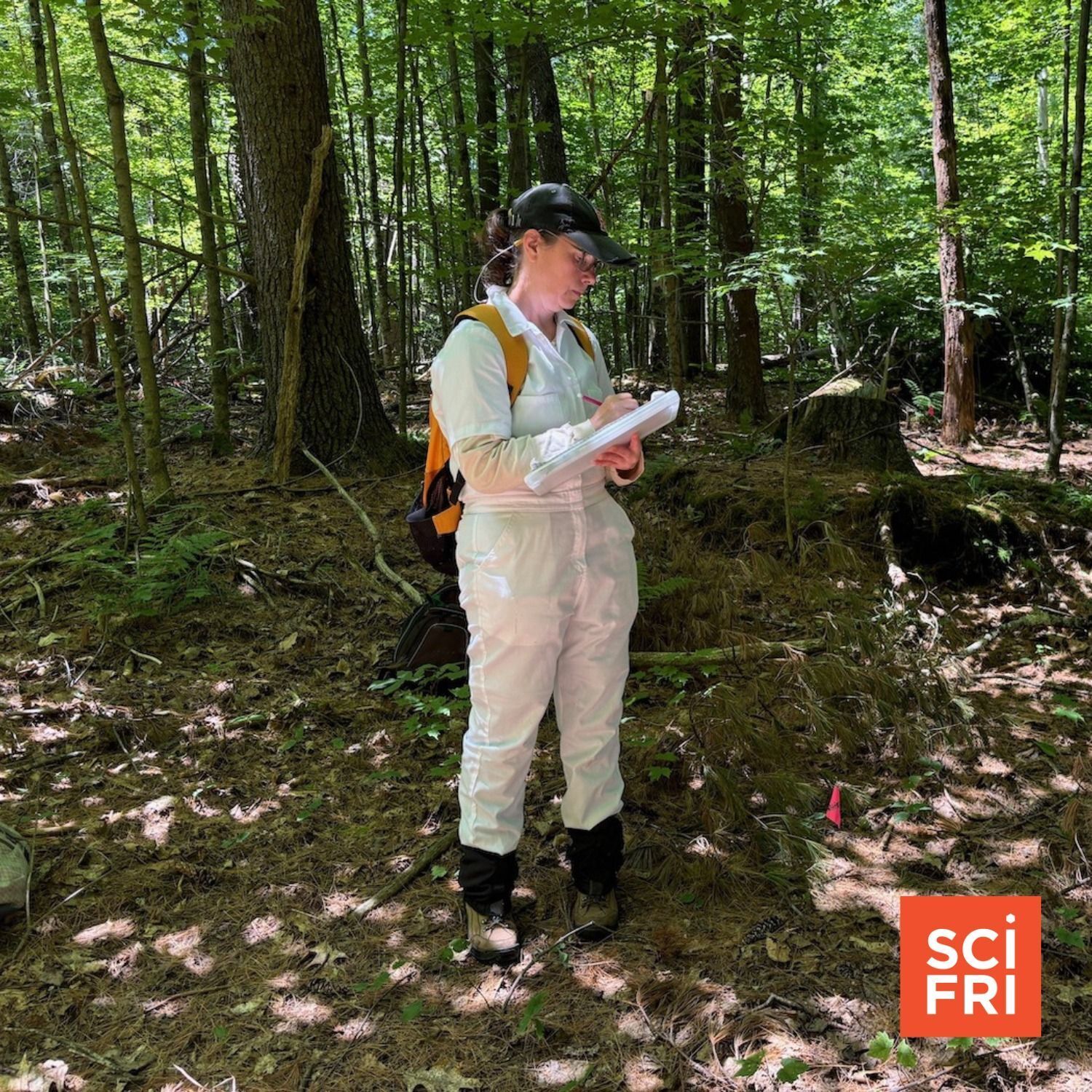
Managing Invasive Plants And Ticks Together | Clue Into The Evolution Of The Bird Brain episode artwork

EPISODE · Nov 19, 2024 · 18 MIN

Managing Invasive Plants And Ticks Together | Clue Into The Evolution Of The Bird Brain

from Science Friday · host Ira Flatow, Kathleen Davis, Rasha Aridi

Researchers are connecting two ecological problems in the Northeast in hopes of reducing the risk of tick-borne illnesses. Also, a “one-of-a-kind” fossil of Navaornis hestiae helps fill a giant gap in scientists’ understanding of how bird brains evolved.Managing Some Invasive Plants Might Reduce Blacklegged TicksIn much of the eastern US, October and November usher in an autumn peak of the blacklegged tick season.For years, researchers have noticed that these ticks, also called deer ticks, are more abundant on certain invasive plant species, like Japanese barberry, that create dense thickets in the forest understory. Now, a group of scientists in Vermont and Maine is investigating how managing these plants might decrease the number of blacklegged ticks—and the risk of people developing tick-borne illnesses, like Lyme disease and Babesiosis. After getting a $1.8 million grant from the National Science Foundation, they’re hoping to come up with guidance for landowners.Read the rest at sciencefriday.com.Ancient Bird Fossil Offers Clues Into How Bird Brains EvolvedArchaeopteryx is the earliest bird-like dinosaur that we know of. It lived 150 million years ago, but researchers don’t know much about how the bird brain evolved from then to now.An 80 million-year-old bird from the Mesozoic Era is now helping fill in the blanks. It’s called Navaornis hestiae. Researchers uncovered a fossil of this species, which was previously unknown to science, in Brazil in 2016. That specimen has a remarkably well-preserved skull, which a team of paleontologists used to digitally reconstruct the bird’s brain. The researchers recently reported their findings in the journal Nature.Ira talks with a lead author of the study, Dr. Luis Chiappe, a paleontologist and curator at the Natural History Museum of Los Angeles County in California.Transcripts for each segment will be available after the show airs on sciencefriday.com. Subscribe to this podcast. Follow our show on Instagram, TikTok, Facebook, and Bluesky @scifri and sign up for our newsletters. Got a science question that’s keeping you up at night? Call us: 877-472-4374 Hosted by Simplecast, an AdsWizz company. See pcm.adswizz.com for information about our collection and use of personal data for advertising.

Researchers are connecting two ecological problems in the Northeast in hopes of reducing the risk of tick-borne illnesses. Also, a “one-of-a-kind” fossil of Navaornis hestiae helps fill a giant gap in scientists’ understanding of how bird brains evolved.

NOW PLAYING

Managing Invasive Plants And Ticks Together | Clue Into The Evolution Of The Bird Brain

0:00 18:05

No transcript for this episode yet

We transcribe on demand. Request one and we'll notify you when it's ready — usually under 10 minutes.

No similar episodes found.

Sunbury Life news & features Sunbury Life Hear the weeks news headlines from the Melbourne suburb of Sunbury in our weekly news wrap - out every Friday. There's reports on Hume City Council meetings, news from across Sunbury, and occasional feature interviews.SunburyLife.au is a hyperlocal news website run by dedicated volunteers serving the town of Sunbury in north/west Melbourne. Elevatin' The GetRight Spot & The Love Algorithm Elevatin' The GetRight Spot & The Love Algorithm A podcast that expresses the journey of taking ideas and turning them into a successful website and business. Using an ideology, philosophy and mental science as motivation, we shall Elevate Bodybyloud! and The GetRight Spot. We also inspire everyone to elevate their lives and go after their dreams, desires., and abundance. The Health Odyssey: Navigating Tomorrow's Medicine Podcast Welcome to 'The Health Odyssey: Navigating Tomorrow's Medicine,' where we embark on an adventurous journey through the ever-evolving world of healthcare. Each episode is like a treasure map, guiding you through the rich tapestry of ancient healing arts mixed with futuristic tech wizardry. We’ll chat about the wild west of health data privacy, the corporate giants reshaping our care, and the mind-bending potential of psychedelics for mental wellness. Think of us as your trusty sidekicks, unraveling the mysteries of modern medicine while keeping it real and relatable. Let’s dive into the stories, the science, and the soul of healthcare, paving the way for a healthier tomorrow. Chosn Conversations: Beyond the Journal Chosn AI Journal Welcome to Chosn Conversations: Beyond the Journal, where your AI hosts explore the transformative power of conversational journaling and emotional intelligence. Each episode takes you beyond traditional journaling methods, diving deep into voice journaling techniques, mental wellness strategies, and the science behind AI-supported emotional health. We share inspiring user stories, analyze the latest research in digital mental wellness, and provide practical guidance for incorporating journaling into your self-care routine. Whether you're curious about AI therapy alternatives, looking for mental health support tools, or wanting to optimize your journaling practice, our conversations extend beyond the written page into meaningful audio experiences that offer evidence-based insights in an accessible, compassionate format. Join us as we navigate the intersection of technology and mental well-being, helping you track your emotional journey and build lasting resilience through the power of

Frequently Asked Questions

How long is this episode of Science Friday?

This episode is 18 minutes long.

When was this Science Friday episode published?

This episode was published on November 19, 2024.

What is this episode about?

Researchers are connecting two ecological problems in the Northeast in hopes of reducing the risk of tick-borne illnesses. Also, a “one-of-a-kind” fossil of Navaornis hestiae helps fill a giant gap in scientists’ understanding of how bird brains...

Can I download this Science Friday episode?

Yes, you can download this episode by clicking the download button on the episode player, or subscribe to the podcast in your preferred podcast app for automatic downloads.
URL copied to clipboard!