
EPISODE · May 7, 2026 · 22 MIN
914-Bidirectional Brain-Fat Body Axis for Pathogen Avoidance
from Paper Talk
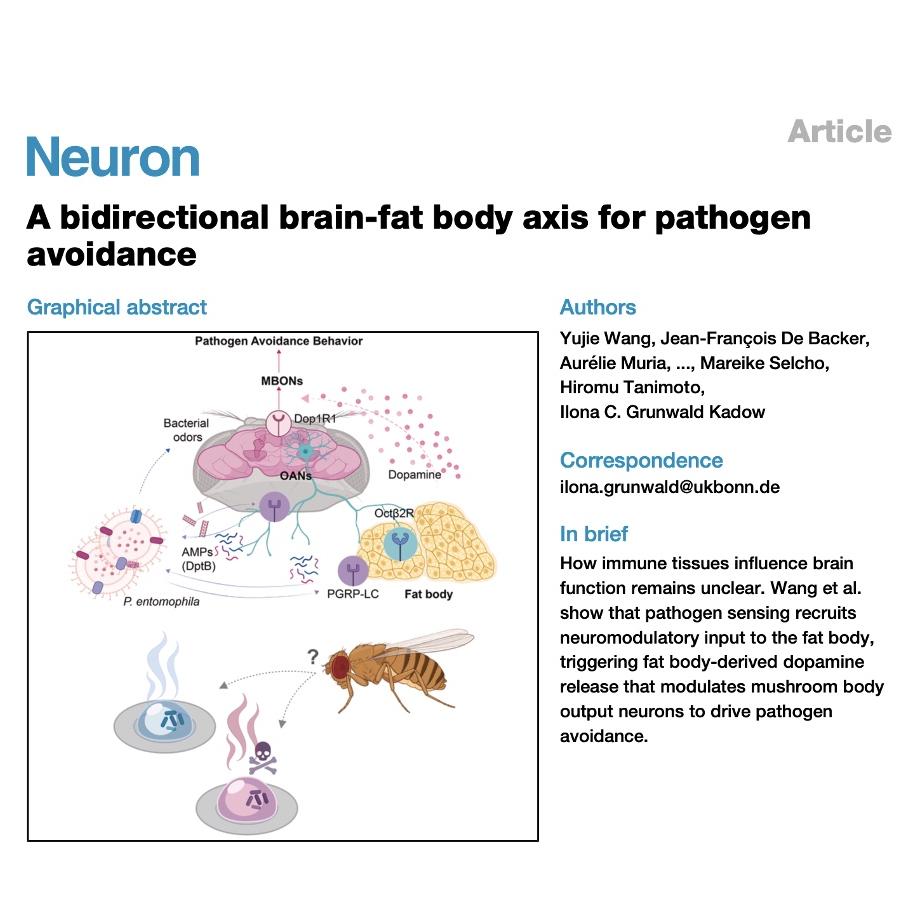
This study identifies a bidirectional brain-fat body communication axis in Drosophila that triggers pathogen avoidance behavior following the ingestion of harmful bacteria. Researchers discovered that octopaminergic neurons and the fat body use immune receptors to detect pathogens, subsequently inducing the production of antimicrobial peptides like DptB. This neural activity stimulates the fat body to release dopamine, which travels to the brain to signal the presence of infection. The released dopamine acts on Dop1R1 receptors within specific mushroom body output neurons, effectively shifting the fly’s preference from attraction to aversion. Ultimately, this neuro-immuno-metabolic loop allows animals to rapidly adapt their feeding choices to enhance survival during illness.References:Wang Y, De Backer J F, Muria A, et al. A bidirectional brain-fat body axis for pathogen avoidance[J]. Neuron, 2024.前往小宇宙评论区与主播互动
Embed this episode
Ready to play
914-Bidirectional Brain-Fat Body Axis for Pathogen Avoidance
No transcript for this episode yet
Similar Episodes
No similar episodes found.
Similar Podcasts
No similar podcasts found.