
EPISODE · Jan 4, 2025 · 19 MIN
92. Steve Reich
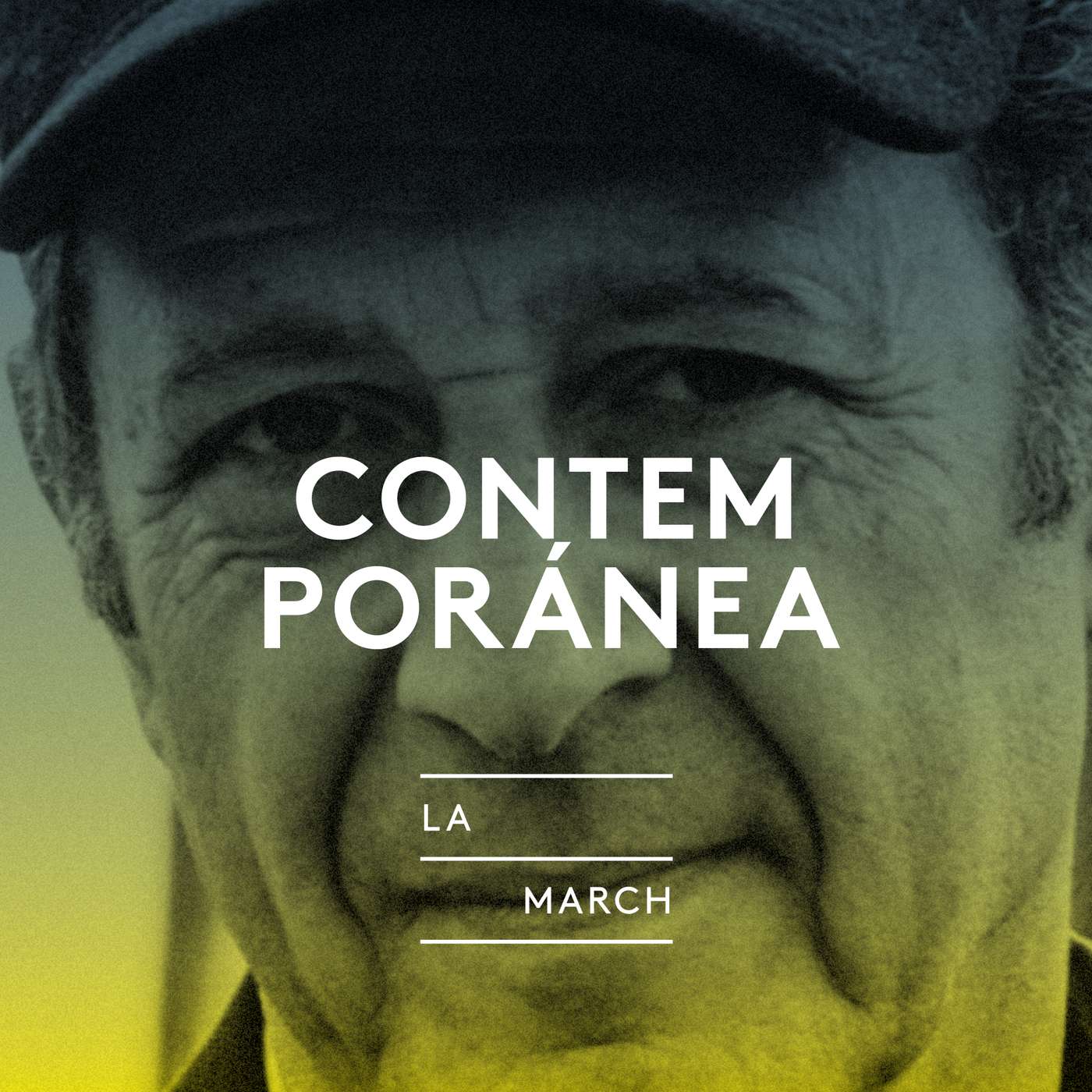
from Contemporánea · host Fundación Juan March
Uno de los grandes pioneros del minimalismo, escucha a Bach y se forma en el jazz antes del descubrir el gamelán y la música africana. Experto en la exploración del ritmo y la métrica a través de una instrumentación mínima, se sirve de la cinta magnética para convertir el loop en recurso narrativo. _____ Has escuchado Different Trains. 2. Europe: During the War (1988). Kronos Quartet. Elektra Nonesuch (1989) Drumming. Part I (1971). Steve Reich and Musicians. Elektra Nonesuch (1987) Four Organs (1970). Bang on a Can. Elektra Nonesuch (2000) Music for 18 Musicians (1976). Steve Reich and Musicians. Elektra Nonesuch (1978) Proverb (1995). Theatre of Voices; The Steve Reich Ensemble. Nonesuch (1996) _____ Selección bibliográfica BODON-CLAIR, Jérôme, Le langage de Steve Reich. L’exemple de “Music for 18 musicians” (1976). Harmattan, 2008 COHN, Richard, “Transpositional Combination of Beat-Class Sets in Steve Reich’s Phase-Shifting Music”. Perspectives of New Music, vol. 30, n.º 2 (1992), pp. 146-177* CUMMING, Naomi, “The Horrors of Identification: Reich’s Different Trains”. Perspectives of New Music, vol. 35, n.º 1 (1997), pp. 129-152* FOX, Christopher, “Steve Reich’s Different Trains”. Tempo, n.º 172 (1990), pp. 2-8* GOPINATH, Sumanth y Pwyll ap Siôn (eds.), Rethinking Reich. Oxford University Press, 2019 HARTENBERGER, Russell, Performance Practice in the Music of Steve Reich. Cambridge University Press, 2016* HOEK, D. J., Steve Reich: A Bio-Bibliography. Greenwood, 2001 JOHNSON, Timothy A., “Minimalism: Aesthetic, Style, or Technique?”. The Musical Quarterly, vol. 78, n.º 4 (1994), pp. 742-773* NYMAN, Michael, “Steve Reich”. The Musical Times, vol. 112, n.º 1537 (1971), pp. 229-231* PASTRE, Guillaume, Un art de la cohérence: “Different trains”, Steve Reich. L’Harmattan, 2018 POTTER, Keith, Four Musical Minimalists: La Monte Young, Terry Riley, Steve Reich, Philip Glass. Cambridge University Press, 2002* REICH, Steve, Writings on Music 1965-2000. Editado por Paul Hillier. Oxford University Press, 2002* —, Conversations. Hanover Square Press, 2022 ROEDER, John, “Beat-Class Modulation in Steve Reich’s Music”. Music Theory Spectrum, vol. 25, n.º 2 (2003), pp. 275-304* SCHWARZ, David, “Listening Subjects: Semiotics, Psychoanalysis, and the Music of John Adams and Steve Reich”. Perspectives of New Music, vol. 31, n.º 2 (1993), pp. 24-56* SCHWARZ, K. Robert, “Steve Reich: Music as a Gradual Process: Part I”. Perspectives of New Music, vol. 19, n.º 1-2 (1980), pp. 373-392* —, “Steve Reich: Music as a Gradual Process Part II”. Perspectives of New Music, vol. 20, n.º 1-2 (1981), pp. 225-286* *Documento disponible para su consulta en la Sala de Nuevas Músicas de la Biblioteca y Centro de Apoyo a la Investigación de la Fundación Juan March
Embed this episode
Ready to play
92. Steve Reich
No transcript for this episode yet
Similar Episodes
No similar episodes found.