
EPISODE · Mar 27, 2024 · 54 MIN
93: The Griot in the Prison Yard: Provoking Community Healing Through Story
from ART IS CHANGE: Strategies & Skills for Activist Artists & Cultural Organizers
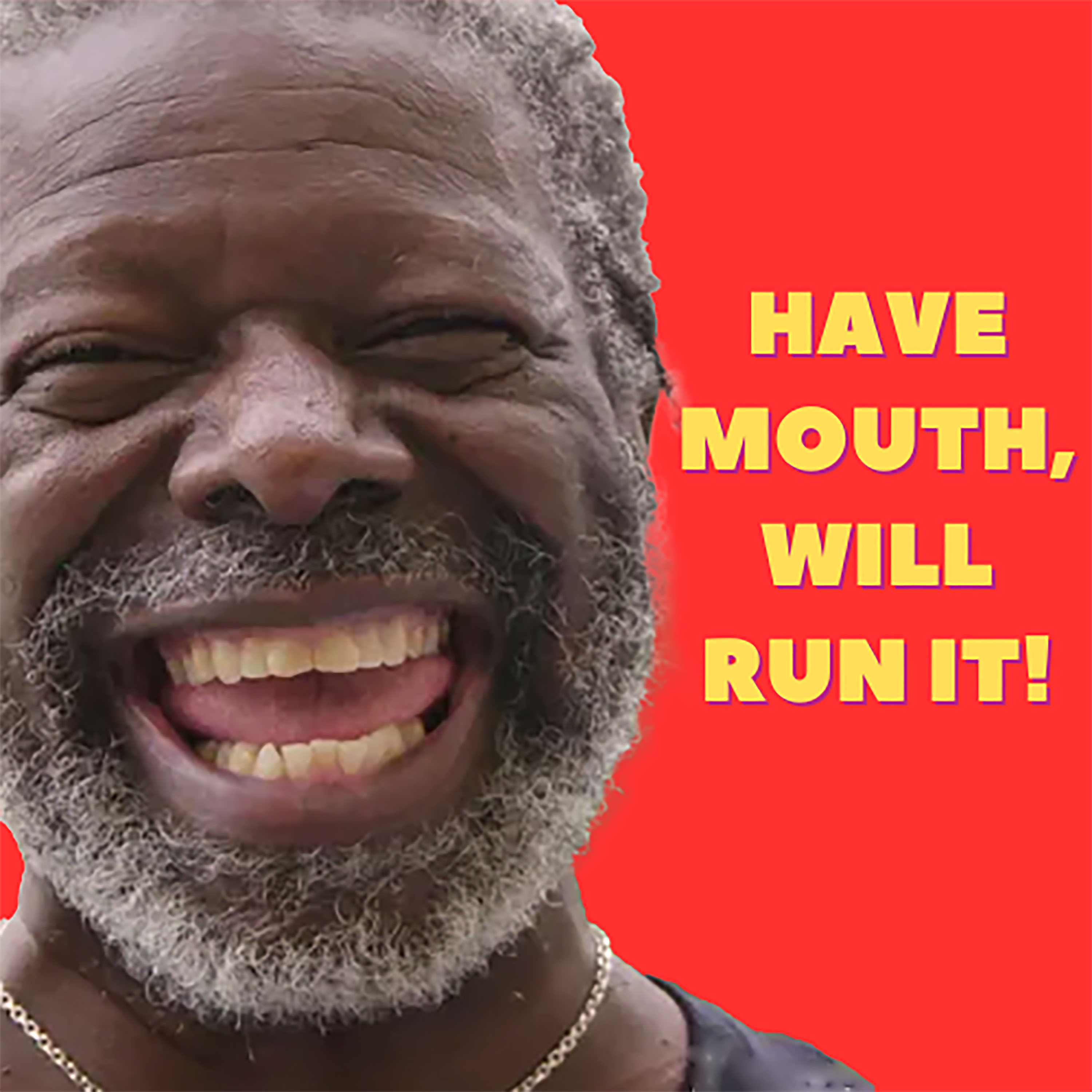
Michael McCarty in my prison workshops, they say. “Storytelling, you're going to show us how to tell the Three Little Pigs?” I say, “Every living person has at least one story they need to tell. And (telling) that story will help them in their relationship with the people around them, and the world, and more importantly, with themselves.BIOMichael McCarty: Mother always told me stories. I began telling stories formally when I was in high school in Chicago (St. Ignatius) in the 60’s, stories of Africa and the struggles of African-Americans for freedom. In 1992 I met Joel ben Izzy from Berkeley, CA who was introduced to me as a professional storyteller. “You mean to tell me that people pay you to tell stories!?” I asked. I picked his brain and vowed that I was going to become a professional teller too, and my motto would be “Have mouth. Will run it.” A week or so later I asked myself what would I do as a profession if I was independently wealthy. Tell stories, was my answer.So I went to my local library and began collecting folk tales from different countries and reading books about storytelling. One day the Young Adult Librarian asked me why I was getting so many books of folk tales and asked if I was writing a paper. When I told him that I was a storyteller he said that he had a group of teenagers that wanted to learn storytelling. Could I give them a workshop? I said sure. The workshop was a success. Thus began my career. And I’ve been running my mouth around the country and around the world ever since.In 1996 I initiated the GRIOT Workshop in Leimert Park in Los Angeles. This is a place where anyone can come and get assistance in developing their storytelling skills. From 2004 until 2008 I was the Pacific Region Representative for the National Storytelling Network (NSN) Board of Directories.My life has been one heaven of a story: Student activist, Black Panther, US Army martial arts instructor, acupuncturist, world traveler, spiritual seeker, construction worker, storyteller, husband, father, crazy friend. Never a dull moment! I LOVE my life;-)Notable MentionsHigh John the Conqueror: John the Conqueror, also known as High John de Conqueror, John, Jack, and many other folk variants, is a folk hero from African-American folklore. He is associated with the roots of Ipomoea purga, the John the Conqueror root or John the Conqueroo, to which magical powers are ascribed in African-American folklore, especially among the Hoodoo tradition of folk magic.[Have mouth will run it: Michael D. McCarty’s web siteBlack Panther Party: Founded in 1966 in Oakland, California the Black Panther Party for Self Defense was the era’s most influential militant black power organization. Its members confronted politicians challenged the police and protected black citizens from brutality. The party’s community service programs - called “survival programs” - provided food clothing and transportation. Rather than integrating American society members wanted to change it fundamentally. For them black power was a global revolution.Fred Hampton: Fredrick "Chairman Fred" Allen Hampton Sr. (August 30, 1948 – December 4, 1969) was an American activist. He came to prominence in his late teens and very early 20s in Chicago as deputy chairman of the national Black Panther Party and chair of the Illinois chapter. Conference on Alternatives in Jewish Education: The Coalition for the Advancement of Jewish Education (CAJE), founded as the Coalition for Alternatives in Jewish Education, was a non-profit organization based in New York City. Its activities included an annual conference that drew ~2000 Jewish educators,[1][2] advocacy for Jewish educators, various education-related publications, and more. Its founding was the brainchild of Jerry Benjamin and Cherie Koller-Fox.[3]Joel Ben Izzy: It was back in 1983 that I graduated from Stanford with a self-designed degree in English, Creative Writing and Storytelling, and set off to travel the world, gathering and telling stories. Since then I have told stories and taught storytelling in some 36 countries throughout North and South America, Europe, the Middle East, Africa and Asia.Peninnah Schram: In 1970 Peninnah Schram started recording books for the blind at the Jewish Braille Institute. That experience inspired her to begin to teach Jewish storytelling as a separate subject, and in 1974 she taught her first course on Jewish storytelling. The year 1974 heralded several other groundbreaking projects: She became “storyteller-in-residence” at The Jewish Museum, and she recorded three record albums and broadcast two storytelling series on radio. Some of this recorded material is now in the National Jewish Archive of Broadcasting. Karen Golden: Karen is currently a teaching artist with the Los Angeles County Arts Commission (LAartsed.org) and the founding director of Creative Learning Place (creativelearningplace.com), an academic and arts center for home-schooled children. She is also an international touring artist with the Buenos Aires based company DreamOn Productions and she has brought her storytelling to 1000's of students in international schools in China, S. Korea, Hong Kong, and Peru. In 2020 she will be telling stories in Argentina and Columbia. Kathleen Zundel: ONCE UPON A TIME...there was a storyteller named Kathleen Zundell whotraveled far and wide telling stories of fearless kids, feisty women, family foibles, and four-footed creatures. Her repertoire celebrated many cultures,stories with American Sign Language, and tales of the earth. Pasadena storytellers (Community Storytellers): Community Storytellers is a storyswap group that was formed in 1981 by two special women named Peggy Prentice and Kathleen Zundell. Peggy and Kathleen are no longer with us but they left a wonderful format for bringing people together.Leslie Perry : It was an article of faith with this great “Story Man,” the title of his first book. Note he didn’t just refer to himself as a “storyteller,” but as a “story man;” it defined his entire being—not just the act of telling, but the act of being itself. It was who he was, not just what he did. More than any one I know, he became the story when he told it—he was just the vessel for the tale. (from Folkworks, in Memoriam)PF Sloan: P. F. Sloan, was an American singer and songwriter. During the mid-1960s, he wrote, performed, and produced...
Embed this episode
Ready to play
93: The Griot in the Prison Yard: Provoking Community Healing Through Story
No transcript for this episode yet
Similar Episodes
No similar episodes found.
Similar Podcasts
No similar podcasts found.