
EPISODE · May 8, 2026 · 14 MIN
934-Plaque-Associated Microglia in Alzheimer’s Disease
from Paper Talk
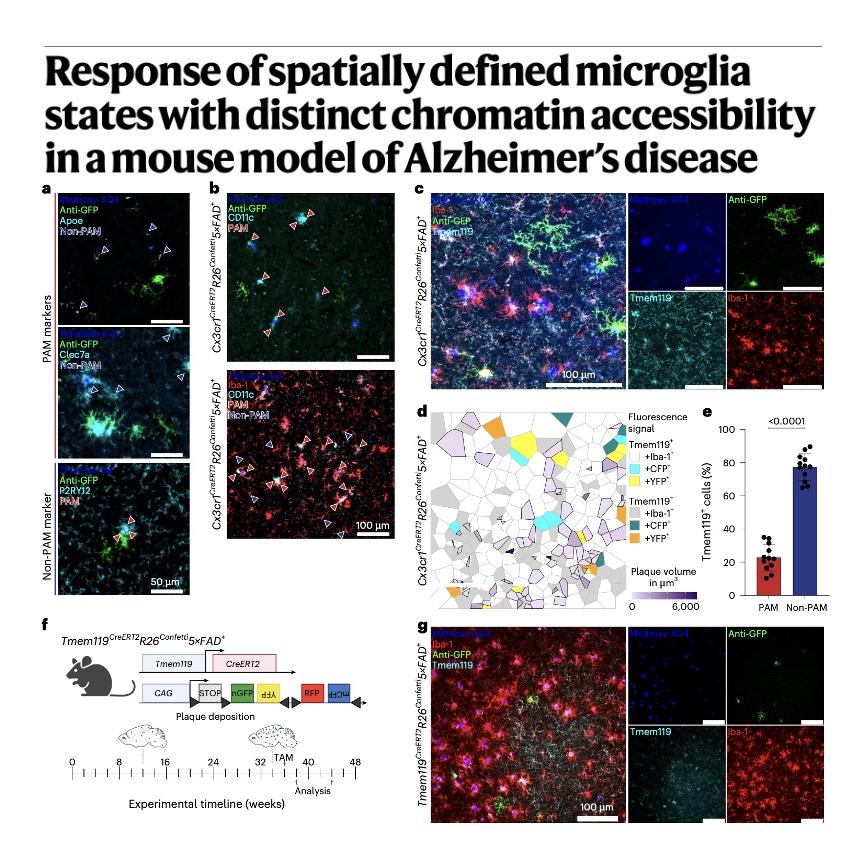
This research investigates the complex spatial and functional dynamics of microglia within mouse models of Alzheimer’s disease. By distinguishing between plaque-associated microglia (PAM) and non-plaque-associated microglia (non-PAM), the study reveals that these cells exist in distinct states defined by their proximity to amyloid deposits. High-resolution mapping demonstrates that non-PAM are highly versatile cells that eventually transition into clonally expanding PAM as the disease progresses. Furthermore, the authors show that environmental factors, such as gut microbiota and peripheral inflammation, significantly influence microglial behavior and expansion during early disease stages. Genetic and epigenetic profiling further confirms that non-PAM possess a unique chromatin accessibility and a heightened sensitivity to external cues compared to the more stable PAM. Ultimately, these findings suggest that targeting the dynamic transition between these microglial states could offer new therapeutic avenues for treating neurodegeneration.References:Ardura-Fabregat A, Bosch L F P, Wogram E, et al. Response of spatially defined microglia states with distinct chromatin accessibility in a mouse model of Alzheimer’s disease[J]. Nature neuroscience, 2025, 28(8): 1688-1703.前往小宇宙评论区与主播互动
Embed this episode
Ready to play
934-Plaque-Associated Microglia in Alzheimer’s Disease
No transcript for this episode yet
Similar Episodes
No similar episodes found.
Similar Podcasts
No similar podcasts found.