
EPISODE · May 10, 2026 · 26 MIN
942-Oxidized Phospholipids in Chronic Neurodegeneration
from Paper Talk
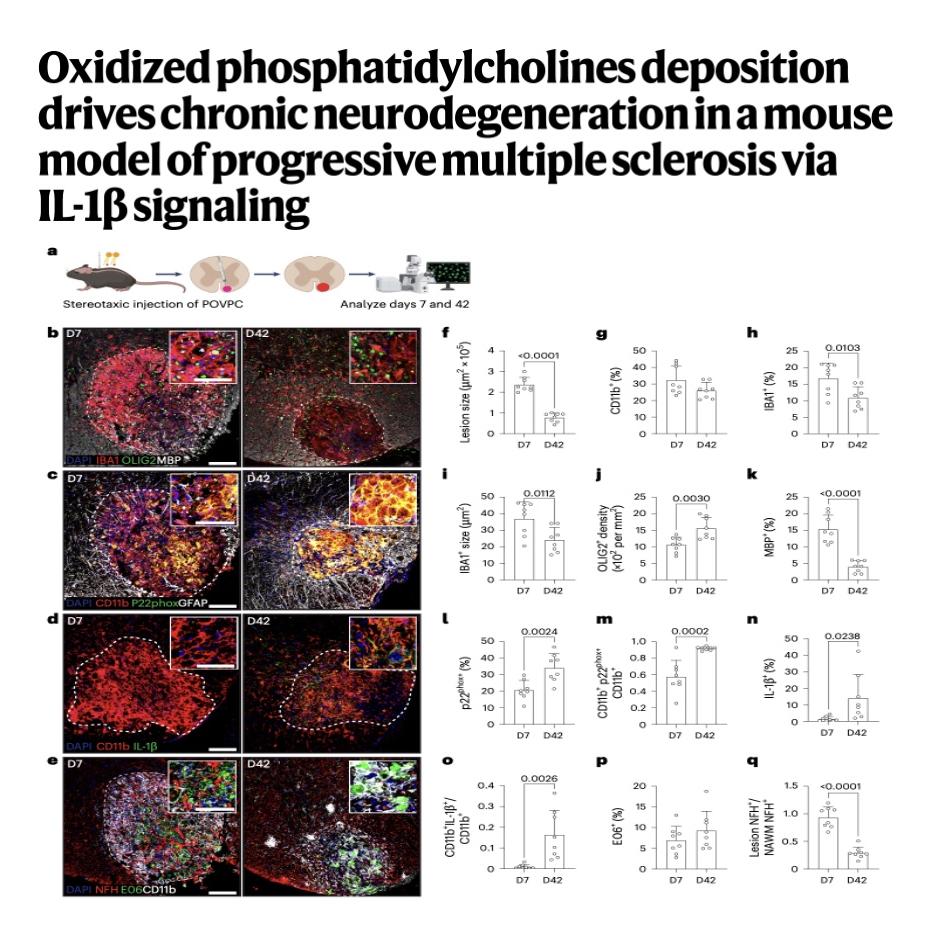
This research investigates how oxidized phosphatidylcholines (OxPCs) act as primary drivers of chronic neurodegeneration in progressive multiple sclerosis (P-MS). By using a mouse model, the authors demonstrate that depositing these toxic byproducts into the central nervous system creates persistent lesions that mirror the pathological and transcriptomic signatures of human disease. The study highlights that aging significantly worsens these injuries by promoting microglial dysfunction and increasing the recruitment of inflammatory macrophages. Furthermore, the findings reveal a destructive feedback loop involving IL-1β signaling, which fuels the continuous accumulation of OxPCs and prevents tissue repair. Ultimately, the results suggest that neutralizing OxPCs or blocking IL-1β could offer a promising therapeutic strategy for treating progressive forms of MS.References:Yu R, Lozinski B M, Seifert A, et al. Oxidized phosphatidylcholines deposition drives chronic neurodegeneration in a mouse model of progressive multiple sclerosis via IL-1β signaling[J]. Nature Neuroscience, 2026, 29(1): 67-80.前往小宇宙评论区与主播互动
Embed this episode
Ready to play
942-Oxidized Phospholipids in Chronic Neurodegeneration
No transcript for this episode yet
Similar Episodes
No similar episodes found.
Similar Podcasts
No similar podcasts found.