
EPISODE · Aug 22, 2019 · 1H
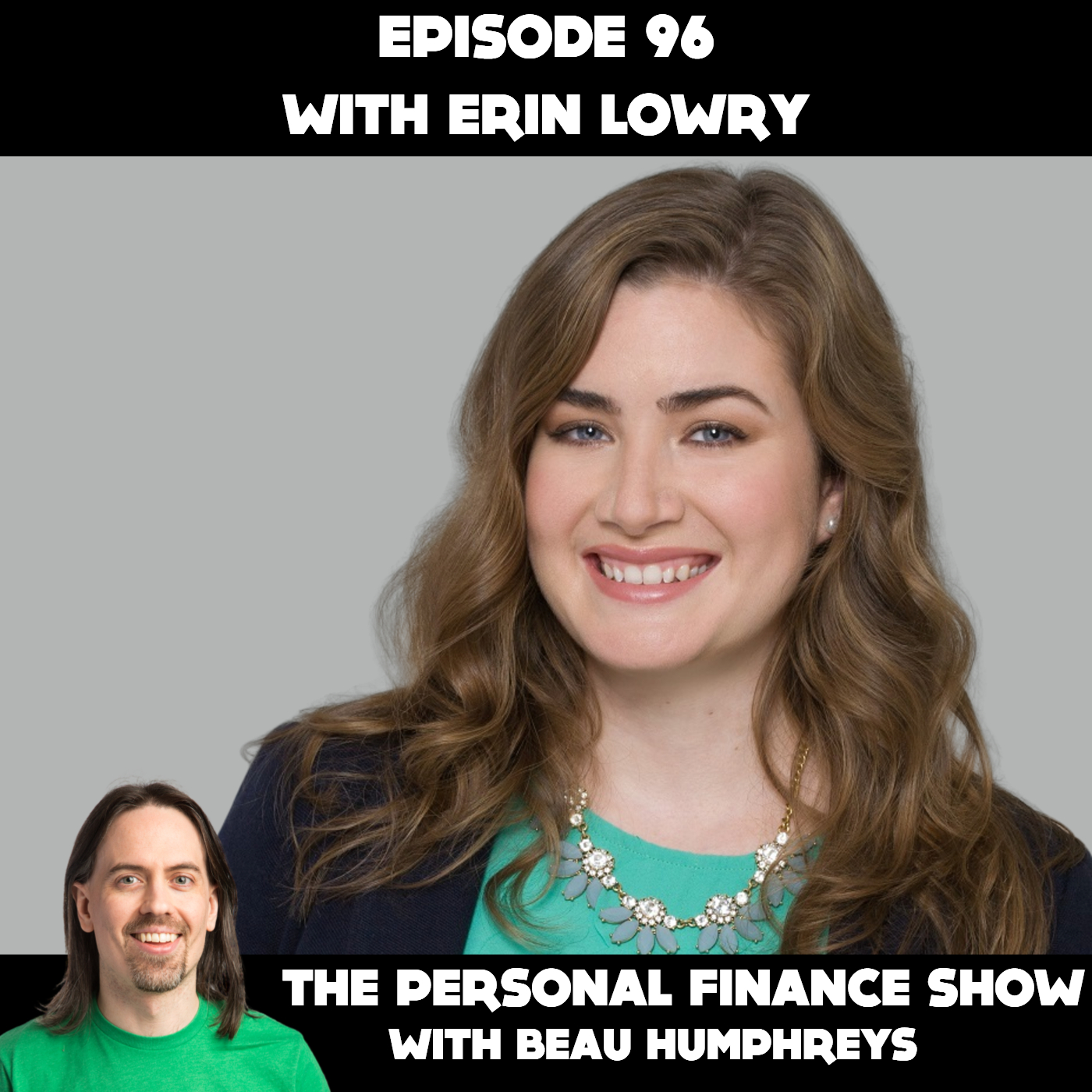
96 - Erin Lowry
from The Personal Finance Show · host Beau Humphreys
Erin Lowry wants you to know that words have power, especially when it comes to your money. Saving and investing are not the same thing. For example, if someone is saving for retirement, they might not even be aware that they are actually investing their money. Very few people put their retirement money in a savings account. It’s much more likely that if you have your retirement money invested in an index fund, or some kind of portfolio of stocks and bonds that are subject to risk and growth. But if we keep using the word “save” when we talk about retirement, we miss the opportunity to learn about our investments. If we say “invest” for retirement, you might be triggered to ask “What’s my money invested in?” You might be thinking, Beau, everyone knows the difference between saving and investing, and people know where their retirement money is invested. Unfortunately, that’s just not true. I read yesterday that 40% of Canadians keep their TFSA contributions in a simple savings account. Why are Canadians doing this? Well, it’s in the name. TFSA stands for Tax-Free Savings Account. The Canadian government called it a savings account. But it’s not a savings account. It’s a tax shelter. Where the RRSP, or Registered Retirement Savings Plan, was created to save you taxes now, only for you to pay them later when you withdraw money in retirement, the TFSA allows you to take after-tax money you already have and protect it from ever being taxed again. So the TFSA is not for savings, because savings might grow, if you’re lucky, at 1% per year. You can afford the taxes on 1%. What you want in your TFSA is your highest growth investments. If you have $10,000 in Canadian bank stocks, for example, and you say they are part of your TFSA, and then grow by 10% this year, you pay no tax on that 10%. Not this year or any year after that. That $10,000 could grow to $100,000 and you never pay any tax. So should this program created to shelter your investment growth from future taxes be called a Tax-Free Savings Account? Absolutely not. It’s a terrible name and it’s confusing Canadians. Words have power. Like the words "broke" and "poor" are not the same thing. This is something that Erin and I discuss in the episode, as she has now written two books: the first one is called Broke Millennial and the most recent one is Broke Millennial Takes on Investing. And there’s a third book in the series coming soon, which we also discuss in the episode. Erin joined me from New York City to share her personal finance story. NEXT EPISODE 97 - Bridget Casey Click here to book a FREE 15-minute personal finance consultation with Beau Humphreys, Personal Finance Coach Click here to become a patron of The Personal Finance Show via Patreon To register for my next available personal finance webinar click here.
What this episode covers
Erin Lowry wants you to know that words have power, especially when it comes to your money. Saving and investing are not the same thing. For example, if someone is saving for retirement, they might not even be aware that they are actually investing their money. Very few people put their retirement money in a savings account. It’s much more likely that if you have your retirement money invested in an index fund, or some kind of portfolio of stocks and bonds that are subject to risk and growth. But if we keep using the word “save” when we talk about retirement, we miss the opportunity to learn about our investments. If we say “invest” for retirement, you might be triggered to ask “What’s my money invested in?” You might be thinking, Beau, everyone knows the difference between saving and investing, and people know where their retirement money is invested. Unfortunately, that’s just not true. I read yesterday that 40% of Canadians keep their TFSA contributions in a simple savings account. Why are Canadians doing this? Well, it’s in the name. TFSA stands for Tax-Free Savings Account. The Canadian government called it a savings account. But it’s not a savings account. It’s a tax shelter. Where the RRSP, or Registered Retirement Savings Plan, was created to save you taxes now, only for you to pay them later when you withdraw money in retirement, the TFSA allows you to take after-tax money you already have and protect it from ever being taxed again. So the TFSA is not for savings, because savings might grow, if you’re lucky, at 1% per year. You can afford the taxes on 1%. What you want in your TFSA is your highest growth investments. If you have $10,000 in Canadian bank stocks, for example, and you say they are part of your TFSA, and then grow by 10% this year, you pay no tax on that 10%. Not this year or any year after that. That $10,000 could grow to $100,000 and you never pay any tax. So should this program created to shelter your investment growth from future taxes be called a Tax-Free Savings Account? Absolutely not. It’s a terrible name and it’s confusing Canadians. Words have power. Like the words "broke" and "poor" are not the same thing. This is something that Erin and I discuss in the episode, as she has now written two books: the first one is called Broke Millennial and the most recent one is Broke Millennial Takes on Investing. And there’s a third book in the series coming soon, which we also discuss in the episode. Erin joined me from New York City to share her personal finance story. NEXT EPISODE 97 - Bridget Casey Click here to book a FREE 15-minute personal finance consultation with Beau Humphreys, Personal Finance Coach Click here to become a patron of The Personal Finance Show via Patreon To register for my next available personal finance webinar click here.
NOW PLAYING
96 - Erin Lowry
No transcript for this episode yet
Similar Episodes
Mar 26, 2026 ·1m
Mar 19, 2026 ·34m
Feb 18, 2026 ·11m
Feb 11, 2026 ·45m