
EPISODE · May 14, 2026 · 23 MIN
969-Plastic Architecture of Brain-Wide Astrocyte Networks
from Paper Talk
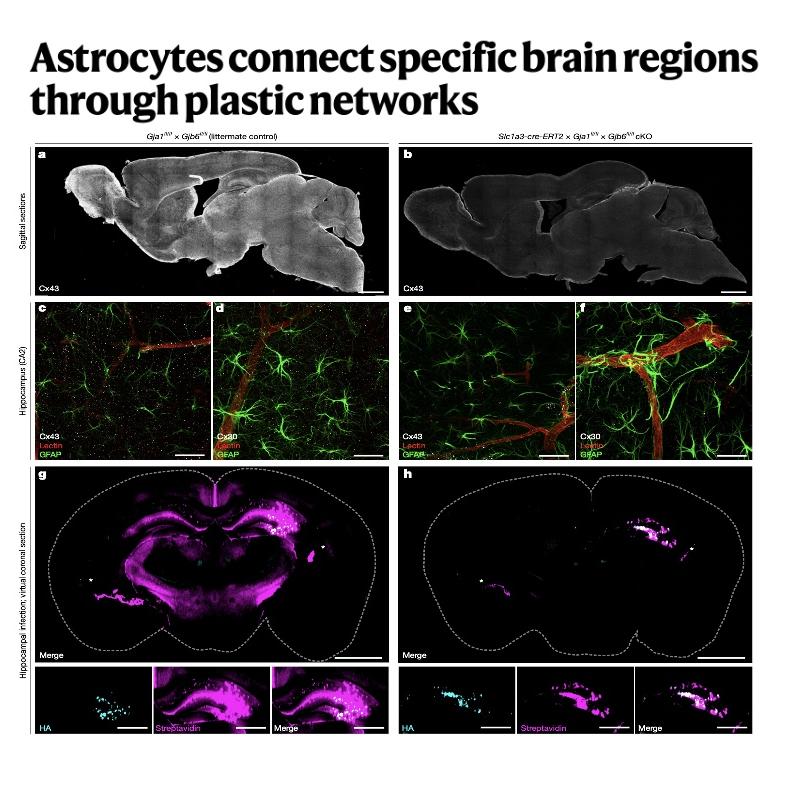
This research introduces a novel vector-based tracer designed to map the complex, three-dimensional architecture of astrocyte networks in the living brain. By utilizing a specialized fusion protein and tissue clearing techniques, scientists discovered that astrocytes do not form a random mass but instead create specific, long-range connections between distant brain regions. These non-neuronal pathways are highly organized and often follow patterns that differ significantly from known neuronal projections. Notably, the study demonstrates that these astrocytic circuits possess structural plasticity, as they reorganize in response to sensory changes like whisker trimming. These findings suggest that gap junction-coupled astrocytes provide an independent and adaptable communication system essential for maintaining brain function and metabolic balance. Consequently, this work redefines our understanding of functional connectivity by highlighting the active, organized role of glial networks in the central nervous system.References:Cooper M L, Selles M C, Cammer M, et al. Astrocytes connect specific brain regions through plastic networks[J]. Nature, 2026: 1-9.前往小宇宙评论区与主播互动
Embed this episode
Ready to play
969-Plastic Architecture of Brain-Wide Astrocyte Networks
No transcript for this episode yet
Similar Episodes
No similar episodes found.
Similar Podcasts
No similar podcasts found.