
EPISODE · May 15, 2026 · 23 MIN
972-Skin-Hypothalamus in Heat-Induced Metabolic Dysfunction
from Paper Talk
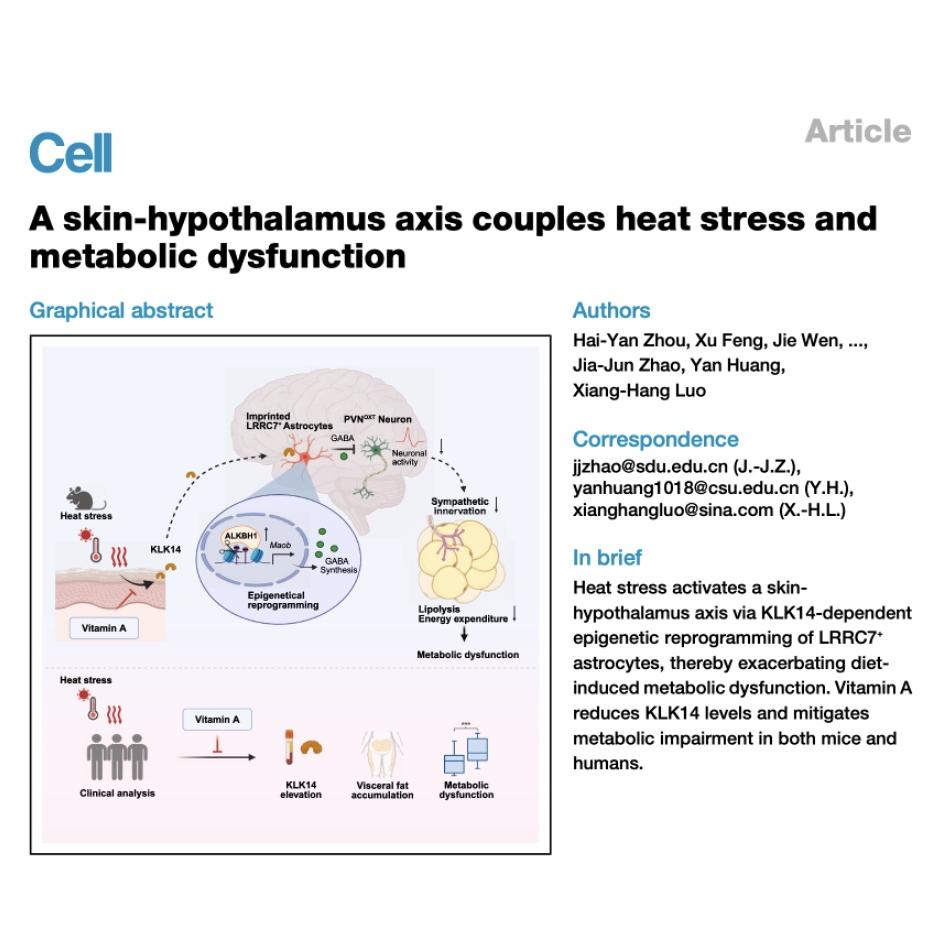
Research identifies a novel skin-hypothalamus axis that explains how repeated heat stress causes long-term metabolic dysfunction. The study reveals that heat exposure triggers the release of the protein KLK14 from the skin, which travels through the blood to the brain and induces lasting epigenetic changes in hypothalamic LRRC7⁺ astrocytes. These reprogrammed astrocytes suppress specific neurons in the paraventricular nucleus, ultimately reducing sympathetic nervous system activity and impairing the body's ability to burn fat. This "heat memory" makes individuals more susceptible to obesity and insulin resistance when following a high-fat diet. Crucially, the researchers found that vitamin A supplementation can lower KLK14 levels, effectively blocking this pathway and mitigating metabolic damage in both mice and humans. These findings provide a biological link between global warming and the rising prevalence of metabolic diseases.References:Zhou H Y, Feng X, Wen J, et al. A skin-hypothalamus axis couples heat stress and metabolic dysfunction[J]. Cell, 2026.前往小宇宙评论区与主播互动
Embed this episode
Ready to play
972-Skin-Hypothalamus in Heat-Induced Metabolic Dysfunction
No transcript for this episode yet
Similar Episodes
No similar episodes found.
Similar Podcasts
No similar podcasts found.