
EPISODE · Feb 2, 2022 · 28 MIN
99: Six-Day Race Part 7: Weston Invades England (1876)
from Ultrarunning History · host Davy Crockett
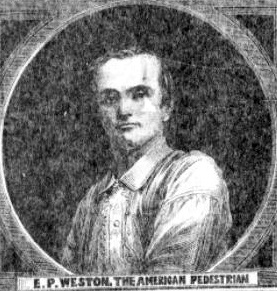
By Davy Crockett You can read, listen, or watch The six-day challenge (running as far as you could in six days) originally started in England during the late 1700s. Fifty years later, in the 1820s, a six-day frenzy occurred as many British athletes sought to reach 400 or more miles in six days (see episode 91). But then, six-day attempts were essentially lost for the next 50 years. Surprisingly, it was the Americans who resurrected these events in the early 1870s and brought them indoors for all to witness. The Brits believed they owned the running sport and surely their athletes were superior and could beat the upstart Americans, Edward Payson Weston and Daniel O'Leary. It was written, “They cannot be expected to be much better than those bred in England.” Both American and British runners/walkers wanted to prove that they were the best and challenges were sent back and forth across the Atlantic Ocean. The British did not realize that in 1875, there was no one truly skilled and trained in England to do heel-toe walking for the distances that Weston and O’Leary were doing in America. Thus, Weston took the English bait and boarded a steamship to England. Please consider becoming a patron of ultrarunning history. Help to preserve this history by signing up to contribute a little each month through Patreon. Visit https://ultrarunninghistory.com/member British Pedestrian Talent The British attitude toward Americans in athletics at the time was characterized in one of their sporting newspapers. “Americans have long looked upon us as being far behind the times, while they have prided themselves on their ability to go ahead of all creation. This may be true, or it may not be so, but there can be no doubt that we have on all occasions shown ourselves fully equal to them in all branches of sport.” Another explained it this way, “We Englishmen only believe what we see of American prowess is the extreme untruthfulness of American sportsmen. We are not in the least degree jealous of their athletic prowess, we are only skeptical.” Lillie Bridge Grounds The current Pedestrian hero in England was William T. Perkins, “The Champion Walker in England.” On September 20, 1875, at the Lillie Bridge grounds in London, England, the home of the London Athletic Club, he covered eight miles in 59:05 in front of 5,000 people. In England “Pedestrianism” was not limited to walking, it included distance running and short-distance “sprint running.” But interest was low. During December 1875, a Sporting newspaper wrote, “Professional pedestrianism is at its lowest ebb in London.” The first long-distance running race, professional or amateur in more than a year was scheduled for December 26th that year, a ten mile-race held at Lillie Bridge. Reaction in England to Weston-O’Leary Race Weston and O'Leary British sports writers doubted the results of the December 1875 Weston-O’Leary six-day race in Chicago won by O’Leary (see episode 98). A respected British sportswriter, Easterling, wrote, “Either O’Leary is a wonder of endurance such as has never been before even dream of, or he isn’t, and that can only be tested by his walking against some known man round a large ground or on a road. Not to mince matters, the reason we Englishmen only believe what we see of American prowess, is the extreme untruthfulness of American sportsmen.” A running/walking expert in London carefully looked over the statistics of the Weston-O’Leary six-day race. He was impressed with the amount of data collected but wondered about competing that distance in “a covered building.” Indoor running competitions were not yet taking place in England, and it was believed that there were many British professional athletes who could beat “the Yankee horses,” Weston or O’Leary, easily on roads outside, rather than in comfy looping indoor accommodations, events which they referred to as “dreary tramps.” William Curtis
Embed this episode
What this episode covers
The six-day challenge originally started in England during the late 1700s. Fifty years later, in the 1820s, a six-day frenzy occurred as many British athletes sought to reach 400 or more miles in six days (see episode 91). But then, six-day attempts were essentially lost for the next 50 years. Surprisingly, it was the Americans who resurrected these events in the early 1870s and brought them indoors for all to witness. The Brits believed they owned the running sport and surely their athletes were superior and could beat the upstart Americans, Edward Payson Weston and Daniel O'Leary. It was written, “They cannot be expected to be much better than those bred in England.” Both American and British runners/walkers wanted to prove that they were the best and challenges were sent back and forth across the Atlantic Ocean. The British did not realize that in 1875, there was no one truly skilled and trained in England to do heel-toe walking for the distances that Weston and O’Leary were doing in America. Thus, Weston took the English bait and boarded a steamship to England.
NOW PLAYING
99: Six-Day Race Part 7: Weston Invades England (1876)
No transcript for this episode yet
Similar Episodes
No similar episodes found.
Similar Podcasts
No similar podcasts found.