
EPISODE · May 10, 2026 · 27 MIN
A Chronicle of Crowns
from Kobi One Podcast · host Kobi One
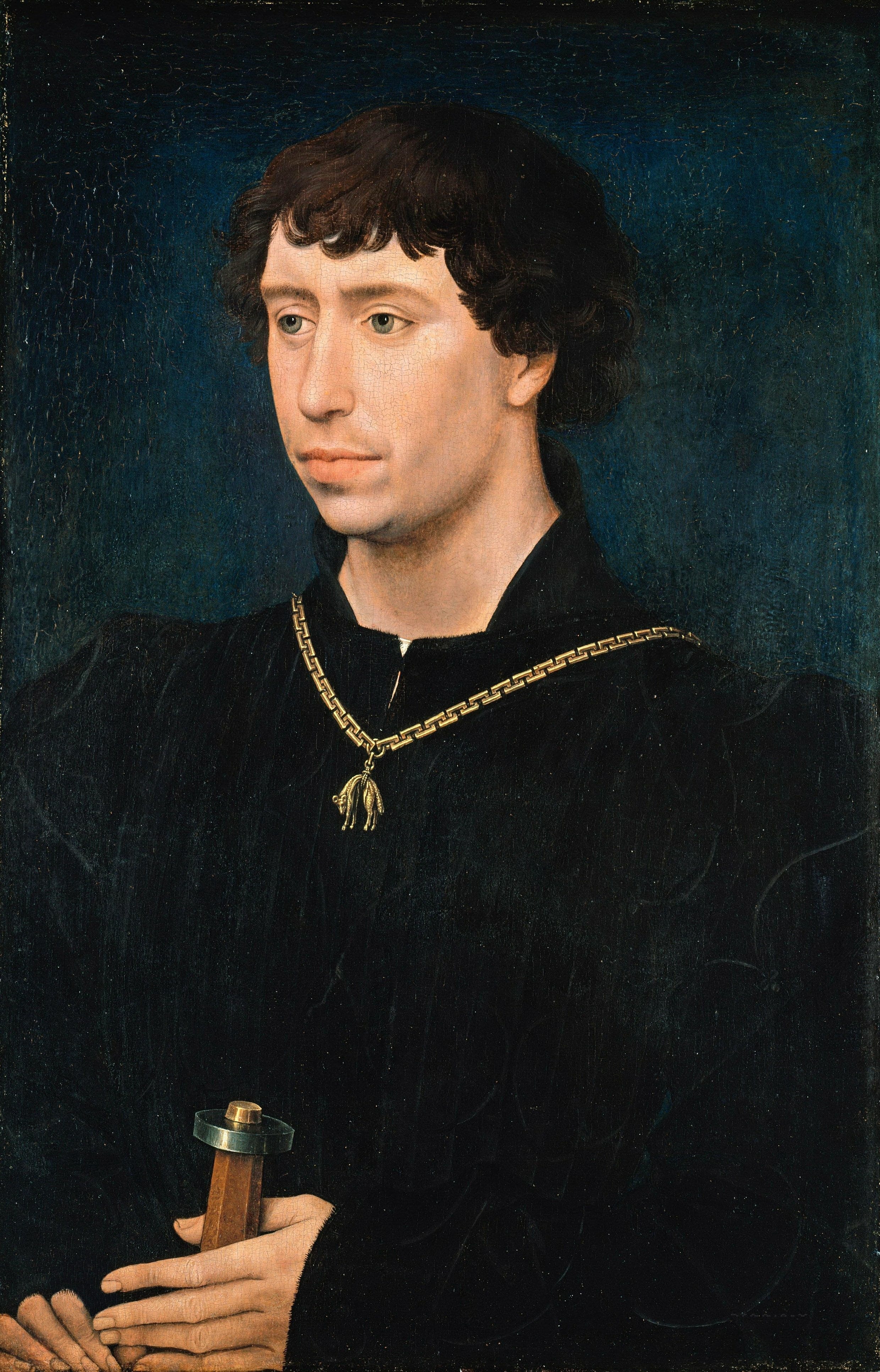
All around him there was red on white, streaks of blood on snow to mark where comrades and enemies alike had fallen. The smell of death, overwhelming if it wasn’t for the adrenaline of war. He and his men had arrived here at the gates of Nancy on frostbitten toes, empty stomachs and empty pockets. And now the French were colouring the snow with his men’s entrails. However did he allow this to happen? Well, it didn’t matter, really. If this was to be his end, they would very well have to fight him for it.The man getting ready to fight in the snow, he will be dead shortly hereafter. His name is Charles, Duke of Burgundy, nicknamed the Bold. He was once one of the richest and most powerful men in all of Europe, and here, at the gates of Nancy, France, he will meet his end. But let’s first discover together where the story of the Burgundians starts, before we get to their end.To get close to anything resembling an answer, we need to go back. Way back. Further back than Charles. Further back than the dukes of Burgundy or the French kings who invented them. We need to go back to an island in the Baltic Sea, and a tribe that no longer exists, and the name they left behind.ACT 1 — WHO WERE THE BURGUNDIANS?The island was called Burgundarholm. Today we call it Bornholm and it belongs to Denmark, located in the Baltic Sea. The tribe who lived there are today known as the Burgundians. They were East Germanic, not really Celtic, definitely not French, not anything the word Burgundy would later come to suggest, really. They were Baltic migrants who spent centuries moving around, being pushed by pressure from the east on one hand, and pulled by the collapsing edges of the Roman Empire on the other.By the early 5th century they had settled along the Rhine in what is now western Germany. They had built themselves a proper kingdom, king and all! But it wasn’t to last.In 437 the Huns destroyed the Burgundian kingdom on the Rhine. King Gundahar died. The kingdom collapsed. This cataclysmic event was so catastrophic it became legend, compressed into the Nibelungenlied, the great Germanic epic of betrayal, fire and the fall of kings.The Burgundians that made it out alive marched into Roman Gaul. As the western Roman Empire stood slowly crumbling, the Roman and Germanic tribes mixed. The Burgundians were welcomed as tasty Germanic meat for the grinder, to help oppose the Huns and their own assorted tribes. Edged on by the promise of revenge on the Huns, the Burgundians ventured deeper and further. An uneasy silence, the type of silence that hits you just before a once in a lifetime storm, settled over the land. This silence too, wasn’t to last. Written in the stars, already brewing in the air for decades, the battle that would decide the fate of Europe for years to come finally erupted like a volcano, whose molten lava would devour the European continent wholesale and change it forever.It’s 451 AD. We’re at the Catalaunian Plains, near Châlons in northeastern France.Attila had just crossed the Rhine with an army and they were simply burning everything between him and the Atlantic. Cologne. Mainz. Strasbourg. Worms. Trier. City after city fell. The Roman general Flavius Aetius built an alliance of enemies to keep at bay the tidal wave of Huns; Romans, Visigoths, Alans, Franks, Burgundians, all of them standing together against the Huns.This would be the Burgundians’ golden hour! Their moment of bloody revenge! The Burgundians had lost everything, including their own identity to the Huns. Gundahar had fallen! But now revenge would be theirs!But alas, here comes the anti-climax. The battle was over before it began in earnest. Attila had been hit and fell to the floor. By the time he rose, his army was defeated and retreating. The Burgundians never even got a taste of Hun blood before Flavius Aetius had already let the fleeing Huns go. The Roman general was thinking two steps ahead. He most likely allowed the Huns to retreat so he could keep the threat of their return as a get-out-of-jail-free card. It would keep this Frankenstein’s monster of a team glued together for just a while longer. It worked. Attila died just two years later and his empire crumbled with him.The Burgundians settled into a valley of their own. Their kingdom lasted until the Franks absorbed them in the 6th century. By the 8th century they had ceased to exist as a distinct people. They left nothing behind but a place name.Bourgogne. Burgundy. France.And here our record skips a beat. A 700 year beat.ACT 2 — SO WHO THEN ARE THE DUKES OF BURGUNDY?We arrive in France of 1363. The King of France rewards his firstborn with the duchy over the Flemish regions in return for his prowess in a battle of the French versus the English. He was but 14 years of age and stood strong to protect his father, the King, against the coming onslaught. Though they were eventually both wounded and taken hostage by the Black Prince, he had officially earned his nickname of Philippe le Hardi, which in English is, very wrongly me thinks, translated as the Bold. Our man from the introduction was nicknamed le Téméraire, which is rightly translated as the Bold, as soon we will discover. More fitting for his great-grandfather would surely be the Brave.The French King, Jean II, installed his son as duke of these regions to maintain control over them whilst still giving a semblance of independence. There was no uniting nation state, kingdom or empire here, only separate city states with some mutual goals and some agreements. To keep them under French control via Philip without absorbing them completely, was to keep them out of reach of the English. Somewhat wrongly, his family line would be named after the Germanic islanders that once built a kingdom around these same regions, almost a millennium ago. Flanders became kingdom in all but name, named after a kingdom long ago destroyed by the Huns.To install his son as Duke of Burgundy, his son was to be wed to Margaret of Male, daughter of Lodewijk van Male, Count of Flanders, in the year of our Lord 1369. It took Lodewijk’s mother the threat of cutting off her own breasts in front of her son to persuade the proud Count to yield his daughter to the French, but happen the wedding did.And it was done in style, the type of style that would soon become the staple for the Burgundians; beer and wine flowing richly, food and games for all. Margaret is known to have planted a large rose garden at her château and having the petals sent to Flanders to be used to make rosewater. It is also noted that Philip himself bathed in rosewater just before his public appearance. We are left to wonder if they were indeed one and the same.When Philip comes to stage, it’s all handshakes and smiles, sharing of Boon wine, his typical grape that he would have planted soon all over, and making friends. This was a political marriage after all. Margaret brought him Flanders, Artois, Brabant, the Free County of Burgundy. Riches and titles alike. I have much more to say about Philip the Brave and for instance his obsession with time, but for the sake of not accidentally stumbling askew from the main narrative, we leave Philip and Margaret to their wedding and we jump the generations as though ropeskipping.The Burgundian state grew and it grew. With each succeeding generation, more territory was added. And with each generation, the gap between the Burgundians and their original family line, the French royals, grew larger. The original intended play was to install family, blood relatives, to rule over Flanders and thus keep the English out. Yet the Burgundians kept trying, and succeeding, mind, to eat away at the kingdoms in their periphery, including the French. All while more and more comradery between Flanders and England blossomed, in part because of the wool.Philip the Bold died in 1404. His son John the Fearless succeeded him. John himself was assassinated on a bridge at Montereau in 1419, by the French.He had actually been informed of plans to assassinate him but when the Dauphin (yes, literally Dolphin, the heir to the throne of France was called a Dolphin) of France invited him for a meeting, he went anyway.He walked into the enclosure on the bridge, the doors closed behind him, and Tanneguy du Chastel drove an axe into his skull while he was kneeling before the Dauphin.The Dauphin watched it happen.That same Dauphin would grow up to be Charles VII of France, soon to be crowned King of France with Joan of Arc standing beside him.The axe had fractured John’s skull and it was kept and used as a political tool. Through the hole in this skull, the English entered France. His death drove Burgundy into the English alliance and dictated the tunes to which the Hundred Years War would rage. We will return to the Hundred Years War in another piece, yet another meandering arm of this river of time trying to lead us astray.John’s son Philip the Good consolidated the empire. Under him, Burgundy reached its greatest extent. He was followed by his son Charles.Charles the Bold, Duke of Burgundy, 1467 to 1477. The last of the four dukes of Burgundy. His aspirations were exactly what the French King had been trying to prevent four generations earlier. Charles wanted to create a sovereign kingdom from down by the North Sea all the way up to the Alps. The French ended up creating their own worst enemy. On the other side there was also trouble afoot. The relationship with the English also started to sour. The English Chancellor insulted Charles, the way only the English can, tongue in cheek jabs woven into la politesse. In 1468 he described him as the mightiest prince in the world, be it without a crown. The jab landed. Charles was furious. He now wanted the crown more than ever.Five years later, it seemed his dreams of the Burgundian kingdom would become reality. It’s 1473, and the Holy Roman Emperor (not old Rome, I know, confusing) Frederick III meets up with Charles in Trier to discuss the creation of this very kingdom as a stronghold between his empire and the French. Charles arrives in what he hoped would be style, but history remembers as quite over the top. He had brought with him a corps-de-garde of 250 soldiers, an army of 6000 men and 400 wagons filled to the brim with vases and tapestries and carpets and furniture. The robe he was wearing had been braided with 1400 big pearls and 23 great Persian rubies.The Holy Roman Emperor and his son, Maximilian, had actually borrowed money for the trip and were presumably at the least somewhat jealous to witness this Duke arrive in more splendour than they could hope to amass. Yet here they now stood, having in hand the power to gift this man the kingdom he so dearly desired. The negotiations commenced.And lasted.And lasted some more.For a month and a half.Until one morning the sun rose over an encampment half abandoned. The Emperor felt the negotiations leading nowhere and packed his bags before dayrise. No excuse. No explanation. No crown. The beginning of the end for Burgundy. Charles was left boiling in a stew of his own rage and anger.He would carve out his name in blood over these regions with his sword, crown or no crown. The world hadn’t seen the last of him. To arms!Three wars he would fight. None of which he would win. That’s why they called him Charles the Bold, not Charles the Bright.In Flemish we have a saying for his three wars: In Grandson verloor hij zijn goed, in Morat verloor hij zijn moed, en in Nancy verloor hij zijn bloed. At Grandson he lost his goods, at Morat he lost his courage, and at Nancy he lost his blood.He ventured out to the Swiss cantons, thinking them to be the threat to eliminate first. He started the campaign at Grandson with 20,000 men. He had promised the first Swiss garrison their freedom and lives in return for their surrender. He had them all hanged or drowned in Lake Neuchâtel regardless. The execution lasted four hours. The bodies were still hanging from the trees when the Swiss relief army of 18,000 arrived. They found their countrymen hanging from the trees like gutted pigs. They went hunting for the Burgundians and when they found them, they kicked Charles’ Burgundian army clean off the field. Charles ran. They walked into the abandoned Burgundian camp and found the greatest treasure in Europe sitting unguarded in a tent; carpets belonging to Alexander the Great, the 55-carat Sancy diamond, the Three Brothers jewel, his silver bath, his ducal seal. Swiss farmers and militia men melted most of it down. They had no idea what it was worth. What wasn’t melted down, you can visit to this day in different museums throughout Switzerland.Three months later at Morat, on the other side of the very same lake, he had rebuilt to somewhere between 12,000 and 25,000 men. An estimated 10,000 Burgundians died when the Swiss found them. The Swiss themselves had less than 600 casualties. The Confederates massacred Burgundians found hiding in ovens, in barns, in chestnut trees. Charles’ army was decimated. He would never again command an army that large.At Nancy in January 1477 he managed to scrape together five thousand frozen, exhausted, demoralised, unpaid men and faced an enemy four times his size, many of them veterans of Grandson and Morat. All around him snow was raging, the wind whistling fear into the hearts of his men. The situation was grim.He refused to retreat.Here we find ourselves again in the blood covered snow, the smell of death thick and heavy in the air and Charles, unwavering.It’s January 5, 1477. A Swiss halberdier swings at Charles’ head and splits his skull.His body is found three days later. Naked and frozen in a ditch, stripped by looters, face eaten off by wolves. Eventually he was identified by his battle scars, his long fingernails, an ingrown toenail on his left foot and the absence of upper incisors lost in a hunting accident years before. It took a considerable amount of time however before his identity was confirmed and before news of his death managed to travel to his only daughter, the last of the family, Mary of Burgundy. This is important because four generations earlier, the French King gave his son the duchy of Burgundy, and now that there was no duke, Burgundy automatically reverted back to France, officially and legally, much to the dismay of the Flemish. Mary had to marry, and fast.ACT 3 — MARY AND THE STRANGERCharles left no male heir. His only child, Mary, was nineteen years of age. She inherited an empty treasury, a destroyed army, and a state already being invaded by France within weeks of her father’s death. The most sought-after unmarried woman in Europe, because whoever married her got what was left of Burgundy.She had one week to negotiate with the Flemish cities before they would support her. They would take advantage of this disaster to reclaim their independence as city states, a powergrab then.On February 11 1477 she signed the Great Privilege, dismantled her father’s centralising reforms, restored the cities’ autonomy, guaranteed the right of the Estates to approve taxation and declarations of war. The cities of Flanders had been waiting years for this moment and before the news of Charles’ death had even been verified, way before any dust could have settled, the cities plotted, and they pounced.Now, she needed a husband with an army. It would keep at bay the French and it would restore some of her power within her regions.Maximilian of Habsburg, son of Holy Roman Emperor Frederick III, eighteen years old, was chosen. All scuffles between their fathers forgotten. He sends Mary the world’s first diamond engagement ring on record. Small oblong diamonds arranged in the shape of the letter M, for Mary, set on a plain gold band. He was so broke, in fact, that as he travelled through his native land, villagers pressed upon him gifts of gold and silver that enabled him to secure the diamonds. It is said that with this gift, the Archduke dealt a severe blow to the already troubled family finances. The ring still exists. It is currently housed in the Museum of Fine Arts in Vienna. A trendsetter, our Max.In Austria he is known still as the Last Knight. He was so much of a knight and mostly so very broke, that instead of marrying Mary himself, he sends some envoys.On April 19, 1477, his envoys arrived in Ghent and two days later the proxy marriage took place. A real knight stood in for him and married Mary by the glove in Max’s name. That night a sword was placed betwixt them both to symbolise purity preserved. Four knights stood guard with bow, arrow and a lit candle to make sure the purity did not run off in the middle of the night.When Maximilian finally arrived, the Ghentians covered the city streets in flowers for him. He was heralded as a hero. Triumphal arches everywhere. Tapestries hung from every balcony. One banner read: whatever you tell us to do, we will do it.He rode in on a white horse, clad in white over silver and gold armour, eighteen years old, blond, speaking seven languages. One chronicler wrote he appeared like an angel descending from heaven. Their marriage reads like a fantasy romance novel set in the middle ages. She taught him to ice skate. They read romances together. They went hunting. They had children. Their firstborn you might know from my first edition of Strange Origins; Philip the Handsome.Mary died in 1482, aged twenty-five, falling from a horse during the hunt. Maximilian, the Habsburg, the Austrian foreigner, became regent of Ghent. Mary, and Ghent through her, went through all of this to keep Ghent Ghentian and now it belonged to Maxiboy. The city that had welcomed him with flowers in 1477 began to turn. He imposed heavy taxes to fund wars against France. He brought in German administrators who plundered the countryside. He ignored the Great Privilege Mary had signed. The flowers had wilted.Ghent revolted in 1487, at their head Jan van Coppenhole, a sock maker, and two men referred to as Rijm and Ondrede; Rhyme and Unreason. He led the lower class weavers’ guilds against the Habsburg administration. A crack and the city split along class lines. Ghent fell.Bruges followed. January 31 1488. The guilds of Bruges imprisoned Maximilian. Hounded him into a house for three months all the while executing his men in front of him, one by one. How does Max escape this dire situation? How do the Habsburgs end up claiming Ghent? Find out in the next edition.Thank you for reading.Don’t miss a sunday edition! Come on, do the thing! Get full access to Kobi One at kobione.substack.com/subscribe
Embed this episode
NOW PLAYING
A Chronicle of Crowns
No transcript for this episode yet
Similar Episodes
No similar episodes found.
Similar Podcasts
No similar podcasts found.