
EPISODE · Oct 10, 2025 · 2 MIN
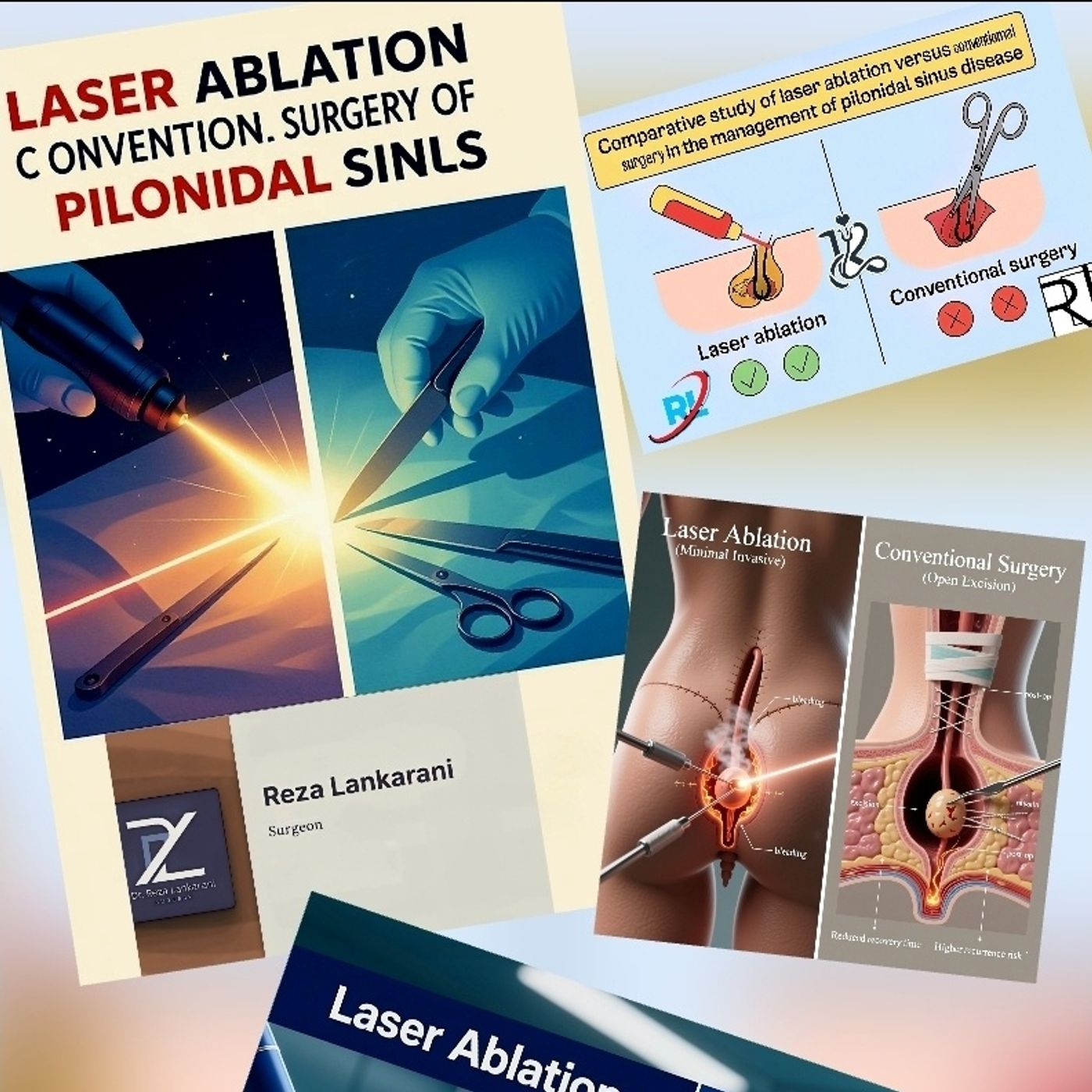
A Comparative Analysis of Laser Ablation vs. Conventional Surgery for Pilonidal Sinus Disease
from Surgical Pioneering Podcast · host Dr. Reza Lankarani
REVIEWED BY Dr , General SurgeonFounder | Surgical Pioneering Newsletter and Podcast Series Editorial Board Member | Genesis Journal of Surgery and MedicineInternational Surgery Journal https://dx.doi.org/10.18203/2349-2902.isj20253005Int Surg J. 2025 Oct;12(10):1602-1606.--------------------------------------------------------------------------------1.0 Background and Study Objective1.1 Introduction to Pilonidal Sinus Disease (PSD)Pilonidal Sinus Disease (PSD) is an inflammatory condition that classically affects the sacrococcygeal region, the cleft at the top of the buttocks. The condition is widely understood to be acquired, with its primary etiology involving the penetration of loose hairs from the head, neck, and back into the natal cleft, which provokes a foreign body reaction. PSD predominantly affects males between the ages of 15 and 30. Key contributing risk factors include being overweight, engaging in extended periods of sitting, having dense body hair, a deep natal cleft, and a potential hereditary susceptibility. Notably, the source clarifies that personal hygiene has minimal impact on the development of the disease. Clinically, PSD can present with a range of symptoms, including pain or discomfort while sitting, persistent dampness or drainage from the affected area, and the development of acute abscesses.1.2 Current Treatment Landscape and Rationale for the StudyA diverse array of treatment options exists for PSD, yet no single approach is universally accepted as the standard of care. Conventional surgical methods include wide excision of the sinus with either primary midline closure or more complex flap reconstruction techniques. In recent years, minimally invasive techniques have gained prevalence, including endoscopic procedures (EPSiT, VAAPS), crystallized phenol application, and laser ablation.This study was designed to address the growing interest in minimally invasive options and the relative scarcity of direct comparative data for laser ablation. Despite promising initial results reported for laser techniques, significant uncertainty remains regarding the optimal management strategy for PSD. The specific objective of this research was to retrospectively evaluate and compare the clinical outcomes of laser ablation against two conventional surgical methods: surgical excision with direct closure (DC) and surgical excision with flap closure (FC). The study's methodology was designed to systematically compare these procedural and clinical outcomes.Surgical innovation 2.0 Study Methodology2.1 Study Design and Patient PopulationUnderstanding the methodological framework of this study is crucial for assessing the validity of its findings. The research was conducted as a retrospective analysis of patient data from a single academic institution, Ahalia Hospital Branch-1 in Abu Dhabi, UAE. The study period covered treatments administered between January 2010 and December 2021.A total of 288 patients who underwent surgery for PSD were included and categorized into three distinct treatment cohorts:* Laser Ablation (LG): 84 patients (29.2%)* Direct Closure (DCG): 112 patients (38.9%)* Flap Closure (FCG): 92 patients (31.9%)The study included patients aged 16 years or older with either primary or recurrent PSD. Patients with open wounds or those for whom delayed wound closure was planned were explicitly excluded from the analysis.2.2 Data Collection and Key EndpointsData were systematically collected from patient medical records, encompassing demographic information, operative details, and postoperative outcomes. The study's primary focus was on several key clinical endpoints, which were measured to compare the efficacy and safety of the three techniques:* Healing without events: Defined as complete healing without complications, residual disease, or recurrence.* Residual disease (RD): Incomplete healing or persistent disease identified at the two-month postoperative mark.* Recurrence: Reappearance of the disease after two months of initial healing.* Complications: Any adverse events following the procedure, such as infection, hematoma, or wound dehiscence.* Re-operations: The need for a subsequent surgical procedure.Statistical analysis was performed using SPSS software. The Mann–Whitney U test was used for continuous variables, while Pearson’s chi-squared test was used for categorical variables. A p-value of less than 0.05 was established as the threshold for statistical significance. This structured methodology allowed for a quantitative comparison of the procedural outcomes.Dr Reza Lankarani 3.0 Analysis of Key Findings3.1 Patient Demographics and Baseline CharacteristicsAnalyzing the baseline characteristics of the patient cohorts is essential for identifying any pre-existing differences that could potentially influence the study's outcomes. The demographic and clinical data for the three treatment groups are summarized below.Surgical Pioneering Several statistically significant differences were observed between the groups. The prevalence of smoking was notably lower in the laser group (21.4%) compared to the direct closure (48.2%) and flap closure (53.3%) groups (p<0.001). Conversely, the laser group had a higher average number of fistulous tracts (2.7) than the direct closure group (2.0) and was comparable to the flap closure group (2.6) (p=0.02). Most critically, the mean follow-up duration for the laser group (14.1 months) was significantly shorter than for the conventional surgery groups (>80 months) (p<0.001). This discrepancy, resulting from the more recent introduction of the laser technique, represents a key limitation when interpreting long-term outcomes like recurrence.3.2 Procedural and Recovery MetricsThis section focuses on metrics related to the surgical procedure itself and the patient's immediate recovery, which are critical factors in evaluating a treatment's efficiency and impact on quality of life.Surgical Pioneering Series The analysis of these metrics revealed several statistically significant advantages for the laser ablation cohort (p<0.001 for all comparisons below). These findings underscore the minimally invasive nature of the procedure and its positive impact on patient recovery.* Reduced Operation Time: The mean operative time for laser ablation was 18.2 minutes, substantially shorter than the 33.8 minutes for direct closure and 59.5 minutes for flap closure.* Reduced Postoperative Antibiotic Use: Only 6.0% of laser patients required postoperative antibiotics, in stark contrast to 46.4% in the direct closure group and 90.2% in the flap closure group.* Faster Return to Normal Activity: The mean duration of sitting prohibition was negligible for laser patients (0.1 weeks), compared to 2.3 weeks for direct closure and 3.3 weeks for flap closure.* Shorter Sick Leave: Patients in the laser group required significantly less time off from work, with a mean sick leave of 7.1 days, compared to 25.8 days for direct closure and 31.4 days for flap closure.These procedural and recovery advantages position laser ablation as a highly efficient and patient-friendly option, leading directly to the evaluation of its core clinical outcomes.3.3 Clinical Outcomes: Healing, Complications, and RecurrenceThis section evaluates the ultimate clinical success of each procedure by focusing on healing efficacy, patient safety, and long-term durability.Reza Lankarani M.D The analysis of these outcomes reveals a nuanced trade-off between the treatment approaches. Laser ablation demonstrated a clear advantage in patient safety, with a significantly lower overall complication rate of 13.1% compared to 27.7% for direct closure and 34.8% for flap closure (p=0.002). Notably, complications such as hematoma and wound dehiscence occurred exclusively in the conventional surgery groups, highlighting the benefit of avoiding large excisions and sutures.However, the primary drawback of laser ablation identified in this study was a significantly higher rate of residual disease (RD) at the two-month follow-up. The RD rate was 26.2% in the laser group, compared to approximately 8% in both the direct closure and flap closure groups (p<0.001). This suggests that while safer, the laser technique may be less effective at completely eradicating the disease in the short term.Regarding long-term durability, the recurrence rate after two months was lowest in the laser group (3.6%), but this difference was not statistically significant (p=0.09). This finding must be interpreted with extreme caution due to the significantly shorter follow-up period for the laser cohort, which prevents a definitive comparison of long-term recurrence.4.0 Discussion and Clinical Implications4.1 Interpretation of FindingsThis study synthesizes key data to provide a balanced perspective on the clinical utility of laser ablation for PSD. The findings clearly demonstrate that the miniBecome a supporter of this podcast: https://www.spreaker.com/podcast/surgical-pioneering-podcast--6733149/support.Dr. Reza Lankarani, a surgeon and musician, has released a new album showcasing a diverse range of musical styles, from soulful ballads to high-energy tracks. His music, available on iOS and Android platforms, is characterized as a deeply personal exploration, reflecting his unique perspectives as both a medical professional and a dedicated artist.Lankarani's music is described as a powerful exploration of identity, self-expression, and the struggle against societal expectations, blending various genresincluding folk, rock, and even jazz fusion.Reza Lankarani's music offers a compelling exploration of the struggle for self-identity in the face of societal pressures, employing powerful metaphors of masks and chisels to represent the inherent pain of conformity. His compositions reveal the internal conflict between externally imposed roles and one's authentic self, underscoring the universal experience of feeling constrained by external judgments. Ultimately, however, Lankarani's music celebrates resilience and the reclamation of personal narrative, affirming the transformative power of self-discovery and authenticity. Through evocative imagery and profound emotional depth, his songs provide a transformative journey toward self-actualization within a society that often seeks to define us.
Embed this episode
What this episode covers
REVIEWED BY Dr , General Surgeon Founder | Surgical Pioneering Newsletter and Podcast Series Editorial Board Member | Genesis Journal of Surgery and Medicine International Surgery Journal https://dx.doi.org/10.18203/2349-2902.isj20253005 Int Surg J. 2025 Oct;12(10):1602-1606. -------------------------------------------------------------------------------- 1.0 Background and Study Objective 1.1 Introduction to Pilonidal Sinus Disease (PSD) Pilonidal Sinus Disease (PSD) is an inflammatory condition that classically affects the sacrococcygeal region, the cleft at the top of the buttocks. The condition is widely understood to be acquired, with its primary etiology involving the penetration of loose hairs from the head, neck, and back into the natal cleft, which provokes a foreign body reaction. PSD predominantly affects males between the ages of 15 and 30. Key contributing risk factors include being overweight, engaging in extended periods of sitting, having dense body hair, a deep natal cleft, and a potential hereditary susceptibility. Notably, the source clarifies that personal hygiene has minimal impact on the development of the disease. Clinically, PSD can present with a range of symptoms, including pain or discomfort while sitting, persistent dampness or drainage from the affected area, and the development of acute abscesses. 1.2 Current Treatment Landscape and Rationale for the Study A diverse array of treatment options exists for PSD, yet no single approach is universally accepted as the standard of care. Conventional surgical methods include wide excision of the sinus with either primary midline closure or more complex flap reconstruction techniques. In recent years, minimally invasive techniques have gained prevalence, including endoscopic procedures (EPSiT, VAAPS), crystallized phenol application, and laser ablation. This study was designed to address the growing interest in minimally invasive options and the relative scarcity of direct comparative data for laser ablation. Despite promising initial results reported for laser techniques, significant uncertainty remains regarding the optimal management strategy for PSD. The specific objective of this research was to retrospectively evaluate and compare the clinical outcomes of laser ablation against two conventional surgical methods: surgical excision with direct closure (DC) and surgical excision with flap closure (FC). The study's methodology was designed to systematically compare these procedural and clinical outcomes. Surgical innovation 2.0 Study Methodology 2.1 Study Design and Patient Population Understanding the methodological framework of this study is crucial for assessing the validity of its findings. The research was conducted as a retrospective analysis of patient data from a single academic institution, Ahalia Hospital Branch-1 in Abu Dhabi, UAE. The study period covered treatments administered between January 2010 and December 2021. A total of 288 patients who underwent surgery for PSD were included and categorized into three distinct treatment cohorts: * Laser Ablation (LG): 84 patients (29.2%) * Direct Closure (DCG): 112 patients (38.9%) * Flap Closure (FCG): 92 patients (31.9%) The study included patients aged 16 years or older with either primary or recurrent PSD. Patients with open wounds or those for whom delayed wound closure was planned were explicitly excluded from the analysis. 2.2 Data Collection and Key Endpoints Data were systematically collected from patient medical records, encompassing demographic information, operative details, and...
Ready to play
A Comparative Analysis of Laser Ablation vs. Conventional Surgery for Pilonidal Sinus Disease
No transcript for this episode yet
Similar Episodes
No similar episodes found.
Similar Podcasts
No similar podcasts found.